Warriors of Might and Magic
 49
★ /10
49
★ /10
 Game Boy Color,
  PS 1,
PS 1,  PS 2
PS 2
 The 3DO Company
The 3DO Company
The 3DO Company
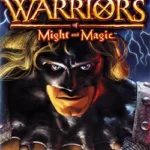
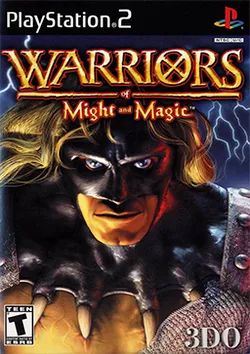
Warriors of Might and Magic (2000/2001) is another classic artifact from 3DO’s experimental, early-2000s push to spin the Might & Magic intellectual property off into third-person console action-adventure games.
Developed directly in-house by The 3DO Company, it serves as the conceptual sibling to Crusaders of Might and Magic. However, while Crusaders began on consoles and was rushed to PC, Warriors reversed that trajectory, focusing its engineering entirely on the home console landscape of the time.
The Narrative: The Mask of Shame
The storyline introduces a gritty, dark-fantasy premise centered on a new protagonist: Alleron, a disgraced former Captain of the Guard.
- The False Charges: Alleron is wrongfully targeted by a fanatical Grand Inquisitor and framed for the ultimate crime in the realm: practicing the dark arts of Necromancy.
- The Living Punishment: Instead of simple execution, Alleron is forced to don the Mask of the Accused. The mask is a terrifying, living, parasitic metal curse that physically slithers onto his face, cannot be removed by normal means, and actively behaves as a beacon that drives wild monsters into an aggressive frenzy.
- The Descent: Stripped of his weapons, armor, and dignity, he is hurled into the depths of the “Pit of the Accused”. Players must navigate Alleron out of the labyrinthine subterranean depths, gather gear, master combat arts, and unearth a grand conspiracy involving a malicious entity named Daglathor to break the curse and clear his name.
Gameplay Framework: The Hack-and-Slash Loot Loop
Mechanically, Warriors operates as a straightforward, early 3D action RPG that drops tactical turn-based grid logic in favor of real-time combat.
- Visual Gear Progression: Heavily inspired by the structural progression loop of games like Diablo, the title places massive emphasis on continuous looting. As Alleron explores castles, swamps, and magical citadels, he continuously plunders upgraded swords, axes, maces, and shields. Crucially for the era, any weapon or armor piece players equip is immediately and realistically reflected on Alleron’s physical 3D character model.
- Hybrid Battle Magic: Alleron balances heavy physical melee combos with a versatile magical spellbook. Spending his mana pool allows players to toggle between traditional elemental attributes—launching projectile fireballs, triggering frost stasis, or calling down chains of lightning to manage large crowds of skeletons, zombies, and orcs.
Cross-Platform Architecture: One Name, Three Distinct Games
True to 3DO’s chaotic production standards at the turn of the millennium, Warriors manifested as three radically different games depending entirely on the hardware:
- The PlayStation 1 Version (2000): A structurally linear, compact, lower-polygon third-person action game focused heavily on tight cavern navigation.
- The Game Boy Color Version (2000): A complete 2D top-down isometric adaptation. Because of 8-bit handheld limitations, it featured an almost entirely different, condensed storyline and completely unique tile layouts.
- The PlayStation 2 Version (2001): The flagship release. It took full advantage of the PS2’s early processing power to implement sprawling outdoor environments, highly detailed texture variety, dynamic colored mist/fogging, and large numbers of simultaneous enemy encounters on screen.
The Scrapped Port: A PC version of Warriors was officially in production and track data indicates it was roughly 50% complete. It promised vastly upgraded higher-resolution textures, but as 3DO’s financial stability rapidly imploded, the PC port was permanently cancelled mid-development.
Critical Legacy & The Direct Sequel
At launch, the game received highly mixed, polarized reviews. While critics heavily praised the PS2 version’s visual effects, environmental size, and satisfying loot loops, the game was dragged down by clunky camera tracking, an unstable frame rate, basic puzzle designs, and incredibly stiff, mechanical hand-to-hand combat animations.
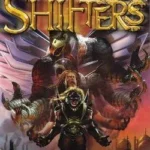
Despite its flaws, it performed well enough to spawn a direct, even more experimental console sequel titled Shifters (2002), which brought Alleron back to navigate a sci-fi, “Magitek” setting while granting him the power to shapeshift into various beast-human hybrids.
Release Timeline & Platforms
- PlayStation 1: December 5, 2000 (North America) / April 6, 2001 (Europe)
- Game Boy Color: December 22, 2000 (North America) / April 6, 2001 (Europe)
- PlayStation 2: March 21, 2001 (North America) / April 6, 2001 (Europe)
Digital Availability Notice
Unlike Crusaders of Might and Magic (which enjoys a modern, optimized digital copy on GOG), Warriors of Might and Magic is completely unavailable on modern digital storefronts like GOG or Steam. Because the PC port was aborted before release and the console versions were tied directly to legacy contracts, the game lives on exclusively through original physical console media and the retro emulation scene (such as PCSX2 for the PlayStation 2 build).