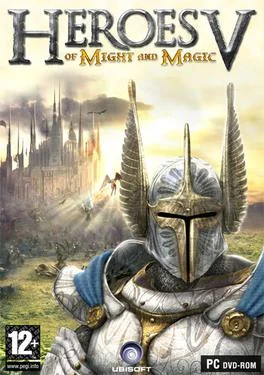
Heroes of Might and Magic V
 77
★ /10
77
★ /10
 PC
PC Nival
Nival 1C Company
 Ubisoft

Heroes of Might and Magic V (2006) stands as one of the most critical turning points in the history of the legendary turn-based strategy franchise. Following the dramatic 2003 bankruptcy of The 3DO Company and the subsequent closure of New World Computing, the future of the series was highly uncertain.
French publisher Ubisoft stepped in, bought the intellectual property, and handed development duties to the Russian studio Nival Interactive. Faced with the intense task of salvaging a deeply fractured community after the highly polarizing experiments of Heroes IV, Nival delivered a stellar, redemptive chapter that bridged classic nostalgic mechanics with modern technological leaps.
The Grand Reset: A Brand New Universe
Heroes V completely severed ties with the classic worlds of Enroth and Axeoth. Instead, it established a completely fresh, tightly constructed dark-fantasy lore continuity: The World of Ashan.
Ashan’s geopolitical landscapes, religious architecture, and faction alignments are strictly governed by a pantheon of primordial Elemental Dragon Gods. The massive 30-mission base campaign plays out like an interconnected fantasy political thriller, tracking the Holy Griffin Empire as a demonic eclipse disrupts a royal wedding, sparking a world war that drags dark elves, wizards, rangers, and necromancers into a grand struggle to prevent a demonic apocalypse.
The Core Evolution: 3D Graphics & Polished Roots
Nival deliberately looked back at Heroes III as its mechanical anchor, discarding Heroes IV’s controversial frontline hero combat and free-roaming creature squads. However, they heavily evolved the engine:
- The Leap to Full 3D: Running on a highly modified 3D graphics engine, Heroes V was the first entry to ditch 2D sprites. Players were handed a fully rotatable camera to hunt for hidden resource nodes behind mountains on the adventure map, and town screens were transformed into jaw-dropping, fully animated 3D architectural masterworks.
- The Dynamic Initiative Bar: The combat grid completely abandoned rigid, round-based turn structures. Nival implemented an “Initiative Timeline” at the bottom of the screen. Fast, low-health units (like Pixies or Blood Furies) could now naturally act multiple times on the board before a slow, heavily armored unit (like a Plague Zombie) could execute a single move, adding massive layer of tactical speed management to combat.
- The Sidelined combatant: Heroes returned to their safe operational zone on the flanks. However, unlike Heroes III, they weren’t restricted to just casting spells. On their turn, a Hero could perform a physical attack command to personally strike an enemy squad on the board, executing high physical damage without ever stepping onto the grid or opening themselves up to retaliation.
The Deep Meta: Racial Unique Skills & The Skill Wheel
To maximize faction asymmetry, Heroes V completely threw out generic secondary skill distributions. Every alignment was granted a mandatory, entirely exclusive Racial Skill that dictated their macro-strategy:
- Haven (Counterstrike): Allows human heroes to pay gold at training grounds to physically upgrade lower-tier units into elite variants.
- Inferno (Gating): Demonic squads can channel their inner hellfire to summon exact duplicate copies of themselves directly onto the battlefield after a short casting delay.
- Necropolis (Necromancy): The classic franchise staple, re-engineered. Reanimating fallen foes into Skeletons or Ghosts now requires a finite, daily regenerating resource pool called Dark Energy, preventing early-game infinite army snowballs.
- Academy (Artificer): Wizards can spend hard-earned rare resources to craft custom, physical “mini-artifacts” in their castle foundry, permanently equipping them onto specific unit tiers to buff their speed, health, or armor.
- Dungeon (Irresistible Magic): Dark Elves specialize in pure destructive spells. Their racial trait allows their offensive nukes to partially or completely bypass an enemy’s passive magic resistance.
- Sylvan (Avenger): Elves can study their foes at a town’s Guild of Avenging. Choosing specific target monsters grants all elven archers a permanent chance to land devastating, double-damage critical strikes against those exact units.
The Hidden Skill Wheel
Progression was governed by a massive, intricately complex web of abilities. Every single class possessed a highly hidden “Ultimate Ability” (e.g., Haven’s Unstoppable Charge or Inferno’s Urgent Gating). To unlock these game-breaking capstones, players had to follow highly specific, seemingly unrelated skill paths across their level-ups, turning hero cultivation into a precise science.
The Expansions and Alternate Upgrades
1. Hammers of Fate (2006)
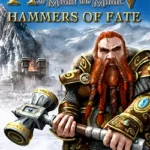
The first expansion introduced the Fortress Faction, bringing the underground clans of the Dwarves into the mix. Operating on a completely separate magic economy, Dwarves utilize Rune Magic. At the start of a unit’s turn, players can spend physical resources (like Wood or Ore) to activate runes, granting the squad immediate combat buffs like double movement or invulnerability. The expansion also officially integrated the beloved Caravan system back into the macro-map layer.
2. Tribes of the East (2007)
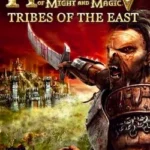
The final standalone expansion brought the fiercely anti-magic Stronghold Faction, starring the escaped mutant slave tribes of the Orcs. Orcs reject standard magic paths entirely, instead accumulating Blood Rage meters mid-combat. As they deal or take damage, their rage levels surge, allowing them to naturally absorb incoming physical blows and hit with catastrophic momentum.
More importantly, Tribes of the East introduced Alternate Upgrades for every single unit in the game. Every base creature now features two completely different upgraded paths, effectively expanding the total unit roster to 177 creatures. For example:
| Base Unit (Tier 4) | Upgrade Path A | Upgrade Path B (Alternate) |
| Griffin (Haven) | Imperial Griffin (Gains Battle Dive Area-of-Effect attack) | Battle Griffin (Gains Infinite Retaliation passives) |
| Vampire (Necropolis) | Vampire Lord (Standard life-leech attack) | Nosferatu (Sacrifices high damage to cast aura-debuffs) |
| Succubus (Inferno) | Succubus Mistress (Ranged chain-fire counter-attack) | Succubus Seducer (Gains active Mind Control capabilities) |
The Modern Standard: The Heroes 5.5 Mod
While the official lifecycle concluded in 2007, Heroes V experiences an incredible competitive and casual renaissance today through Heroes 5.5. This monumental, community-maintained overhaul completely reconstructs the engine framework. It integrates a fast 64-bit executable, implements a vastly superior, balanced, and fully visible interactive Skill Wheel inside the UI, adds a massive randomized map generator system, and unifies all separate campaigns and faction balances into a singular, polished modern gameplay client.
Release History
- Heroes of Might and Magic V (Base Game): May 19, 2006 (Europe) / May 24, 2006 (North America)
- Hammers of Fate (Expansion 1): November 14, 2006 (North America) / November 17, 2006 (Europe)
- Tribes of the East (Expansion 2): October 12, 2007 (Europe) / October 19, 2007 (North America)
- Modern Packaging: Natively bundled together as the definitive digital package, Heroes of Might and Magic V: Bundle, available on storefronts like GOG and Ubisoft Connect.