Blitzkrieg 2
 75
★ /10
75
★ /10
 PC
PC Nival
Nival 1C-SoftClub
 CDV
CDV

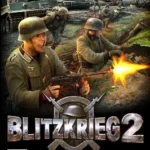
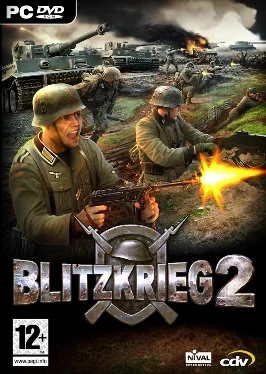
Blitzkrieg 2 (2005) represents the grand architectural evolution of Nival Interactive’s World War II real-time tactics formula. While it staunchly maintained the core identity of its predecessor—refusing to clutter the battlefield with base-building or resource mining—it dragged the mechanical backend into a fully 3D engine, aiming to balance the strict simulation of the original game with the high-octane accessibility of mid-2000s RTS titles.
The Jump to 3D and Tactical Destruction
The most immediate change from the first game was the replacement of the 2D isometric Enigma engine with a fully 3D graphical landscape.
- Dynamic Camera & Visibility: Players were finally given free-reign over camera manipulation, allowing them to scroll, tilt, and zoom directly into the thick of combat lines to verify firing angles or check terrain elevation.
- Physical Havoc: The 3D engine enabled complete structural destruction. Forests could be entirely ironed out by advancing tank columns, and walls or multi-story buildings could be occupied by infantry squads and subsequently collapsed by heavy artillery fire, altering line-of-sight and cover dynamically.
The Operational Map & Reinforcements
Instead of dropping players into an unyielding, linear sequence of pre-allocated maps, Blitzkrieg 2 introduced a strategic campaign layer.
- Choosing Your Battles: Each chapter presented an operational map littered with primary and secondary objectives. Capturing a specific railway station or securing a local airfield on a secondary map granted macro-level advantages, such as unlocking heavier tanks or faster air support for the primary historical breakthrough mission.
- Unified Reinforcement Pools: You no longer had to survive solely with what you started with on the map. The game introduced a deployment interface where players spent finite reinforcement points to call in specialized waves—like tank platoons, paratroopers, or heavy anti-armor batteries—directly into secured checkpoints during a match.
The Commander System and Veterans
To lean further into the tactical importance of preservation, the expansion mechanics prioritized unit identity:
- Appointing Leaders: Players could assign historical or specialized commanders to specific weapon categories (e.g., Tanks, Artillery, Infantry).
- Skill Trees: As those specific unit types saw success on the battlefield, the assigned commander accumulated experience. This unlocked permanent upgrades and special abilities for your roster, such as enabling tanks to fire smoke screens, infantry to dig rapid trenches, or artillery crews to execute precision tracking barrages.
The Three Global Campaigns
The base game features three massive single-player campaigns divided into distinct geographical chapters:
- The American Campaign: Uniquely starts in the Pacific Theater, forcing players to wage bloody amphibious island-hopping campaigns against the Imperial Japanese Army across the Philippines and Guadalcanal before shifting to the European Western Front for the final push into the Ruhr Valley in 1945.
- The German Campaign: Tracks the high-speed maneuvers of the 1940 invasion of France, moves to the harsh deserts of North Africa for the capture of Tobruk, shifts to the Eastern Front during Case Blue, and finishes with a desperate assault during the Battle of the Bulge.
- The Soviet Campaign: Begins during the chaotic, desperate defensive holding patterns of Operation Barbarossa in 1941, tracking the brutal multi-year war of attrition through the Eastern Front before concluding with the final cinematic assault on the Reichstag in Berlin.
Summary
Blitzkrieg 2 is remembered as a successful, action-forward modernization of the real-time tactics genre. By introducing a dynamic reinforcement framework, customizable unit commanders, and complete 3D environmental destruction, it took the heavy, cerebral homework of early 2000s military simulations and repackaged it into an accessible, visually explosive theater of war that still demanded combined-arms competence.
Release Platforms & Add-ons
- Microsoft Windows (PC): September 2005
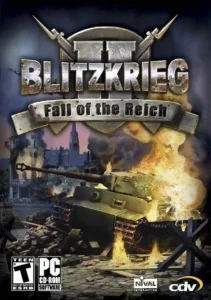
- Blitzkrieg 2: Fall of the Reich (2006 Expansion): Focused on the final, desperate days of the Eastern Front, featuring campaigns like the Siege of Budapest and Operation Bagration.
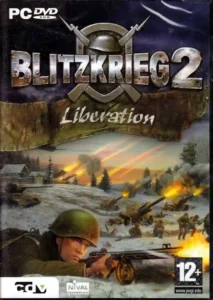
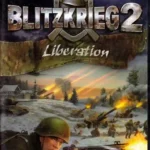
- Blitzkrieg 2: Liberation (2007 Expansion): Focused on the Allied advance through Italy and the German retreat from France.
- Blitzkrieg 2 Anthology: The complete digital bundle including the base game and both expansions, fully scaled and optimized for modern hardware compatibility on Steam and GOG.