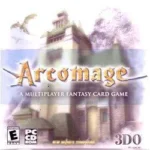
Arcomage
 PC
PC
 New World Computing
 The 3DO Company
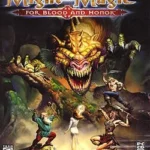
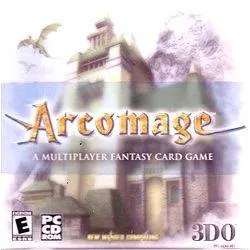
Arcomage (2000) is one of the most celebrated mini-games in PC history. Originally built as a tavern distraction to gamble for gold in Might and Magic VII: For Blood and Honor (1999) and Might and Magic VIII: Day of the Destroyer (2000), the card game became an absolute obsession for players.
Fan demand was so overwhelming that the developer, Stickman Games, polished the framework and sold it to The 3DO Company, who published it as a low-cost, standalone multiplayer game.
Core Gameplay Matrix
Arcomage simulates a strategic duel between two rival wizards vying for territorial supremacy. Each player commands a custom castle layout consisting of a Tower (your life points) and a Wall (your defensive shield).
Every turn, players draw from a shared deck to maintain a 6-card hand. You must either play a card by spending the required resources or discard a card to cycle your hand, forfeiting your turn.
The Trinity of Resources
The strategy relies entirely on balancing your resource generation economy. Your production values increase at the start of every round based on the level of your resource engines:
| Resource Type | Income Engine | Card Identity & Main Function |
| Bricks (Red) | Quarries | Focused heavily on fortifications. Bricks are used to fortify your Wall or increase your base Quarry production. |
| Gems (Blue) | Magic | Used for complex spellcraft. Gems heal or raise the height of your Tower, grant extra cards, or manipulate production mechanics. |
| Recruits (Green) | Dungeons / Zoos | Focused on military offense. Recruits summon monsters and armies to deal direct raw damage to the enemy’s Wall or Tower. |
Tactical Damage Rule: Damage from cards hits the enemy Wall first. If the Wall is completely destroyed, any remaining surplus damage bleeds over directly into the Tower.
Three Paths to Victory
Unlike traditional trading card games where reducing an opponent’s life total to zero is the only goal, Arcomage offers three mutually exclusive win conditions, allowing for brilliant mechanical pivots mid-match:
- Tower Destruction: Reduce your opponent’s Tower health down to 0.
- Tower Construction: Build your own Tower up to a designated peak height (e.g., 50 or 100 points, depending on custom rules).
- Resource Accumulation: Hoard a massive supply of any one of the three primary resources (e.g., 300 bricks, gems, or recruits).
Standalone Version Upgrades
While the baseline rules remained identical to the RPG tavern variants, the 2000 standalone release offered several essential features for fans:
- The Multiplayer Evolution: The headline selling point. While the RPGs restricted players to predictable computer AI, the standalone client officially introduced LAN and TCP/IP network play, enabling authentic 1v1 multiplayer duels over the internet.
- Expanded Deck Pools: The retail version bundled in a significantly larger card index, introducing new high-cost cards, balance updates, and chaotic action effects not present in Might and Magic VII.
- Custom Parameter Settings: Players gained the capability to tweak match criteria prior to a lobby start, defining custom starting tower heights, wall parameters, and victory limits to speed up or lengthen matches.
Technical Timeline & Modern Legacy
- PC (Microsoft Windows): Released in February 2000 as a digital and low-cost retail package.
- Modern Lifecycle: Because 3DO went bankrupt shortly after release, the official client has long been abandoned. However, its core blueprint heavily inspired mainstream digital card games like Gwent or Hearthstone.
- The Remastered Fan Base: Today, the community preserves the spirit of the game via open-source browser and application remakes, most notably MArcomage (an expanded online multiplayer adaptation) and Arcomage HD (a free, web-based open-source 3D recreation).