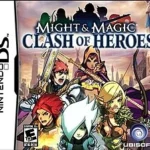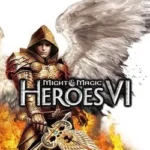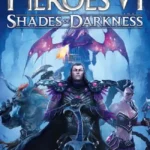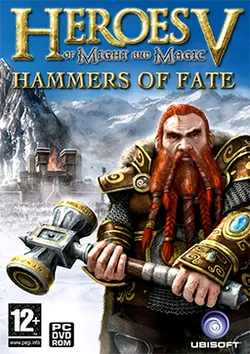
Heroes of Might and Magic V: Hammers of Fate
Expansion of Heroes of Might and Magic V 66
★ /10
66
★ /10
 PC
PC Nival
Nival 1C Company
 Ubisoft

Heroes of Might and Magic V: Hammers of Fate (2006) is the first official expansion pack to Nival Interactive and Ubisoft’s soft-reboot of the legendary turn-based strategy franchise.
Arriving just six months after the highly successful launch of the base game, Hammers of Fate prioritized addressing the community’s biggest quality-of-life complaints. It re-engineered macro-logistics, dramatically expanded the political lore of the world of Ashan, and introduced a highly unique, underground-dwelling faction that operated on an entirely separate economy.
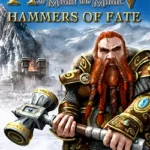
The New Faction: The Fortress (Dwarves)
The headline addition of the expansion is The Fortress, introducing the stout, isolationist, mountain-dwelling clans of the Dwarves. Mechanically, the Dwarven roster is designed for maximum defensive endurance, high magic resistance, and slow-moving, retaliatory brute force.
The Roster:
- Tier 1: Defenders / Shieldguards (High-defense frontline tanks)
- Tier 2: Skirmishers / Blackbrand Skirmishers (Ranged axethrowers who trap enemies in place)
- Tier 3: Bear Riders / Blackbear Riders (High-health cavalry that knock back enemy formations)
- Tier 4: Brawlers / Berserkers (Melee shock-troops immune to mind-control)
- Tier 5: Rune Priests / Rune Patriarchs (Ranged casters who drop area-of-effect fire walls)
- Tier 6: Thanes / Warlords (High-mobility shock units capable of throwing chain lightning)
- Tier 7: Fire Dragons / Magma Dragons (Colossal, slow-moving behemoths that radiate fire shields and explode upon death)
The Mechanical Divergence: Rune Magic
Dwarven Runemages treat the combat grid completely differently than standard wizards. Instead of (or in addition to) spending traditional Mana points from a Hero’s pool to cast standard spells, the Fortress faction utilizes Rune Magic.
- The Resource Economy: Activating a Rune consumes raw physical resources (Gold, Wood, Ore, Gems, Mercury, Sulfur, or Crystals) directly from your kingdom’s global treasury.
- Unit-Level Execution: Runes are cast directly by individual dwarven units on their specific initiative turn.
- The Tactical Buffs: These Runes grant immediate, short-term buffs. For example, the Rune of Charge consumes wood/ore to instantly double a unit’s speed for one turn, the Rune of Immateriality grants a 50% chance to dodge physical strikes, and the Rune of Resurrection revives fallen soldiers in the squad using rare gems.
- The Resource Tax: If a player tries to activate the exact same Rune multiple times in a single battle, the resource cost doubles with each subsequent invocation, forcing careful management of your global stockpiles.
The Return of the Caravan System
Perhaps the most universally celebrated addition in Hammers of Fate was the official re-integration of the Caravan system. Re-engineered from its rough debut in Heroes IV, the Caravan completely solved the tedious end-of-week micromanagement cycle.
Instead of requiring players to recruit weak secondary “mule” heroes to manually pick up units from far-flung creature dwellings and walk them across the map, players could use the town interface to order troops from across their empire. The units would group into an automated caravan and travel autonomously to your chosen frontline fort over a set number of days.
The Renegades and the Civil War Campaign
The expansion packs a massive, interconnected 15-mission single-player campaign split cleanly across three distinct narrative acts. The story picks up directly after the base game, following the Holy Griffin Empire as a vicious civil war tears the human factions apart.
The Red Menace: Renegade Troops
The campaign introduces Renegade Haven units. Led by the fanatical Archbishop Randall and the ruthless executioner Laszlo, these are radicalized, crimson-clad alternative variants of the standard human military. They possess slightly altered stat blocks and highly aggressive passive traits (such as the Tier-1 Enforcer, who hits with a shield bash, or the Tier-6 Champion of Light, who deals extra damage based on tiles traveled).
[Act 1: Freyda's Dilemma] -> [Act 2: Wulfstan's Defiance] -> [Act 3: Ylaya's Quest]
  (Haven / Renegades)            (Fortress / Dwarves)           (Dungeon / Dark Elves)
- Freyda’s Dilemma (Haven): Tracks Godric’s daughter, Freyda, as she is forced to lead the Empire’s armies to ruthlessly purge human rebels, causing her to slowly question the sanity of Queen Isabel.
- Wulfstan’s Defiance (Fortress): Follows the rogue Dwarven clan leader Wulfstan as he defies his own King’s isolationist orders to protect human refugees fleeing across the mountains.
- Ylaya’s Quest (Dungeon): Follows a mysterious Dark Elf priestess who must navigate a fractured underground shadow-war to locate the fugitive Raelag and uncover the dark secret behind the fake Queen Isabel.
Technical Specifications & Timeline
- Developer: Nival Interactive
- Publisher: Ubisoft
- Release Date: November 14, 2006 (PC / Microsoft Windows)
- Multiplayer Additions: Officially introduced Simultaneous Turns for online matchmaking, drastically cutting down on downtime by allowing players to move, build, and fight creeping neutral monsters concurrently until their operational zones intersect.
- Modern Integration: The expansion is fully optimized and natively packaged alongside the base game and Tribes of the East inside the Heroes of Might and Magic V: Bundle digital collection on GOG and Ubisoft Connect.