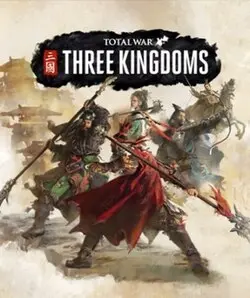
Total War: Three Kingdoms
 85
★ /10
85
★ /10
 PC
PC
 1C-SoftClub,
  SEGA Corporation


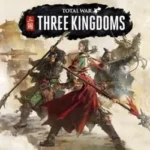
Total War: THREE KINGDOMS (2019) stands as one of the most critical, record-breaking, and structurally revolutionary turning points in the history of the legendary grand strategy and real-time tactics franchise. Following the exhausting market fatigue of traditional flat sandbox maps and the subsequent stagnation of generic faction rosters, the future of historical strategy required an absolute mechanical overhaul.
British developer The Creative Assembly stepped in, boldly reconstructed the franchise’s underlying social mechanics, and focused development duties on a grand, character-driven canvas. Faced with the intense task of proving that historical entries could match the cinematic flare of their fantasy spin-offs, Creative Assembly delivered a masterpiece that shattered franchise records—becoming the fastest-selling game in Total War history and dominating Steam concurrent player charts.
The Bifurcated Reality: Romance vs. Records Mode
Three Kingdoms completely severed ties with the rigid, singular historical constraints of its predecessors. Instead, it established a groundbreaking, dual-mode engine framework set during the chaotic Fall of the Han Dynasty and the Dawn of the Three Kingdoms Era (190 AD):
- Romance Mode: Based on Luo Guanzhong’s legendary epic Romance of the Three Kingdoms. In this mode, Generals operate as larger-than-life, lone-unit superhero demigods on the 3D tactical field. They boast devastating active abilities, single-handedly shatter infantry lines, and engage in high-stakes, real-time cinematic Duels to the death mid-battle to permanently break opposing army morale.
- Records Mode: A traditionalist’s dream. This mode strips away the mythos to present a hardcore, gritty historical simulation. Warlords do not fight alone; they are flanked by an elite, traditional cavalry bodyguard retinue. Battle mechanics shift entirely back to classic tactical parameters—prioritizing combat positioning, physical fatigue mapping, and complex combined-arms maneuvers.
The Core Evolution: Social Philosophy & Numerical Diplomacy
Creative Assembly heavily re-engineered their engine to transition away from anonymous, automated empire building, centering every macro and micro decision around human capital:
- The Guanxi Social Network Matrix: Dynamic character relationships are explicitly modeled on Guanxi—the Chinese philosophy of inter-personal connectivity. Every character in your empire tracks complex personal opinions, forming deep friendships, burning rivalries, or blood feuds with other heroes based on your campaign choices. A disgruntled general can spontaneously defect, steal your treasury, or spark an internal civil war; conversely, a loyal oath-brother will fight with double the efficiency if his companion is slain in battle.
- The Wu Xing Retinue System: The production loop threw out uniform regional recruitment. Armies are hard-locked to an intimate trio of individual heroes, with each hero bringing a custom Retinue of up to six squads. Recruitment parameters are dictated by a hero’s color-coded Wu Xing (Five Elements) class tier, transforming army design into a strict tactical matching puzzle:
| Character Class / Color | Element Attribute | Primary Retinue Profile | Core Tactical Combat Role |
| Vanguard (Red) | Fire | Heavy Shock Cavalry | High-velocity impact flankers built to shatter line infantry. |
| Champion (Green) | Wood | Heavy Spearmen / Glaives | Maximum physical health pool; acts as an unyielding anti-cavalry anvil. |
| Sentinel (Purple) | Metal | Shielded Melee Infantry | Exceptional defensive stats; designed to absorb incoming missile lines. |
| Strategist (Blue) | Water | Crossbows, Trebuchets, Formations | Unlocks complex unit tactical layouts (e.g., Circle, Loose) and long-range siege. |
| Commander (Yellow) | Earth | Melee Cavalry / Sabres | Boosts nearby friendly troop morale and provides a passive shield aura. |
- The Reworked Numerical Diplomacy Engine: Deleting the nebulous, frustrating “low/medium/high” barter logic of older titles, Three Kingdoms introduced an incredibly precise, mathematically transparent trade interface. Every single deal—from marrying off a family member to trading a border territory or trading surplus food items—is calculated against a hard, visible numerical value score (+/-), allowing players to negotiate with absolute precision.
The Deep Meta: The Three Emperors Dynamic
To maximize endgame tension, Three Kingdoms threw out traditional conquest rules in favor of an unyielding political race. As your custom warlord wins campaigns, captures commanderies, and builds regional prestige, your faction levels up toward imperial status.
The moment your faction claims the top prestige tier, the engine triggers a massive paradigm shift. Instantly, your faction leader claims the Mandate of Heaven and declares themselves absolute Emperor. Simultaneously, the two other strongest AI warlords on the map immediately crown themselves rival Emperors.
The entire map dynamically fractures into three monolithic kingdoms, breaking all existing coalitions and locking the remaining turn-based campaign into a brutal, multi-front war of survival where you must march on the rival imperial capitals to unify China under a single dynasty.
Distinct Warlord Currencies
Every legendary leader utilizes entirely exclusive mechanical mechanics to alter empire management:
- Cao Cao (The Strategic Mastermind): Generates Credibility over time, which can be spent to actively manipulate relationships between AI factions—triggering proxy wars between rival kingdoms without deploying a single soldier.
- Liu Bei (The Virtuous Leader): Gathers Unity currency, allowing him to peacefully annex neutral Han territory out-of-the-box and boost local city satisfaction.
- Sun Jian (The Tiger of Jiangdong): Cultivates Heroism, reducing unit upkeep costs and boosting troop replenishment speeds based on his personal bravery in combat.
The 1.7.1 Legacy: Abrupt End & Ongoing Mastery
A primary point of discussion within the strategy community centers around the game’s post-launch life cycle. In May 2021, following seven major DLC expansions—ranging from the timeline-shifting Mandate of Heaven to the distinct faction layouts of The Furious Wild—Creative Assembly released a highly polarizing developer update. They announced they were ending all future patches and content for the game, locking it into its final version: Patch 1.7.1.
Despite this sudden halt in development, Three Kingdoms experiences a massive, highly respected legacy renaissance. Running natively on a highly optimized, modern 64-bit multi-core engine shell, the game stands as one of the smoothest, visually spectacular titles in the modern catalog.
Strategy purists leverage its crisp UI scaling to play out campaigns in native 1440p and 4K widescreen configurations under Windows 10 and Windows 11 with zero technical friction. Serving as a premier sandbox platform, the active modding community continues to expand the game via extensive total conversion overhauls—such as TROM (The Radious Overhaul Modification) and Serious Trivia’s deep campaign adjustments—maintaining its position as a monumental achievement in historical strategy gaming.