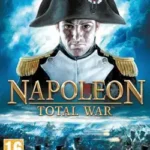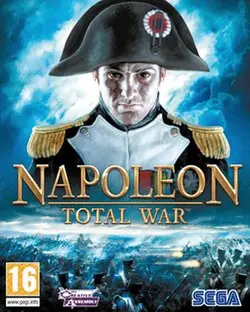
Napoleon: Total War
 81
★ /10
81
★ /10
 Android,
  iOS (iPhone/iPad),
  PC
PC
 1C-SoftClub, Feral Interactive,
  SEGA Corporation
Where to buy

Total War: NAPOLEON (2010) stands as one of the most critical, hyper-focused, and mechanically refined turning points in the history of the legendary grand strategy and real-time tactics franchise. Following the exhausting market fatigue of the massive, chaotic macro-sprawl seen in Empire: Total War, the stability of the series’ newly minted Warscape Engine was highly volatile.
British developer The Creative Assembly stepped in, boldly shifted away from open-ended sandboxes, and focused development duties on a tight, character-driven biographical framework. Faced with the intense task of restoring a deeply passionate community after the technical friction of previous gunpowder experiments, Creative Assembly delivered a stellar, redemptive chapter that bridged historical narrative drama with crucial logistical and tactical technological leaps.
The Grand Reset: Biographical Theaters & The Attrition Trap
Napoleon: Total War completely severed ties with the wide-open, unguided global map layers of its predecessor. Instead, it established a tightly constructed, highly intimate narrative continuity: The Military Career of Napoleon Bonaparte (1796–1815).
The game’s geopolitical landscapes and regional campaigns are hardcoded into three tightly wound linear narratives alongside an endgame scenario:
- The Italian Campaign (1796): A fast-paced, low-tier resource blitz to conquer Piedmont and force Austria out of Northern Europe.
- The Egyptian Campaign (1798): An isolated, high-risk economic sandbox tasking players with securing trade links across the Nile while managing massive local rebellions.
- The European Grand Campaign (1805–1812): The definitive multi-front strategic puzzle, challenging you to achieve total continental dominance as France, or command Coalition forces (Great Britain, Russia, Prussia, or Austria) to dismantle the French Empire.
- The Battle of Waterloo (1815): The ultimate historical standalone tactical showcase, acting as a final mathematical challenge of positional defense and positioning.
The Environmental Attrition Matrix
The strategy layer completely abandoned safe, limitless border marching. Napoleon introduced real-time climate penalization. Leaving your armies standard-marching through the biting winter snows of the Russian steppe or the scorched sands of the Egyptian desert dynamically triggers automatic Climate Attrition, physically wiping out percentages of your troop columns every turn before they can ever cross paths with enemy lines.
The Core Evolution: Localized Supply Chains & Active Generalship
Creative Assembly heavily overhauled the Warscape battlefield mechanics to transition away from anonymous unit blobs and magical army preservation:
- The Leap to Unit Replenishment Lines: Armies completely abandoned manual retrain clicks inside localized faction factories. The engine introduced automated troop replenishment, which is strictly bound to geographic proximity. An army will only slowly heal its wounds if it rests within a friendly region or sits adjacent to a custom Supply Depot infrastructure node, turning logistics and supply line defense into a primary strategic vulnerability.
- The Area-of-Inspiration General Combat Loop: Generals are no longer just expendable morale badges on the tactical grid; they act as localized, real-time stat multipliers. Key historical commanders project a visible Area of Inspiration radius. Actively positioning your General near breaking line infantry lets you trigger manual cooldown matrices like Rally or Inspire, instantly stabilizing firing accuracy and driving morale columns up during brutal firefights.
- Modular Mid-Battle Naval Repairs: The 3D naval combat engine evolved significantly from Empire. Wooden warships taking heavy damage can be ordered to actively initiate structural repairs directly in the heat of battle. This forces the ship to temporarily halt all movement and cannon firing, introducing a high-stakes micro-management layer as players calculate whether to drop sails to fix a burning hull component or maintain their broadside fire.
The Deep Meta: Political Conversion & The Guerrilla Inversion
To maximize macro-strategy tension across specific expansions (such as the highly celebrated Peninsular Campaign), Napoleon threw out generic faction happiness to introduce a dynamic Political Alignment scale.
The Sentiment Tug-of-War
Provinces track pro-French versus pro-Coalition sentiment. Leaving an opposing territory ungoverned doesn’t just lower taxes; it actively spawns continuous guerrilla resistance fighters. Factions must deploy specialized agents—such as the French Provocateur or Spanish Priest—to actively manipulate public sentiment columns, mathematically shifting local thought patterns to permanently pacify captured strongholds.
Superpower Strategic Profiles & Specialized Roster Elements
The table below demonstrates the asymmetry between the primary European empires, outlining their distinct mechanical bonuses and game-changing elite units:
| Faction Alliance | Strategic Campaign Passive | Elite Unit Variant | Tactical Role & Battlefield Passives |
| The French Empire | Accelerated industrial research speeds and reduced military recruitment costs. | Old Guard | The ultimate heavy shock infantry anvil. Radiates a passive morale boost to all nearby friendly units and refuses to rout under panic. |
| Great Britain | Supreme global maritime trade margins and unmatched ship construction scaling. | 95th Rifles | Hyper-long-range skirmish line sharpshooters. Bypasses standard musket distance limits; utilizes exceptional stealth passives. |
| The Russian Empire | Drastically reduced unit attrition damage penalties when weathering harsh winters. | Semenovski Lifeguard | Elite defensive guard footmen specializing in rapid-reload volley fires to shred incoming skirmish swarms. |
| Kingdom of Prussia | Superior army replenishment speed and exceptional unit training veterancy baselines. | Life Hussars | High-velocity, elite light shock cavalry built to break enemy line flanks and systematically execute retreating artillery crews. |
The Modern Standard: The Handheld Shift & Modding Dominance
While the game’s native PC build is well-preserved through the official Definitve Edition packaging on Steam, Napoleon: Total War is experiencing a massive cross-platform renaissance today. In a monumental technological milestone, porting experts Feral Interactive brought the entire grand strategy game and real-time tactical battles natively to iOS and Android devices.
This mobile transformation includes a complete, fully optimized touch-control user interface, enhanced radar tracking, and pristine performance scaling on modern smartphone and tablet systems. On the PC side, the title serves as the premier engine platform for massive, highly ambitious community total conversions—most notably DarthMod Napoleon (which vastly multiplies unit numbers and musket smoke physics), and the ahistorical The Great War mod, which completely reshapes the Warscape client to simulate World War I trench warfare, machine guns, and early tanks.
Release History
- Napoleon: Total War (Original PC Launch): February 23, 2010 (North America) / February 26, 2010 (Europe)
- The Peninsular Campaign (Expansion Pack): June 2010 (Introduces independent Iberian map with guerrilla mechanics)
- Napoleon: Total War — Definitive Edition (Steam Integration): 2018 (Compiles all elite unit packs and DLC modules)
- Feral Interactive Mobile Port (iOS & Android): Late 2025