 75
75  Android,
  iOS (iPhone/iPad),
  PC
PC
 SEGA Corporation
Where to buy

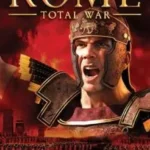
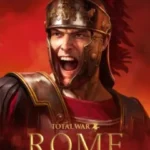
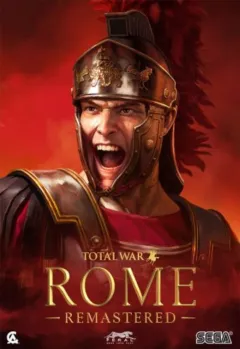
Total War: Rome Remastered (stylized as Total War: ROME REMASTERED) is a grand strategy and real-time tactics video game co-developed by Creative Assembly and Feral Interactive, and published by SEGA. Released on April 29, 2021, it is a comprehensive modernization of the critically acclaimed 2004 title Rome: Total War, which is widely regarded as the foundational breakthrough that defined the modern identity of the Total War franchise.
The remaster introduces full 4K visual optimizations, native ultra-widescreen support, and massive mechanical structural revisions—including a completely overhauled user interface, a brand-new economic agent type, and the unlocking of 16 previously unplayable factions.
Technical Specifications
| Attribute | Details |
|---|---|
| Developer(s) | Creative Assembly, Feral Interactive |
| Publisher | SEGA |
| Engine | Upgraded Total War Engine (Ported to full 64-bit architecture) |
| Platform(s) | Microsoft Windows, macOS, Linux |
| Release Date | April 29, 2021 |
| Genre(s) | Grand strategy, Real-time tactics |
| Modes | Single-player, Multiplayer (Cross-platform) |
Gameplay Architecture & Modern Overhauls
Total War: Rome Remastered retains the classic dual-layer gameplay loop of the original 2004 masterpiece: a turn-based geopolitical campaign map where players manage diplomacy, infrastructure, and taxation, seamlessly shifting into real-time tactical battles commanding thousands of historically modeled soldiers. Feral Interactive extensively re-engineered the underlying mechanics to realign the classic title with contemporary strategy design standards.
Visual and Environmental Overhaul
The graphics pipeline was completely updated to support native UHD/4K resolution matrixes. Buildings, structural objects, and battle map models were entirely re-textured and re-modeled. The visual update introduces dynamic environmental layers, including volumetric dust clouds and real-time heat haze distortions on arid battlefields. The campaign map was also redesigned with higher-fidelity geographic geography assets and modernized foliage shading.
The Merchant Agent and Economic Systems
The remaster updates the classic macroeconomic layout by introducing a brand-new operational unit: The Merchant.
- Merchants can be trained at commercial structures and dispatched across the global campaign map to sit atop raw resource nodes (such as Silk, Wine, Spice, or Gold).
- Stationing a Merchant grants a continuous turn-by-turn cash influx directly to your treasury based on the value and rarity of the resource.
- Crucially, Merchants can launch hostile Buyouts against competing foreign merchants, forcefully absorbing their assets via economic subversion to establish lucrative, state-sanctioned monopolies.
Expanded Faction Spectrum
In the original 2004 release, players were strictly restricted to a small hand-picked roster of Roman families and major cultures, leaving the vast majority of historical factions locked out from campaign interactions. The remaster natively removes these arbitrary script blocks, introducing 16 previously unplayable factions to the playable selection pool. This brings the total grand count to 38 playable civilizations—allowing players to command factions ranging from the nomadic Scythians and Iberian tribes to Numidia and Thrace.
User Interface & Quality-of-Life Revisions
To smooth out the cumbersome menu tracking of the early 2000s, the user interface was completely overhauled:
- Tactical Overlays and Heat Maps: The strategic campaign map features newly integrated icon overlays and graphic Heat Maps. Players can instantly toggle these lenses to visually assess complex imperial vectors at a glance, mapping out regional public security levels, diplomatic leanings, financial productivity, and cultural unrest.
- Enhanced Battle Command: Real-time tactical battles introduce an interactive 2D Tactical Mini-Map, advanced unit behavior displays, and clear range markers for missile units to maximize strategic micro-management over complex military lines.
- Camera Mechanics: Camera constraints were modernized, incorporating smooth campaign map rotation, free tilt, and a significantly expanded zoom range in both real-time battles and campaign screens.
- The Rule Choice Toggle: To respect franchise purists, the launcher includes an optional Classic vs. Remastered Ruleset toggle. This allows players to selectively disable Feral’s modern additions, returning unit pathfinding logic, base balance parameters, and classic AI diplomacy behaviors to the original 2004 engine baseline.
Bundled Expansion Campaigns
The remaster serves as a comprehensive preservation package, natively integrating two massive historical expansion packs directly inside the core application:
1. Barbarian Invasion
Set during the twilight of the ancient world, this campaign documents the terminal fracturing and decline of the Roman Empire. Players can attempt to hold the collapsing empire together as the Western or Eastern Roman Empire, or command massive, nomadic Horde Factions (such as the Huns, Goths, or Vandals). Horde factions introduce a unique migration mechanic: if their final settlement is razed, the entire culture transforms into a massive, homeless military column that can march across the map to forcefully carve out a fresh homeland in a new region.
2. Alexander
A highly focused, linear single-player narrative campaign tracking the legendary military conquests of Alexander the Great. Operating on a strict, running turn-limit countdown, players must execute a rapid, aggressive military campaign to dismantle the massive Persian Empire, testing their capacity for swift tactical maneuvers and unit conservation.
Preservation Modding and Current Status (2026)
Engine Modernization
The most important technical change in Total War: Rome Remastered is the complete migration of the old 2004 codebase from a single-core 32-bit architecture to a robust, fully optimized 64-bit multi-core framework. The original game was notoriously bottlenecked by its engine; even on high-end hardware, massive battles featuring more than 10,000 troops would encounter intense lag and engine-level crashes because the software could only utilize a single CPU core. Porting the code to 64-bit effectively eliminates these performance limits.
The 2026 Modding Scene
While official post-launch patches from Feral Interactive concluded in early 2022 (with Patch 2.0.4 stabilizing the core features), the remaster functions as a thriving sandbox platform in 2026. Thanks to full Steam Workshop integration and the removal of legacy hardcoded map and unit caps, the community hosts massive total-conversion modifications.
Landmark overhaul projects—such as RTR Imperium Surrectum (Rome Total Realism)—exploit the 64-bit engine to deliver massive grand campaign maps featuring thousands of settlements and historically accurate unit expansion rosters. The performance updates allow modern systems to seamlessly execute massive 4v4 multiplayer cross-play matches featuring close to 25,000 active troops simultaneously with flawless frame-pacing, preserving the classic era of grand strategy for modern historians.