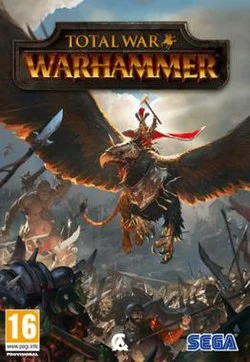
Total War: Warhammer
 86
★ /10
86
★ /10
 PC
PC
 1C-SoftClub,
  SEGA Corporation


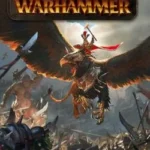
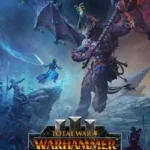
Total War: WARHAMMER (2016) stands as one of the most critical, highly ambitious, and fundamentally transformative turning points in the history of the legendary grand strategy and real-time tactics franchise. Following the exhausting market fatigue of traditional flat historical sandboxes and the subsequent creative ceiling of regular human infantry formations, the future of the series required a massive paradigm shift.
British developer The Creative Assembly took a monumental gamble, stepped entirely out of history, and focused development duties on a dark, grimdark high-fantasy canvas. Partnering with Games Workshop, they delivered a stellar chapter on May 24, 2016, that beautifully bridged the tactical depth of the Total War franchise with the rich, violent lore of Warhammer Fantasy Battles.
The Grand Reset: Leaving History in the Dust
Total War: Warhammer completely severed ties with the real-world historical timelines that had anchored the series for sixteen years. Instead, it established a brutal fantasy continuity: The Old World on the Brink of the End Times.
The world’s shifting geopolitical landscapes, subterranean cave networks, and imperial expansions are strictly governed by the fierce racial ideologies of completely unique fantasy species. The grand campaign plays out like an apocalyptic thriller, tracking rival kingdoms as they fight for territorial dominance, all while a catastrophic global threat looms in the icy North—where the arrival of Archaon the Everchosen and his unstoppable Chaos Warrior hordes threatens to tear down and permanently erase civilization.
The Core Evolution: Winds of Magic & Monstrous Vanguard
Creative Assembly threw out uniform, symmetrical human rosters to re-engineer their engine to accommodate magic, flight, and terrifying scale transformations on the battlefield:
- The Leap to Single-Entity Demigods: The 3D tactical field abandoned standard squad constraints. Characters operate as towering, larger-than-life heroes known as Legendary Lords (such as Emperor Karl Franz or Thorgrim Grudgebearer). These lords act as independent, multi-faceted units capable of single-handedly slaughtering hundreds of low-tier troops, triggering epic character duels, and unlocking custom RPG quest battles to claim legendary artifacts.
- The Winds of Magic Sorcery Suite: Real-time combat introduced a dynamic, regenerating energy resource known as the Winds of Magic. Players deploy specialized Wizards and Shamans to cast battlefield-altering spells—including destructive moving vortexes, armor-piercing magical projectiles, and massive stat buffs—transforming static military lines into highly reactive magical firefights.
- Flying Units and Monstrous Shock Ranks: Tactical geometry expanded vertically. The engine integrated true Flying Units (like Gyrocopters, Griffons, and Pegasus Knights) capable of completely bypassing frontline spearmen to isolate vulnerable backline artillery. This was backed by giant monstrous entities—including hulking Trolls, Arachnarok Spiders, and towering Giants—capable of physically smashing through braced shield formations.
The Deep Meta: Cultural Ideologies & Dimensional Corruption
To maximize faction asymmetry within its macro-framework, Warhammer throwing out generic infrastructure paths. Every single race was granted a mandatory, entirely exclusive ideological metric that dictated their campaign map strategy:
- The Great Book of Grudges (Dwarfs): Slighting the Dawi (sacking a city, losing a battle) writes a literal entry into a persistent racial ledger. Failing to avenge these grievances spikes global unrest and tanks economic output, forcing a strict campaign focus on absolute retribution.
- Fightiness & The Waaagh! (Greenskins): Orc and Goblin armies track an active momentum meter. Winning consecutive battles drives Fightiness up; hitting maximum capacity spawns a massive, completely autonomous AI reinforcement stack (a Waaagh!) that hitches directly to your army to steamroll targets.
- Vampiric and Chaos Corruption: Undead and demonic factions actively pollute the physical landscape. Spreading dimensional corruption visually mutates map textures, crashes public order in enemy territories, and inflicts severe Attrition damage on living rival armies foolish enough to step across your borders without preparation.
The Regional Occupation Gate
A defining, hardcore rule of the 2016 launch client was strict geographic lockouts. Factions could not paint the map a single color. Humans and Vampire Counts could only occupy temperate plains and cities, while Dwarfs and Greenskins were hard-gated to capturing hold coordinates inside subterranean mountain ranges and the barren Badlands, making regional raiding and vassalage primary strategic tools.
Faction Strategic Profiles & Roster Asymmetry
The launch version of the game established the initial framework for four iconic fantasy superpowers:
| Faction Race | Strategic Campaign Passive | Core Roster Archetype | Tactical Battlefield Role & Passives |
| The Empire (Humans) | Highly balanced diplomacy and versatile global trade setups. | Combined-Arms Master | Extremely well-rounded; relies on structured line infantry, devastating gunpowder artillery, and diverse wizard choices. |
| The Dwarfs (Dawi) | Subterranean Underway stance to tunnel completely beneath impassable mountain ranges. | Slow, Plated Anvil | Possesses zero cavalry options; relies on iron-clad heavy armor, magic-resistant runes, and high-precision missile fire. |
| The Greenskins (Orcs/Goblins) | Gains massive bonus economy and loot pools from raiding and sacking settlements. | Aggressive Swarm | High-velocity melee infantry and monstrous giants built to quickly panic enemy morale via raw frontline weight. |
| Vampire Counts (Undead) | Can instantly resurrect dead units directly from mass grave battle sites. | Fear & Terror Infiltrators | Completely lacks ranged missile weapons; relies on fast flying beasts, heavy shock cavalry, and health-regeneration necromancy. |
The Trilogy Blueprint: The Immortal Legacy Meta
While the game’s official standalone content cycle concluded following major race drops (like the Realm of the Wood Elves and Call of the Beastmen expansions), the 2016 title stands as the absolute foundational architecture for one of the greatest trilogies in PC gaming history.
Through Creative Assembly’s consecutive launches of Total War: Warhammer II (2017) and Total War: Warhammer III (2022), the original game serves as a mandatory structural keycard. Owning the original title natively unlocks its entire geography, legendary lords, and factions inside the massive, combined global mega-sandbox map known as Immortal Empires.
Fully optimized on a native 64-bit engine, the original game’s content scales into crisp, flawlessly sharp 1440p and 4K widescreen resolutions under contemporary Windows 10 and Windows 11 frameworks, remaining a massive strategy monument as the community eagerly awaits the next generation of fantasy strategy.
Release History
- Total War: Warhammer (Base Game Launch): May 24, 2016
- Call of the Beastmen (Expansion DLC): July 2016 (Introduced dynamic brayherd mechanics)
- Realm of the Wood Elves (Expansion DLC): December 2016 (Added the Amber economic system)
- Modern Packaging: Readily available on digital storefronts like Steam and GOG, serving as the essential building block to access the definitive cross-trilogy grand sandbox.