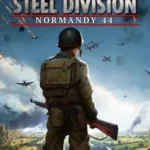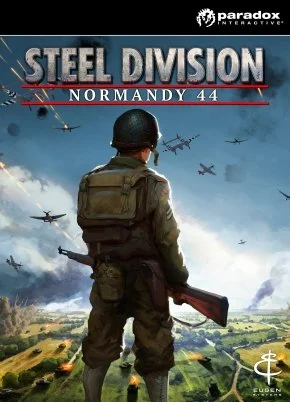
Steel Division: Normandy 44
 83
★ /10
83
★ /10
 PC
PC
 Eugen Systems
Where to buy

Steel Division: Normandy 44 (2017) stands as one of the most critical, hyper-authentic, and tactically demanding turning points in the history of the real-time tactical strategy (RTT) genre. Following the exhausting market fatigue of traditional base-building RTS clones and the structural complexity of their own modern-era Wargame franchise, Paris-based developer Eugen Systems pivoted.
Partnering with grand strategy publisher Paradox Interactive, they boldly threw out generic health-bar combat and focused development duties on a punishingly realistic, mechanically innovative simulation of World War II tactical warfare. Faced with the intense task of breathing new life into a crowded historical setting, Eugen delivered a stellar chapter that beautifully bridged macroscopic battlefield logistics with microscopic unit authenticity.
The Grand Reset: Tactical Historical Authenticity
Steel Division: Normandy 44 completely severed ties with the stylized, ahistorical military balancing of its contemporaries. Instead, it established an ironclad commitment to historical lore continuity: The Allied Invasion of Normandy during Summer 1944.
The game’s vast, sprawling battlefields were built using actual 1:1 scale WWII aerial reconnaissance photographs, capturing the claustrophobic reality of the French bocage—dense hedgerows, narrow dirt paths, and hidden village clusters. The single-player campaigns track the brutal, grinding reality of Western front operations, forcing players to step into the boots of real commanders navigating the tactical friction of the Overlord campaign across historically accurate Allied and Axis divisions.
The Core Evolution: Three-Phase Warfare & The Dynamic Front Line
Eugen Systems took the massive tactical scale of their Wargame series and completely re-engineered the mechanics, introducing two foundational features that redefined modern tactical pacing:
- The Hardcoded Three-Phase Combat Layout: Matches entirely abandoned steady, unchecked unit spams. Battles are strictly gated across three evolving time intervals: Phase A (Minutes 1–10; focuses on recon, light infantry skirmishes, and fast transport vehicles), Phase B (Minutes 10–20; introduces standard medium tanks, mechanized line infantry, and light artillery), and Phase C (Minute 20 to end; unleashes the heaviest armor, elite divisions, and devastating off-map heavy artillery). Units are hard-locked to specific phases within your deck, forcing a meticulous risk-versus-reward deployment strategy.
- The Dynamic Front Line Matrix: The map features a living, visible red and blue line that dynamically morphs across the grid based on the literal physical presence and suppression sphere of your units on the field. Territory control is constantly calculated; pushing a squad forward physically warps the front line, revealing empty territory and altering the strategic fog of war in real time.
- The Suppression & Surrender Loop: Units do not blindly fight to the death. Taking sustained fire spikes a squad’s Stress Meter, eventually pinning them to the ground and rendering them completely unresponsive to offensive commands. Crucially, if a heavily stressed, pinned unit is completely bypassed by the dynamic front line—meaning they are cut off and surrounded deep inside enemy territory—they will instantly Surrender the moment an opposing unit approaches, erasing the squad entirely without a single shot fired.
The Deep Meta: Battlegroup Calculus & Stress Mechanics
To maximize strategy variance, Steel Division threw out uniform faction rosters in favor of highly specialized Battlegroup Customization. Players utilize a card-based deck-building matrix to draft a single historical division (e.g., the US 101st Airborne or the German 21st Panzer), balancing an explicit trade-off between Veterancy (troop experience level) and Availability (the absolute number of units a single card grants).
The tactical depth plays out across heavily specialized, historical division profiles:
| Historical Division | Primary Faction | Roster Specialization | Tactical Role & Phase Meta |
| 101st Airborne “Screaming Eagles” | Allied (United States) | Elite Infantry & Airborne Deployment | Hyper-dominant in Phase A; relies on fast, high-veterancy paratrooper ambushes inside hedgerows but severely lacks heavy Phase C armor. |
| 21st Panzer Division | Axis (Germany) | Heavy Armored Breakthrough | Extremely weak early-game mapping; survives Phase A via light French capture vehicles before completely dominating Phase C via monolithic King Tiger tanks. |
| 3rd Canadian Infantry Division | Allied (Canada) | Mechanized Combined-Arms | Well-rounded, mid-game specialist; utilizes heavy Phase B line artillery and specialized automated fire support to grind down defensive walls. |
| 12th SS-Panzer “Hitlerjugend” | Axis (Germany) | High-Stress Zealot Armor | Units possess passive resistance to the Stress meter; relies on aggressive, high-damage panzergrenadiers and heavy anti-tank flak arrays. |
The Combat Mechanics: Line-of-Sight & Armor Thickness
On the 3D battlefield, real-time micro-management is governed by a strict mathematical approach to ballistic physics:
- The Line-of-Sight (LoS) Tool: Players can activate a real-time targeting overlay from any coordinate on the map. The engine calculates literal topographic obstacles, rendering exactly which sightlines are obscured by buildings, smoke clouds, or individual hedgerows, making recon units vital gatekeepers.
- Armor Penetration Calculus: Kinetic tank duels abandon generic hitpoint chipping. The engine tracks separate Front, Side, Rear, and Top armor thickness parameters. A shell fired from a standard Sherman tank will bounce harmlessly off the front plate of a German Panther tank, forcing players to execute calculated flanking maneuvers to score high-penetration critical hits against vulnerable rear hull plating.
The Modern Standard: The Sequel Legacy and Preservation Meta
While its active competitive development cycle naturally transitioned into the massive Eastern front sandbox of Steel Division 2 (2019), the original 2017 title experiences an incredibly stable, highly respected preservation meta today.
Natively preserved and maintained on Steam, the title completely avoids the game-breaking graphics glitches, multi-core processing errors, and third-party software exceptions that cripple older real-time tactical alternatives. Operating on a highly refined iteration of Eugen’s 64-bit engine, Normandy 44 scales beautifully into sharp 1080p, 2K, and 4K widescreen desktop resolutions under Windows 10 and Windows 11 out-of-the-box. This ensures that the gorgeous dynamic lighting, dense foliage textures, and intense multi-regiment tank clashes remain a highly polished benchmark for WWII strategy purists.
Release History
- Steel Division: Normandy 44 (Base Game Launch): May 23, 2017 (Published by Paradox Interactive)
- Second Wave DLC: September 2017 (Introduced elite new historical divisions like the US 4th Armored and German 9th Panzer).
- Back to Hell DLC: February 2018 (Finalized the content lifecycle by introducing high-stakes historical single-player missions and co-op operations).