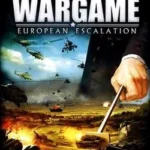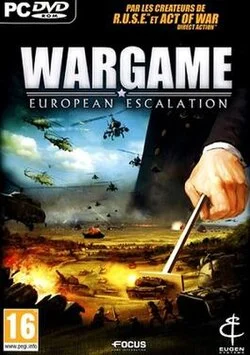
Wargame: European Escalation
 81
★ /10
81
★ /10
 PC
PC
 Eugen Systems
 1C-SoftClub,
  Focus Home Interactive
Where to buy
Wargame: European Escalation (2012) stands as one of the most critical turning points in the history of the legendary real-time tactics and modern strategy franchise. Following the exhausting market fatigue of traditional flat base-building clones and the subsequent structural stagnation of micro-intensive RTS gameplay, the future of authentic military simulation was highly uncertain.
French developer Eugen Systems stepped in, shifting away from their previous sci-fi action formulas, and focused development duties on a hardcore, macro-scale tactical engine. Faced with the intense task of defining a new gold standard for Cold War simulation, Eugen delivered a stellar, redemptive chapter that beautifully bridged classic miniature-tabletop wargaming rules with unprecedented technological scale leaps.
A Cold War Gone Hot
Wargame: European Escalation completely severed ties with both fictional sci-fi battlefields and historical World War II settings. Instead, it established a deeply realistic, highly volatile alternate-history continuity: The Height of the Cold War from 1975 to 1985.
The game’s geopolitical landscapes, industrial friction, and military operations are hardcoded into four distinct single-player campaign “Operations”. These scenarios trace timeline deviations based on genuine real-world flashpoints that historically came terrifyingly close to triggering World War III:
- 1975 – Brüder gegen Brüder: Explores an escalation along the Iron Curtain following an East German border defection, pulling both German nations into a full-scale civil war that drags their respective superpowers along.
- 1981 – Dabrowski’s Mazurka: Centers around a fictionalized Polish and Czechoslovakian uprising against Soviet martial law, triggering a massive Warsaw Pact fracturing and subsequent Western intervention.
- 1983 – ABLE ARCHER: Tracks a worst-case scenario where the real-world NATO exercise is misinterpreted by paranoid Soviet leadership as a smokescreen for an immediate preemptive strike.
- 1984 – Wasteland: A bleak endgame scenario where players command a rogue Soviet commander gathering multi-faction survivors across a scarred post-nuclear landscape.
The IrisZoom Engine & Logistical Realism
Eugen Systems deliberately looked back at board game mechanics and realistic military doctrines as their structural anchor, entirely throwing out resource base building, automated unit queues, and localized health points. Instead, they heavily evolved the strategy engine:
- The Leap to IrisZoom v2: Running on an upgraded, proprietary engine shell, the game enabled unmatched spatial scale. Players can seamlessly scroll from a microscopic bird’s-eye view of a single Leopard tank’s exhaust pipe up to an extreme macroscopic viewpoint displaying dozens of square kilometers of the German countryside.
- The Physics of Logistics and Resupply: Units completely abandoned limitless combat actions. Every vehicle and squad independently tracks Fuel reserves and Ammunition metrics. Running dry forces players to actively coordinate vulnerable supply truck routes moving back and forth from forward operating bases (FOBs), turning logistics supply chains into a primary tactical target.
- The Psychological Cohesion Matrix: Soldiers do not blindly fight to the death. Units under sustained artillery shelling or sudden ambush parameters accumulate a severe Stress/Morale meter. Taking heavy suppression tanks a squad’s combat cohesion—causing them to panic, tank their firing accuracy, or drop inputs completely to flee automatically into nearby cover.
National Deck Building & Bloc Asymmetry
To maximize macro-strategy depth, European Escalation introduced a card-based Deck Customization Suite across two major global alliances, which are further divided into eight highly asymmetrical national doctrines:
- NATO (The Technocrats): Emphasizes high-tech optics, superior individual weapon accuracy, and flexible helicopter integration across the United States, United Kingdom, France, and West Germany.
- Warsaw Pact (The Kinetic Juggernauts): Relies on overwhelming artillery barrages, mass-armored armor blocks, and cheap deployment loops across the Soviet Union, Poland, Czechoslovakia, and East Germany.
The sub-faction mechanics are strictly defined by their historical military architectures:
| Global Alliance | National Sub-Faction | Doctrines & Mechanical Specializations | Signature Roster Core |
| Warsaw Pact | Soviet Union (USSR) | Heavy armored breakthrough focus backed by devastating long-range heavy artillery arrays. | T-80 / Mi-24 Hind (Steel-plated heavy tanks and flying armor gunships). |
| Warsaw Pact | Poland | Rejects slow armor blocks to prioritize elite, hyper-fast mechanized infantry insertions. | Komandosi (High-speed, elite shock troops deployed via fast light transports). |
| Warsaw Pact | Czechoslovakia | Advanced domestic engineering yielding exceptional accuracy and mobility modifiers on mobile artillery. | DANA Artillery (High-precision, wheeled self-propelled siege gun arrays). |
| Warsaw Pact | East Germany (DDR) | Masterful surveillance and defensive line preservation metrics. | Aufklärer / Recon Lines (High-stealth scouting infantry and radar command vehicles). |
The Content Expansions & Multi-Touch Experimentation
True to Eugen Systems’ early consumer philosophy, the game received four significant, completely free content expansions that added massive structural modes and unit layers directly to the client:
- New Battlefields (2012): Expanded the multiplayer and skirmish arena with fresh maps and integrated player clan matchmaking pools.
- Conquest (2012): Introduced the titular game mode, altering victory calculations away from pure destruction points to holding active physical Victory Sectors across the map grid.
- Commander (2012): Brought an entirely new economic mode layer, restricting deployments to scaling economic triggers and introducing a reworked AI profile matrix.
- Fatal Error (2012): The final content drop, injecting a completely fresh 5-mission campaign alongside an experimental multi-touch control system explicitly tuned for early touchscreen-enabled setups.
The Modern Standard
While its online competitive multiplayer community naturally migrated over the decade to its massive successors—Wargame: AirLand Battle, Wargame: Red Dragon, and the modern Cold War spiritual successor WARNO—the 2012 original holds a highly respected archival position today. Strategy purists frequently return to European Escalation for its highly praised single-player campaigns, widely celebrated as the finest, most story-driven solo experience in the entire franchise.
Natively preserved on Steam, the game operates on a robust, mature DirectX framework that sidesteps the color-palette corruption and multi-core CPU exceptions that cripple vintage RTS titles. Contemporary players running the game on modern setups can scale resolutions seamlessly into sharp 1080p, 2K, and 4K widescreen monitor formats under Windows 10 and Windows 11 out-of-the-box, keeping the title permanently cemented as the absolute baseline architecture for modern military real-time tactics.