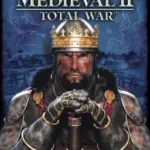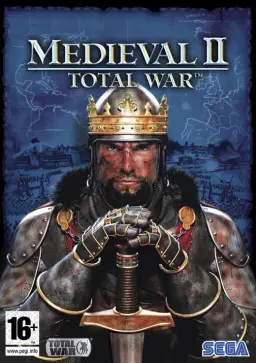
Medieval II: Total War
 88
★ /10
88
★ /10
 Android,
  iOS (iPhone/iPad),
  PC
PC
 1C-SoftClub, Feral Interactive,
  SEGA Corporation


Total War: MEDIEVAL II (2006) stands as one of the most critical turning points in the history of the legendary grand strategy and real-time tactics franchise. Following the exhausting market fatigue of traditional flat spreadsheet sims and the initial rough, grid-based architecture of the early 2000s, the future of the genre was highly uncertain.
British developer The Creative Assembly stepped in, boldly iterated upon the groundbreaking 3D foundations laid by Rome: Total War, and focused development duties on a massive, grit-soaked feudal scope. Faced with the intense task of building a worthy successor to their catalog, Creative Assembly delivered a stellar, redemptive chapter that bridged complex ecclesiastical politics with cinematic, multi-layered tactical leaps.
The Grand Reset: A Fractured Feudal Age
Medieval II completely severed ties with the clean antiquity aesthetics of Rome. Instead, it established a fresh, tightly constructed historical lore continuity: The Late Dark Ages to the Renaissance across Europe, North Africa, and the Middle East (1080–1530 AD).
The game’s geopolitical landscapes, regional trade webs, and multi-national conflicts play out like an interconnected political thriller. The grand campaign challenges players to navigate the volatile rise of rival kingdoms while bracing for devastating late-game global paradigm shifts—such as the terrifying arrival of the Mongol and Timurid hordes from the east, or the sudden, map-expanding voyage of discovery to the shores of the New World.
The Core Evolution: Settlement Dualism & Cinematic Realism
Creative Assembly deliberately looked back at their hybrid turn-based/real-time formula, keeping the structural loop of macro map management and micro real-time combat while heavily evolving the engine’s capability:
- The Leap to Castle/City Structural Dualism: The turn-based campaign map threw out uniform, identical provincial capitals. Medieval II introduced a rigid architectural choice for every region: Cities (high economic hubs that generate massive merchant income and advance scientific research, but rely on low-tier militia defense) or Castles (highly fortified military bastions that unlock elite feudal knights and professional armorers, but yield minimal tax income).
- The Dynamic Visual Armor Engine: Rebuilt from its polygonal roots, the 3D combat field introduced individual unit diversity. Every single soldier in a 150-man squad no longer looked like an identical clone. Furthermore, constructing armor upgrades at a castle smith physically altered the visual appearance of your troops on the battlefield—transforming a squad of unarmored spearmen into leather- or chainmail-plated veterans.
- The Merchant Trading Layer: Economic management was heavily expanded via the introduction of the Merchant agent. Players position these specialists directly onto static luxury nodes (such as silk, gold, or spices) distributed across the campaign map, establishing highly lucrative trade monopolies to actively out-finance rival kingdoms.
The Deep Meta: The College of Cardinals & Dread/Chivalry
To maximize macro-strategy tension, campaign progress is governed by a complex matrix of Religious Influence and Psychological Reputation:
- The Papal Ultimatum Matrix: Catholic factions operate under the watchful eye of the global AI Papacy. The Pope routinely issues explicit structural mandates, such as ordering a ceasefire under threat of excommunication. Neglecting the Pope’s favor can trigger a terrifying Inquisition, where rogue AI Inquisitors wander your territory, executing high-tier generals for heresy. Conversely, capturing maximum favor lets you lobby the Pope to declare a Crusade, launching a massive holy army stack for zero upkeep.
- The College of Cardinals: Cultivating pious Priests levels them up into Bishops and ultimately locks them into the College of Cardinals. When the sitting Pope passes away, the game triggers an interactive election phase where players can utilize political bribery to vote their own Cardinal into the Papacy, granting them absolute control over the cross-continental crusade mechanics.
- The Dread vs. Chivalry Trait Matrix: Generals accumulate persistent psychological profiles based strictly on player behavior. Releasing captured prisoners and peacefully occupying settlements builds Chivalry, which raises local population growth and boosts friendly morale on the field. Alternatively, executing prisoners and exterminating cities builds Dread, which lowers enemy morale on the combat field, causing opposing regiments to panically break and rout upon contact.
The Kingdoms Expansion & Tactical Matrices
In 2007, the game received its highly celebrated definitive expansion: Total War: MEDIEVAL II — Kingdoms. This massive content drop introduced four completely separate, highly focused standalone campaigns, each featuring tailored mechanics and specialized faction rosters:
- The Americas Campaign: Tracks the Spanish Conquistadors as they land in the New World, clashing with the massive, high-zeal Aztec, Mayan, and Apachean empires.
- The Britannia Campaign: Features a high-intensity, five-way struggle for control over the British Isles, introducing unique reinforcing barons and regional culture mechanics.
- The Crusades Campaign: Focuses on the Holy Land as the Kingdom of Jerusalem and the Principality of Antioch battle Saracen empires for control of sacred religious nodes.
- The Teutonic Campaign: Tracks the steel-plated Teutonic Order as they wage a brutal, unyielding crusade to forcefully convert the pagan tribes of Lithuania and Northern Europe.
The core unit balance plays out across heavily specialized, historical counter matrices:
| Faction Type / Culture | Specialized Unit Variant | Primary Weapon Profile | Tactical Combat Role & Passives |
| Western European | Chivalric Knights | Heavy Lance & Warhorse | Maximum shock cavalry momentum; built to utterly devastate open-field enemy infantry lines on a charge. |
| Middle Eastern | Mamluk Horse Archers | Composite Bow | High-mobility skirmishers built for continuous kiting and harassing heavy infantry ranks. |
| The Holy Roman Empire | Zweihander Infantry | Two-Handed Broadsword | Armor-piercing shock footmen explicitly designed to chew through heavy frontline defensive shields. |
| Late Renaissance | Tercio Pikemen / Musketeers | Pike & Matchlock Firearm | Early gunpowder formations; delivers armor-shredding ranged volleys backed by defensive anti-cavalry walls. |
The Modern Standard: Modern Preservation & The Mobile Renaissance
While its original 2006 code is a vintage relic, Medieval II: Total War experiences an extraordinary contemporary renaissance. Today, the game is natively distributed as the Total War: MEDIEVAL II — Definitive Edition on Steam and GOG, fully optimizing file directories and compiling all expansion modules into a singular executable.
Furthermore, porting experts Feral Interactive brought the entire grand strategy layer and real-time battles natively to iOS and Android. Their massive mobile update integrated a meticulously tailored touch-control UI, fixed long-standing legacy engine balance quirks for pikemen, and introduced asynchronous local multiplayer functionality.
This timeless infrastructure continues to serve as the absolute foundation for the grand strategy community—supporting legendary, total-conversion PC mods like Stainless Steel, The Third Age, and Divide and Conquer—maintaining its legendary status while Creative Assembly transitions into the development of the recently announced Total War: MEDIEVAL III.
Release History
- Total War: MEDIEVAL II (Base Game Launch): November 10, 2006 (Europe) / November 14, 2006 (North America)
- Total War: MEDIEVAL II — Kingdoms (Expansion Pack): August 28, 2007
- Feral Interactive Mobile Port (iOS & Android): April 7, 2022
- Modern Packaging: Natively preserved and readily available as the Definitive Edition on PC via Steam and GOG, alongside premium dedicated editions across major mobile app ecosystems.