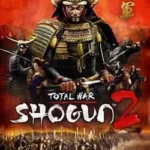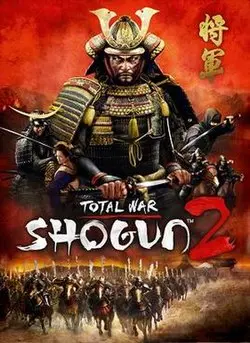
Total War: Shogun 2
 90
★ /10
90
★ /10
 PC
PC
 1C-SoftClub, Feral Interactive,
  SEGA Corporation
Where to buy

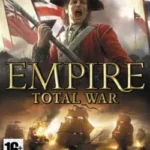
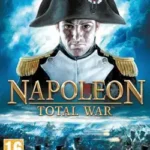
Total War: SHOGUN 2 (2011) stands as one of the most critical, beautifully executed, and universally acclaimed turning points in the history of the legendary grand strategy and real-time tactics franchise. Following the exhausting market fatigue of the massive, technically volatile global sandboxes seen in Empire and the hyper-specific biographical scripting of Napoleon, the series needed a return to absolute mechanical polish.
British developer The Creative Assembly stepped in, boldly narrowed their geographical scope, and focused development duties on a tight, ultra-refined theater. Faced with the intense task of proving that the franchise could still deliver flawless tactical execution, Creative Assembly delivered what many strategy purists still consider the absolute gold standard of the entire Total War lineage.
The Grand Reset: A Knife Fight in a Phone Booth
Shogun 2 completely severed ties with the sweeping multi-theater world maps of the 18th century. Instead, it returned to its ancestral roots: 16th-Century Feudal Japan during the height of the Sengoku Jidai (The Warring States Period).
Unlike its predecessors, which leaned on massive cultural asymmetries across different global continents, Shogun 2 shifted the focus to a symmetrical baseline. Every faction shares a core roster of samurai and ashigaru infantry, transforming the campaign into a precise, calculation-heavy chess match where victory is dictated entirely by positioning, diplomatic timing, and pure tactical execution.
The Core Evolution: Pagoda Sieges & The Visual Masterclass
Creative Assembly heavily upgraded their Warscape Engine, optimizing it specifically to handle fluid, high-velocity melee collisions and eliminating the broken pathfinding that had plagued previous gunpowder fortifications:
- The Multi-Tiered Castle Sieges: The tactical grid completely threw out the rigid, star-fort wall mechanics of Empire. Japanese castles were engineered as multi-layered, organic pagoda fortresses. Attacking infantry can scale the sheer stone walls from any angle, suffering high fatigue and exposure, while defenders engage in brutal, multi-tiered courtyard-by-courtyard retreats to secure the central keep.
- The Living Woodblock Aesthetic: The entire user interface, 3D campaign map, and tactical loading screens were stylized as an immersive, moving tribute to traditional Japanese ink wash and woodblock paintings (Ukiyo-e). Seasons shift dynamically across the provinces, causing cherry blossoms to blow across spring battlefields and autumn leaves to litter mountain passes.
- The Granular RPG Hero Trees: Characters and units received a massive systemic upgrade. For the first time, Generals, family heirs, and specialized agents (like the Ninja, Monk, and Metsuke) were granted expansive, fully customized RPG skill trees—allowing players to explicitly specialize a character into a master battlefield tactician, an economic administrator, or a lethal deep-cover assassin.
The Deep Meta: Realm Divide & The Honor Matrix
To maximize end-game macro-strategy tension, Shogun 2 introduced a controversial and game-changing mechanic designed to completely eliminate the boring “steamroll” phase of late-stage campaigns: The Realm Divide.
- The Shogunate’s Paranoia: As your custom clan captures more territory and wins legendary victories, your global “Fame Meter” steadily rises. The moment your influence peaks, the sitting AI Shogun in Kyoto perceives you as an existential threat to his regime.
- The Ultimate Civil War: Triggering Realm Divide causes the Shogun to issue a total decree to the entire nation. Instantly, all diplomatic treaties shatter, and every remaining clan on the map forms a permanent, unified alliance to aggressively wage a total war of annihilation against you, turning the end-game into a desperate multi-front survival struggle.
The Daimyo’s Honor: Your faction leader tracks a strict Honor rating. Executing captured generals, looting peaceful cities, or breaking diplomatic alliances tanks your Honor, which instantly destroys local public order and lowers the loyalty of your generals, potentially sparking catastrophic internal civil wars right as the external Realm Divide hits.
Standalone Expansions and Alternate Timelines
The structural framework of Shogun 2 was so mechanically flawless that Creative Assembly utilized it to launch two massive standalone expansions, mapping out the entire socio-military transformation of Japan across centuries:
1. Rise of the Samurai (2011)
A prequel campaign shifting the timeline back to the 12th-century Genpei War. This expansion tracks the initial rise of the samurai caste, focusing on primitive archery duels, high-influence cultural agents, and a loose, proto-feudal economy.
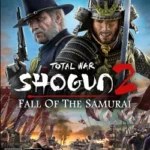
2. Fall of the Samurai (2012)
Widely celebrated as one of the single greatest expansions in the history of PC gaming, this standalone chapter fast-forwards the engine into the 19th-century Boshin War. It simulates the explosive ideological clash between traditional Shogunate Samurai and modern Imperial Forces backed by Western superpowers.
Operating on a completely separate tactical economy, it seamlessly merges traditional sword-and-bow combat with modern industrial warfare: introducing paved railways for rapid troop transport, devastating Gatling guns, ironclad warships, and the ability to call in Real-Time Naval Shore Bombardment to obliterate enemy base structures mid-battle.
Faction Specialization & Strategic Profiles
While sharing a unified cultural baseline, the legendary clans possess critical, distinct military masters that dictate your macro-layout:
| Clan Alignment | Signature Strategic Mastery | Specialized Roster Element | Tactical Role & Battlefield Passives |
| The Chosokabe (Green) | Supreme agricultural income margins and cheap archer upkeep. | Chosokabe Bow Samurai | Elite, high-accuracy ranged infantry; delivers precision missile volleys to clear walls from afar. |
| The Takeda (Red) | High-velocity cavalry operational scaling and training veterancy. | Takeda Fire Cavalry | Devastating shock horsemen built to shatter enemy line formations through raw charge momentum. |
| The Shimazu (Black) | Enhanced general loyalty baselines and cheap katana recruitment. | Shimazu Katana Hero | A localized, small-footprint squad of elite sword masters capable of single-handedly holding castle gates. |
| The Otomo (Leopard) | Exclusive to DLC. Natively starts as a Christian faction with advanced western trade. | Donderbuss Cavalry | Shock gunpowder horsemen armed with heavy blunderbusses, shredding heavily armored lines at close range. |
The Modern Standard: The 2026 Strategy Icon
While the game crossed its 15th anniversary milestone, Total War: Shogun 2 experiences an incredible casual, competitive, and modding renaissance. Today, it stands fully preserved as a modern digital classic on Steam.
Because the game natively operates on a robust DirectX 11 framework, it sidesteps the grueling compatibility bugs, stretched display aspects, and resolution crashes that break older tactical entries on contemporary platforms. Strategy purists running the title on modern setups utilize the game’s pristine texture scaling to lock campaigns into flawlessly sharp 1440p and 4K widescreen configurations under Windows 10 and Windows 11 out-of-the-box. Furthermore, it serves as the host platform for massive community overhauls—most notably the Master of Strategy mod collection—maintaining its legendary position as a flawlessly optimized tactical masterpiece.
Release History
- Total War: Shogun 2 (Base Game Launch): March 15, 2011 (Published by Sega)
- Rise of the Samurai (Prequel DLC): September 27, 2011
- Fall of the Samurai (Standalone Expansion): March 23, 2012 (Later compiled under the Total War Saga brand).
- Modern Packaging: Natively preserved and readily available as a complete digital package on PC via Steam, natively grouping all unit packs and historical campaign arcs into a single launcher.