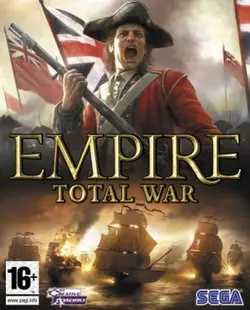
Empire: Total War
 90
★ /10
90
★ /10
 Android,
  iOS (iPhone/iPad),
  PC
PC
 1C-SoftClub,
  SEGA Corporation
Where to buy

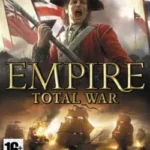
Total War: EMPIRE (2009) stands as one of the most critical, ambitious, and structurally transformative turning points in the history of the legendary grand strategy and real-time tactics franchise. Following the exhausting market fatigue of traditional medieval melee clones and the subsequent structural stagnation of localized regional warfare, the future of the series required a massive technological leap.
British developer The Creative Assembly stepped in, boldly discarded the aging engine architecture of the Rome and Medieval II era, and introduced the groundbreaking Warscape Engine. Faced with the intense task of scaling strategy to a global theater, Creative Assembly delivered a stellar, sweeping chapter that bridged the complex socio-political mechanics of the Age of Enlightenment with the destructive reality of gunpowder warfare.
The Grand Reset: A Global Tri-Theater Sandbox
Empire: Total War completely severed ties with the singular, contiguous continent maps of its predecessors. Instead, it established an unprecedented global historical lore continuity: The Age of Enlightenment, Colonization, and Global Imperialism across the 18th Century (1700–1799 AD).
The turn-based campaign map threw out localized borders to introduce a multi-theater global layout. The playable world is divided into three massive, active Imperial Theaters running simultaneously:
- The European Theater: The primary hotbed of traditional faction diplomacy, heavy industrial development, and historical crown rivalries.
- The American Theater: A volatile landscape of dense wilderness, wealth extraction, native resistance, and colonial expansion.
- The Indian Theater: A hyper-economically dense region centering around the fracturing Mughal Empire and competing corporate trading monopolies.
These primary continents are seamlessly interconnected by maritime Trade Theaters (such as the Ivory Coast, the Straits of Madagascar, and the East Indies). Players deploy merchant fleets directly onto static trade nodes within these zones, establishing international commercial pipelines to siphon sugar, spice, ivory, and tobacco back to their home ports to finance global warfare.
The Core Evolution: The Warscape Engine & Broadside Naval Combat
Creative Assembly completely re-engineered their real-time combat calculus to accommodate the global transition from swords and shields to flintlock muskets and heavy artillery:
- The Architecture of Line Warfare: The 3D battlefield abandoned loose infantry blobs for rigid, highly disciplined military ranks. Gunpowder physics dictates combat: units rely on reload speeds, firing drills (such as Fire by Rank), and projectile trajectory tracking. The engine introduced a dynamic Structural Cover Suite, allowing infantry to physically garrison inside civilian estates, fortify stone walls, or dig defensive trenches on the fly.
- The Leap to Real-Time 3D Naval Combat: For the first time in franchise history, naval battles moved beyond automated text simulations. Players command massive fleets of beautifully rendered, fully articulated wooden warships (ranging from light 5th-rate Frigates to monolithic 100-gun 1st-rate Ships of the Line).
- The Calculus of the Sea: Maritime engagements are strictly governed by wind direction, hull physics, and tailored ammunition types. Captains adjust their sails to cross the enemy’s wake, unleashing devastating broadsides of Round Shot to smash hull plating, Chain Shot to shred sails and snap masts, or Grape Shot to sweep enemy decks before issuing direct boarding actions to capture rival flagships.
The Deep Meta: Government Revolutions & The Enlightenment Tree
To maximize macro-strategy tension, Empire threw out static domestic stability in favor of a volatile Socio-Political Paradigm Switch. Empire management is governed by an interactive class struggle between the Upper Class (Nobility) and the Lower Class (The Common Populace).
The Government Mutation Wheel
Depending on tax burdens and local infrastructure, a nation can experience structural unrest, triggering a full-blown domestic Revolution. If a player chooses to side with the rebels and successfully captures their own capital city, the faction’s entire government style permanently mutates, introducing completely distinct structural passives:
- Absolute Monarchy: Grants the ruler absolute control to summarily hire or fire cabinet ministers to optimize faction-wide buffs, boosting nobility happiness and military suppression, but severely crippling industrial research speeds.
- Constitutional Monarchy: A balanced middle-ground blending administrative flexibility with public representation, stabilizing public order across both social classes.
- Republic: Maximizes individual industrial growth, trade efficiency, and scientific research output, but suffers from regular mandatory democratic elections that can spontaneously dismantle your tailored political cabinet.
The Academic Clamor for Reform
Progression across the empire is driven by a comprehensive, three-pronged Technology Tree (Military, Industry, and Philosophy). To advance, players must construct specialized Schools and Universities, which spawn Gentlemen agents used to accelerate research, duel rival scholars, or infiltrate foreign academies to steal blueprint layouts.
However, tech advancement carries a dangerous internal risk: researching high-tier philosophical concepts (such as The Social Contract or Separation of Powers) generates a permanent, stackable Clamor for Reform penalty across your empire, sparking inevitable lower-class civilian riots that threaten to overthrow the crown.
Standalone Polishing and the Tactical Unit Matrix
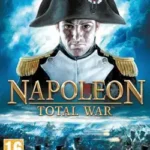
In 2010, the engine received its highly polished, tightly focused standalone successor: Napoleon: Total War. This chapter narrowed the global scope to focus explicitly on the geopolitical military campaigns of Napoleon Bonaparte, refining the Warscape engine stability, adding attrition penalties for extreme seasonal weather, and introducing supply-line replenishment mechanics.
The tactical unit variations across these 18th-century empires dictate precise military counters on the field:
| Unit Classification | Standard Tactical Blueprint | Advanced Specialized Variant | Tactical Battlefield Role & Passives |
| Line Infantry | Flintlock Musketeers | Grenadiers | Heavy, high-morale shock footmen; utilizes heavy musket volleys before physically hurling explosive black-powder grenades to shatter enemy defensive blocks. |
| Skirmishers | Loose-Order Light Infantry | Rifles / Green Jackets | Elite, long-range marksmen equipped with rifled barrels. Bypasses standard line distance limits; utilizes active cloaking passives to fire from deep cover. |
| Cavalry | Regiment of Horse / Hussars | Cuirassiers | Heavy, steel-breastplated shock horsemen built explicitly to execute frontal charges into exposed line infantry flanks. |
| Artillery | Fixed Foot Artillery | Horse Artillery / Howitzers | Hyper-mobile ordnance arrays or high-trajectory cannons capable of firing explosive shells over hills, utilizing devastating close-quarters Canister Shot to shred charging formations. |
The Modern Standard: The Steam Definitive Modding Renaissance
While its initial 2009 launch shell was notoriously plagued by severe technical bugs, optimization exceptions, and erratic AI pathfinding, Empire: Total War experiences an extraordinary contemporary renaissance. Today, the game is officially packaged and maintained as Empire: Total War — Definitive Edition on Steam, compiling all previous DLC expansions (including the Native American-focused Warpath Campaign) into a unified digital executable.
The modern standard successfully reconstructs the engine stability on contemporary PC frameworks. Because the vintage Warscape code natively struggles with modern 64-bit multi-core processing allocation, the active global strategy community relies on the client as a pristine platform for massive, highly ambitious total conversion overhauls.
Through standard mod frameworks—such as DarthMod Empire (which drastically overhauls the battle AI, projectile smoke physics, and unit sizes), Imperial Splendour, and the massive Empire Total War II mod project—players can experience flawlessly sharp 1080p, 2K, and 4K widescreen configurations under Windows 10 and Windows 11, preserving the title as the absolute peak of global 18th-century grand strategy simulation.
Release History
- Empire: Total War (Base Game Launch): March 3, 2009 (North America) / March 4, 2009 (Europe)
- The Warpath Campaign (Expansion DLC): October 2009 (Introduces playable Native American tribes with custom tech paths)
- Napoleon: Total War (Polished Standalone Spin-off): February 23, 2010
- Empire: Total War — Definitive Edition (Steam Repackage): September 2018 (Compiles all localized content and modern OS optimization wrappers)
- Modern Packaging: Natively preserved and distributed as a complete digital classic, available globally on storefronts like Steam.