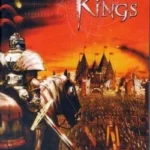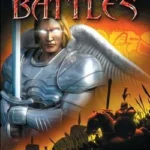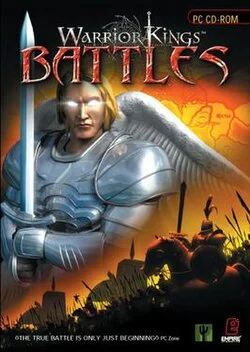
Warrior Kings: Battles
 64
★ /10
64
★ /10
 PC
PC
 ND Games,
  SEGA Corporation, Strategy First


Warrior Kings: Battles (2003) stands as one of the most critical, highly polished, and mechanically complete turning points in the history of the real-time strategy genre. Following the immediate commercial release of the original Warrior Kings in 2002, the game’s core concepts were highly praised, but the package suffered from a glaring structural limitation: it lacked a dedicated skirmish mode, and its multiplayer parameters were notoriously unstable.
British developer Black Cactus stepped in just a year later, deploying a standalone follow-up that completely overhauled the engine’s architectural stability. Faced with the intense task of solidifying the property during the absolute peak of the 3D RTS boom—competing directly against titans like Command & Conquer: Generals and Age of Mythology—Black Cactus delivered a redemptive, feature-rich masterpiece that perfected their signature dynamic tech-tree layout and Cartesian logistical rules.
The Grand Reset: The Non-Linear Conquest of Orbis
Warrior Kings: Battles completely severed ties with the rigid, narrative-heavy linear campaign tracking the journey of Artos from the original title. Instead, it established an open-ended, Risk-style macro-campaign board set across the fractured fantasy world of Orbis.
The campaign map operates as a massive, non-linear territorial sandbox. The continent is divided into dozens of independent provinces, each governed by an eccentric AI warlord boasting a distinct backstory and tailored tactical tendencies. Pushing your army markers across the province borders triggers high-stakes real-time skirmishes; capturing a territory awards permanent global bonuses for subsequent matches and systematically unlocks that specific defeated warlord for use in custom games, treating the entire single-player lifecycle as a progressive, rewarding achievement ladder.
The Core Evolution: The AI Designer & Heavy Formations
Black Cactus preserved the core, realistic physics foundations of their engine while drastically accelerating the pacing, pathfinding accuracy, and customizability of the simulation:
- The Breakthrough AI Behavior Designer: The crown jewel of Battles was its advanced, highly revolutionary custom AI engine. Throwing out generic, cheating AI templates, the client features an interactive AI construction suite. Players can manually build custom computer opponents from the ground up—programming their exact psychological profiles, economic prioritization metrics, visual aggressiveness scales, and explicit bias toward specific religious or scientific alignment tech paths.
- The Return of Cartesian Logistics: The strict, realistic logistical chain remained a defining mechanical layer. Raw materials (Food, Wood, Gold) must be physically deposited by peasants at local village outposts, loaded onto visible Supply Carts, and driven along roads back to your central Manor to be usable. These caravans remain entirely vulnerable to cavalry harassment and interception, turning economic supply lines into primary military targets.
- Calculated Military Formations: Movement abandoned loose troop blobs. Units packed into explicit structural shapes—such as the Column (maximizes traveling speed across open paths but suffers from terrible turning physics), the Wedge (engineered for shock cavalry breakthroughs), and the stationary Line (optimizes ranged volley fire and spear bracing). Units trained on training dummies gain massive, permanent multipliers to their physical melee damage output.
The Deep Meta: Perfecting the Alignment Triad
To maximize balanced competitive skirmish play, Battles re-engineered the mathematical code behind the original three ideological branches, eliminating early-game exploits while keeping the absolute asymmetry of their end-game capabilities intact:
- The Pure Imperial Path (The Sword of God): Built around heavy armor containment, high-tier stone fortresses, and high-faith management. Imperial players gather Priests and Bishops at grand Cathedrals to channel divine mana, unleashing massive, map-wide Acts of God like destructive lightning storms or crop-boosting rain. Their supreme end-game asset is the Archangel, an autonomous, invincible celestial entity that automatically seeks out and eliminates the nearest hostile forces.
- The Pure Pagan Path (The Burning Wicker Man): Prioritizes fast, low-cost organic swarming, stealth cloaking, and severe psychological sabotage. Pagan Druids can forcefully mutate resource nodes into aggressive elemental monsters, while Succubi mind-control and convert enemy infantry charges mid-fight. By constructing a massive Wicker Man and physically sacrificing their own peasants into its blazing center, players summon Abaddon, a colossal arch-demon capable of leveling entire bases single-handedly.
- The Pure Renaissance Path (The Industrial Enlightenment): Rejects magic, mana, and spiritual entities to assert pure scientific dominance. Renaissance players maximize logistical capital and manufacturing collection speeds, unlocking devastating black-powder weapon lines. They dominate open fields with long-range hitscan Arquebusiers, Siege Bombards, and massive multi-missile Rocket Launchers that obliterate stone structures from extreme distance.
The Strategic Alignment Matrix
The table below demonstrates how your structural investments split your faction into pure paths or hyper-specialized hybrid sub-alignments:
| Structural Alignment Path | Secondary Resource Focus | Signature Combat Unit | Core Tactical Battlefield Role |
| Pure Imperial | Holy Faith / Prayer Mana | Holy Inquisitor | High-defense front-line shielding; utilizes holy magic to purge heresy and lock down territory. |
| Pure Pagan | Blood Sacrifice | Succubus / Druid | Subversive raiding, stealth ambushes, resource mutation, and direct unit conversion. |
| Pure Renaissance | Industrial Capital / Science | Rocket Launcher Crew | Extreme long-range ballistic demolition and area-of-effect line suppression. |
| Imperial-Renaissance (Hybrid) | Advanced Steel Engineering | Dragoon Cavalry | Hyper-mobile mounted firearm infantry; executes rapid flanking maneuvers and flexible hit-and-run volleys. |
| Pagan-Renaissance (Hybrid) | Forbidden Asymmetric Chemistry | Pagan Renaissance Artillery | Deploys toxic, volatile siege ammunition designed to melt heavy armored targets and inflict continuous environmental damage. |
The Modern Standard: The WKB Plus Preservation Meta
While the game’s original 2003 code is a vintage, volatile relic that completely crashes on contemporary platforms out-of-the-box due to archaic Direct3D 8 rendering pipelines and SafeDisc execution checks, it experiences an active revival today. Natively hosted and distributed digitally on Steam via Strategy First, the community has taken complete charge of its modern preservation.
The definitive modern standard relies on the community-developed WKB Plus patch framework. Strategy purists use this wrapper to apply Large Address Aware (4GB patches) to the master executable, allowing the legacy code to utilize modern desktop RAM matrices.
Furthermore, integrating a custom d3d8.dll wrapper completely eliminates the notorious “blue and gray triangle” graphical glitches that historically artifacted across modern GPUs. This unlocks the ability to scale widescreen display dimensions into flawless, native 1080p, 2K, and 4K desktop configurations under Windows 10 and Windows 11, preserving the title as a beautifully responsive, hidden gem of early-2000s grand strategy history.
Release History
- Warrior Kings: Battles (Original Retail Launch): March 21, 2003 (Europe under Empire Interactive) / September 30, 2003 (North America co-published via Strategy First)
- Digital Storefront Integration: May 2014 (Officially relaunched on Steam as a standalone digital classic under the Strategy First catalog)
- Modern Packaging: Natively preserved and readily available on PC via Steam, acting as a highly respected retro sandbox for real-time tactics historians.