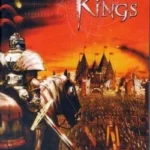
Warrior Kings
 73
★ /10
73
★ /10
 PC
PC
 Microïds,
  ND Games, Strategy First



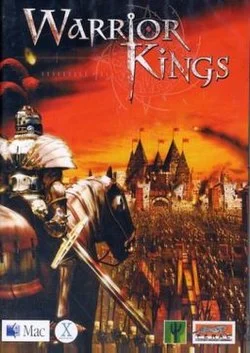
Warrior Kings (2002) stands as one of the most critical, eccentric, and fiercely creative turning points in the history of the real-time strategy genre. Following the market exhaustion of conventional flat, fixed-faction base-building clones and the subsequent structural stagnation of late-90s resource management, the future of 3D strategy was highly uncertain.
British developer Black Cactus stepped in, partnered with publisher Microïds, and focused development duties on a revolutionary, dynamic alignment framework. Faced with the intense task of creating a brand-new intellectual property in a market dominated by the impending arrival of Warcraft III, Black Cactus delivered a stellar, highly unorthodox chapter that beautifully bridged historical combined-arms logic with dark medieval fantasy and unprecedented logistical leaps.
The Grand Reset: A Tale of Religious Imperialism
Warrior Kings completely severed ties with standard pre-selected alien or military faction lines. Instead, it established a tightly constructed pseudo-medieval fantasy lore continuity: The War for the World of Orbis.
The game’s geopolitical landscapes, dark forests, and walled cities are initially governed by the Holy Empire—a corrupt, brutal imperialist theocracy devoted to a deity known as “The One God”. The single-player campaign plays out like an interconnected political thriller, tracking Artos, the young son of a betrayed baron. After his home fiefdom of Cravant is burned to the ground on trumped-up charges of heresy by the cruel Patriarch Icthyus Granitas, Artos flees to the land of Angland. There, he must raise a rebel army to overthrow the usurper crown, giving players absolute freedom to decide exactly what kind of ideological power they will wield to reclaim the continent.
The Core Evolution: Dynamic Alignments & Cartesian Logistics
Black Cactus boldly re-engineered standard real-time strategy tropes, developing a highly sophisticated tech-tree layout and physics engine that broke traditional map rules:
- The Fluid Alignment System: Players do not pick a civilization from a main menu. Everyone starts a match in an identical, unaligned “Conscript/Peasant” state with a basic Manor house. Your alignment is dynamically forged by the literal physical architecture you choose to construct mid-game. Erecting a Church locks you down the holy Imperial path, while raising a Maypole or a Pagan Temple guides you toward nature-worshiping occultism, transforming tech progression into a dynamic psychological guessing game.
- The Vulnerable Supply Cart Loop: The economy completely threw out automated resource banking. Raw materials—Food, Wood/Materials, and Gold—are not instantly credited to your global pool when harvested. Peasants drop off cargo at localized villages, which then automatically load goods into physical Supply Wagons that must travel along map roads back to your main Headquarters. These wagons can be physically ambushed, destroyed, and looted by enemy cavalry, turning supply line protection into a primary strategic constraint.
- 3D Ballistic Geometry and Ammunition: The game was one of the earliest RTS titles to feature a fully realized 3D terrain physics engine. Ranged units require high ground and true lines of sight to output effective damage, and projectile squads possess finite ammunition meters. They will run entirely out of arrows or gunpowder rounds mid-fight unless a player actively links them to mobile supply carts on the front lines.
The Deep Meta: The Faction Triad & Supreme Summons
To maximize mechanical asymmetry, Warrior Kings engineered three massive primary ideological paths, along with two specialized hybrid combinations:
- The Imperial Path (Zealous Theocracy): Emphasizes high-cost, hyper-armored knight cavalry, defensive stone masonry, and high-tier military discipline. Imperial players deploy Priests, Bishops, and Inquisitors who can gather at Cathedrals to channel divine mana, allowing players to invoke sweeping Acts of God—unleashing devastating real-time plagues, lightning storms, or meteors upon enemy bases. Their ultimate end-game summon is the Archangel (The Sword of God).
- The Pagan Path (Savage Occultism): Focuses on low-cost, mass-produced shock troops, nature spirits, and deep economic disruption. Pagans utilize Druids to transform normal resource nodes into hostile elemental beasts, and Succubi to actively possess enemy peasants, spreading heresy to freeze an opponent’s workforce. By constructing a massive Wicker Man and physically sacrificing their own peasants into its burning core, they can summon Abaddon—a colossal, near-unstoppable red arch-demon that rampages across the map.
- The Renaissance Path (Scientific Enlightenment): Rejects religion and superstition entirely to focus on human ingenuity. Renaissance players sacrifice the ability to deploy magical spells or divine entities in exchange for absolute economic dominance, unparalleled civil logistics upgrades, and devastating gunpowder war machines. They field Arquebus-wielding Gunners, Bombards, and massive multi-missile Rocket Artillery to systematically flatten enemy fortifications from extreme range.
The Tactical Alignment Matrix
The table below demonstrates how mixing or purifying your architectural choices completely shifts your frontline army composition:
| Structural Alignment | Unique Economic Metric | Signature Combat Unit | Core Tactical Combat Role |
| Imperial | Divine Faith / Prayer: Priests channel mana at holy altars to fuel large-scale spell matrices. | Holy Inquisitors & Knights | High-armor frontline containment, heavy melee pushes, and fortification holding. |
| Pagan | Blood Sacrifice: Sacrificing human unit models at altars to force immediate monster spawns. | Witches, Succubi, and Demons | High-speed swarming, stealth raiding, and economy-freezing psychological sabotage. |
| Renaissance | Scientific Capital: Drastically accelerated raw material harvesting and structural processing efficiency. | Arquebusiers & Rocket Launchers | Long-range hitscan fire suppression and unmatched siege destruction capabilities. |
| Imperial-Renaissance (Hybrid) | Reworked mechanical resource processing backed by holy military order structures. | Dragoon Cavalry | High-mobility hybrid mounted infantry capable of rapid repositioning and flexible fire lines. |
| Pagan-Renaissance (Hybrid) | Unlocks unique dark science combinations and experimental occult infrastructure. | Pagan Renaissance Artillery | Asymmetric siege weaponry backed by fast, light organic infantry variants to protect weapon crews. |
The Modern Standard: The Steam Compatibility Wrapper
While the original 2002 retail CD-ROM edition is a notoriously finicky piece of legacy software—severely plagued by archaic SafeDisc copy protection checks, broken mouse-input polling loops, and immediate rendering crashes on modern 64-bit multi-core processors—the game experiences an active archival preservation renaissance today.
Natively preserved on Steam via Strategy First, the digital version updates the underlying executable compatibility wrappers. While players running the title on modern Windows 10 and Windows 11 hardware occasionally rely on open-source wrappers (such as dgVoodoo2) to perfectly bridge fixed-aspect-ratio isometric scaling and eliminate cursor tracking exceptions, the digital wrapper successfully preserves the game’s magnificent orchestral soundtrack, dynamic structural fire mechanics, and ambitious three-way ideological wars for the contemporary strategy community.
Release History
- Warrior Kings (Original Retail Launch): March 2002 (Europe) / Early 2002 (North America)
- Warrior Kings: Battles (Standalone Expansion/Sequel): March 21, 2003 (Europe) / September 30, 2003 (North America) — Vastly improved the sandbox AI engine, added skirmish modes, and refined the unit balancing.
- Digital Steam Relaunch: 2014 (Repackaged and optimized for digital distribution via Strategy First)
- Modern Packaging: Readily available as a standalone digital classic on PC via Steam,GOG and Epic maintaining a dedicated niche following among real-time strategy historians.