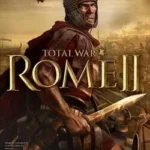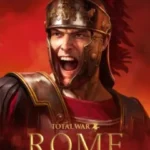
Total War: Rome II
 76
★ /10
76
★ /10
 PC
PC
 1C-SoftClub, Feral Interactive,
  SEGA Corporation


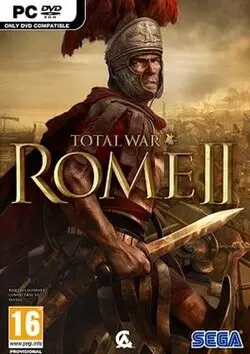
Total War: ROME II (2013) stands as one of the most critical, highly debated, and ultimately redemptive turning points in the history of the legendary grand strategy and real-time tactics franchise. Following the massive success of the hyper-focused Shogun 2, the series needed to transition back to a massive, multi-continental scale.
British developer The Creative Assembly stepped in, boldly pushed their updated Warscape Engine to its absolute technical limits, and focused development duties on an epic ancient theater. While its launch was infamously plagued by technical friction, a monumental multi-year patching pipeline completely transformed the game into what is now celebrated as one of the deepest, most stable, and endlessly replayable sandboxes in the entire franchise.
The Grand Reset: An Unprecedented Mediterranean Scope
Rome II completely shattered the geographic limitations of previous titles, delivering a sprawling, interconnected campaign map spanning from the windswept islands of Britannia all the way to the dense deserts of Parthia.
Set during Classical Antiquity (starting in 272 BC), the geopolitical landscape tracks the explosive rise of the Roman Republic alongside competing superpowers. The macro-campaign plays out like a massive political thriller, requiring players to balance rapid military expansion across dozens of unique cultural territories against the constant threat of internal treachery and assassination.
The Core Evolution: Provincial Consolidation & Combined Warfare
Creative Assembly completely re-engineered how players manage territory and deploy military power, implementing structural changes that permanently defined the future of the series:
- The Multi-Region Province System: The turn-based campaign layer abandoned isolated individual settlements. Instead, maps are divided into unified Provinces composed of multiple regions (typically one walled provincial capital and two to three unwalled resource outposts). Managing a province as a single economic hub allows players to issue specialized global Edicts—such as tax farming or commercial stimulus—maximizing macro-strategy efficiency.
- General-Hardlocked Armies & Traditions: The engine completely eliminated independent unit movement. Armies cannot exist without a commanding General, and the maximum number of active legions is strictly gated by your faction’s global influence. Furthermore, legions accumulate persistent Army Traditions; if an elite army is entirely wiped out in battle, its banner can be raised again in a home province, preserving its hard-earned historical combat bonuses.
- Combined Amphibious Warfare: Real-time combat shattered traditional separation boundaries. Land and naval forces can clash simultaneously on the exact same tactical map coordinates. Warships can engage in ramming duels out at sea, fire artillery support onto coastal ridges, or directly beach themselves on shorelines to land units of marines directly into city streets mid-siege.
The Deep Meta: Imperium Gating & Tense Internal Politics
To maximize late-game tension, Rome II implemented a complex matrix balancing external conquest against domestic political stability:
- The Imperium Threshold: As your custom empire captures territory, your global Imperium level climbs. While raising Imperium unlocks more army slots and higher-tier agents (Dignitaries, Champions, and Spies), it simultaneously triggers severe diplomatic penalties with rival superpowers who grow increasingly paranoid of your absolute influence.
- The Domestic Politics Matrix: Internal empire management requires continuous political engineering. Your generals and statesmen belong to different internal political parties (such as the Patricians or Plebeians in Rome, or rival royal courts in monarchies). Players must manipulate party loyalty by arranging political marriages, promoting officers, or executing political rivals. Allowing a rival party’s loyalty to drop too low, or letting your own political influence monopolize the senate completely, triggers a sudden, empire-shattering Civil War that splits your legions and turns provinces into active rebel warzones.
The Emperor Edition Overhaul & Specialized Matrices
In 2014, Creative Assembly rolled out Total War: ROME II — Emperor Edition, a massive, definitive relaunch of the game that completely overhauled the political system, rebalanced unit statistics, and introduced the massive, free Imperator Augustus campaign detailing the multi-front Roman civil war between Octavian, Mark Antony, and Lepidus.
The game’s tactical depth relies heavily on deploying distinct, culture-specific unit formations to exploit rigid tactical counters on the field:
| Faction Culture Group | Strategic Campaign Passive | Signature Unit Variant | Tactical Battlefield Role & Passives |
| Roman Republic / Empire | Excellent administrative order and rapid paved road movement. | Legionary Cohort | Disciplined heavy infantry. Throws armor-piercing javelins (pila) before executing crushing melee line grinds. |
| Hellenistic Successors | Enhanced scientific research speeds and high maritime commerce. | Foot Companions / Pikemen | Forms a dense, frontal Pike Phalanx wall. Completely immune to frontal cavalry charges but highly vulnerable to flanking. |
| Barbarian Tribes | High public order from raiding and low troop upkeep. | Oathsworn | High-damage shock infantry. Possesses massive charge momentum and a berserk passive to rapidly break defensive lines. |
| Eastern Empires | Severe resistance to desert climate attrition loops. | Armoured Cataphracts | Heavily steel-plated shock horsemen designed to run over and shatter standard infantry columns. |
The Modern Standard: The Divide et Impera Renaissance
While its commercial lifecycle concluded following the launch of expansions like Empire Divided (simulating the Crisis of the Third Century) and Rise of the Republic, Rome II experiences an incredible renaissance. Today, the game stands natively preserved as the ROME II — Definitive Edition on Steam, compiling all previous culture and unit packs into a flawless executable.
Because the engine natively supports robust 64-bit multi-core configurations on modern platforms, strategy purists running the title utilize its pristine optimization to lock campaigns into sharp 1440p and 4K widescreen resolutions under Windows 10 and Windows 11 out-of-the-box. Furthermore, it serves as the host platform for Divide et Impera (DeI), widely considered one of the single greatest total conversion mods in strategy history. DeI completely transforms the baseline client into a hardcore historical simulation—introducing complex population class requirements, strict regional supply lines, and authentic dynamic weather loops, cementing Rome II as a monumental strategy masterpiece.
Release History
- Total War: Rome II (Base Game Launch): September 3, 2013 (Published by Sega)
- ROME II: Emperor Edition ( Relaunch & Imperator Augustus DLC): September 16, 2014
- Empire Divided Campaign DLC: November 30, 2017 (Introduces 3rd Century crisis mechanics)
- Rise of the Republic Campaign DLC: August 9, 2018 (Prequel campaign detailing the early history of Rome)
- Modern Packaging: Natively preserved and distributed as the Total War: ROME II — Definitive Edition, available digitally on PC via Steam.