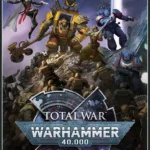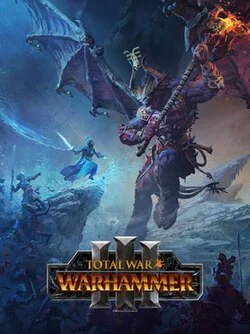
Total War: Warhammer III
 86
★ /10
86
★ /10
 PC
PC
 SEGA Corporation


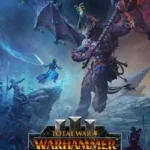
Total War: WARHAMMER III (2022) stands as the colossal, apocalyptic, and fundamentally definitive climax to the legendary fantasy real-time strategy trilogy. Following the hyper-polished success of its predecessor, the task weighing on this closing chapter was immense: it had to successfully unify three massive games, dozens of interlocking DLC expansions, and hundreds of legendary characters into a single cohesive ecosystem without buckling under its own weight.
Sega officially deployed the title on February 17, 2022. While its initial launch faced mechanical friction regarding its baseline campaign pacing, a series of radical, consumer-centric updates and sweeping structural overhauls completely transformed the game into a strategy masterpiece—cementing it as the absolute zenith of Games Workshop’s digital grimdark empire.
The Dual Realities: Realms of Chaos vs. Immortal Empires
Warhammer III completely broke the traditional scale boundaries of the strategy genre by separating its content pipeline into two distinct, massive campaign structures:
- The Realms of Chaos Campaign: The narrative baseline. The story centers on the dying roar of Ursun, the Bear-God of Kislev, which rips open a structural fracture between the mortal world and the warp. Factions must fight their way directly into the terrifying, mind-bending pocket dimensions of the four Ruinous Powers—Khorne, Nurgle, Tzeentch, and Slaanesh—surviving physics-defying attrition loops to claim the god’s divine soul before rival empires can secure it.
- The Immortal Empires Mega-Sandbox: The true crown jewel of the franchise. Permanently decoupled from past multi-game purchase requirements, Immortal Empires is free for all owners of Warhammer III. It seamlessly stitches together the landmasses, oceans, factions, and Legendary Lords of Warhammer I, II, and III into the largest, most structurally ambitious grand strategy map ever generated, enabling an un-gated global war of total conquest.
Core Architectural Evolution: Monogod Pantheons & Allied Outposts
Creative Assembly pushed the modified Warscape Engine to its absolute limits, implementing advanced tactical mechanics that fundamentally shifted battlefield geometry:
- The Monogod Daemonic Stratification: Moving past the generic “Chaos Undivided” rosters of the past, the engine fully separated the four dark gods into independent, asymmetrical factions. Daemonic forces do not rely on standard mortal economics; they are fueled by localized supernatural manifestations, unholy cult manipulation, and dimensional rifts that morph the map state based on their respective patron god’s whims.
- The Breakthrough Allied Outpost System: The diplomacy matrix completely threw out isolationist roster limitations. Players can forge iron-clad military alliances with foreign races and physically construct Outposts inside their allies’ provincial capitals. Managing these outposts generates a persistent Allegiance currency, allowing players to directly recruit units from their ally’s roster—enabling game-changing tactical combinations like guarding fragile High Elf archers behind an unyielding wall of Dwarfen Ironbreakers.
- Overhauled Dynamic Siege Warfare: Settled areas and fortresses received multi-layered minor settlement battle layouts. Defensive maps feature real-time, capture-point structural building mechanics. While under siege, defenders harvest a regenerating supply pool mid-match to dynamically construct localized barricades, anti-infantry arrow towers, and choke-point traps, transforming castle sieges into intense tactical tugs-of-war.
Faction Specialization & Strategic Profiles
The baseline roster of the third installment introduces highly complex, culturally unique ideological loops:
| Faction Race Group | Primary Campaign Currency / Metric | Unique Mechanical Trait | Tactical Battle Role & Passives |
| Khorne (Skarbrand) | Skulls & Bloodletting: Sacrificing armies to the Skull Throne fuels rapid recruitment discounts. | Pure Aggression (Cannot engage in traditional diplomacy; armies gain stat buffs from non-stop warfare). | Unshielded Melee Juggernauts: Possesses zero magic casters; relies on heavy magic-resistant armor, high-tier charging lancers, and frenzied infantry. |
| Tzeentch (Kairos Fateweaver) | Grimoires: Collected through actions to fuel the Changing of the Ways menu. | Reality Manipulation (Can forcefully transfer settlement ownership or halt enemy movement via pure magic). | Barrier Shielding & Sorcery: Units possess a self-regenerating magical barrier shield; dominates backlines with hyper-lethal pink fire missiles. |
| Nurgle (Tamurkhan / Ku’gath) | Infections: Spent to cook and unleash custom, devastating plagues across provinces. | Cyclic Growth (Buildings organically grow, wither, and die on a looping timeline to auto-spawn troops). | Attrition Infiltrators: Snail-slow, massive-health meat shields possessing passive poison attacks to slowly choke out enemy morale. |
| Slaanesh (N’Kari / Dechala) | Devotees: Spawned via cults to systematically force target factions into vassalage. | The Seduction Matrix (Can spend currency to forcefully bribe and steal enemy units right before a battle starts). | Glass-Cannon Flankers: Lacks high-armor plating and ranged missile options; features hyper-fast melee daemons that deal double damage from the rear. |
| Grand Cathay (Miao Ying / Zhao Ming) | Wu Xing Harmony: Tracks an empire-wide balance between Yin and Yang attributes. | The Great Bastion (Must actively station armies to defend a massive wall from endless nomadic raids). | Disciplined Synergy Walls: Ranged and melee infantry gain massive defensive and reloading stat bonuses when standing in close proximity. |
| Kislev (Tzarina Katarin) | Devotion & The Motherland: Gathered to invoke ancient ancestral spirits to pacify local unrest. | The Ice Court (Generals and Frost Maidens must spend multiple turns training inside inner courts to customize traits). | Unyielding Hybrid Lines: Nearly every standard infantryman is armed with both a rifle and a greataxe; boasts a passive trait that makes units immune to routing for a short duration. |
The Evolution Timeline: The End Times Renaissance
The post-launch lifecycle of Warhammer III stands as an incredible testament to dedicated community collaboration. Following the highly praised Forge of the Chaos Dwarfs expansion, Creative Assembly permanently altered their approach to development—shifting away from massive, infrequent reworks to a nimble content structure consisting of targeted character drops alongside massive core stability patches.
This strategy successfully delivered the blockbusters Thrones of Decay (revitalizing the Empire, Nurgle, and Dwarfs) and Tides of Torment (introducing the High Elf naval master Aislinn, Sayl the Faithless, and the Slaaneshi champion Dechala). Backed by an expanded studio footprint and the return of franchise veterans, the title maps out its most ambitious milestone yet: the sweeping Lords of the End Times mega-update, engineered to introduce the long-awaited supreme undead archetype, Nagash, alongside a complete modernization of classic Vampire Counts mechanics.
The Archival Performance Standard
Natively optimized on a robust 64-bit Warscape evolution shell, Total War: Warhammer III stands as a pristine technical achievement across Steam, Epic Games Store, and PC Game Pass (featuring cross-store multiplayer compatibility). The client natively sidesteps the memory exceptions and multi-core CPU starvation bottlenecks that break older strategy entries.
The game handles thousands of high-tier particle effects, dynamic magical vortex shaders, and real-time environment destruction flawlessly, scaling cleanly into sharp 1080p, 2K, and 4K widescreen desktop setups under Windows 10 and Windows 11. Backed by a legendary, thriving Steam Workshop community—anchored by total overhauls like SFO: Grimhammer III—the game acts as the definitive, ultimate digital monument to the entirety of fantasy strategy gaming history.