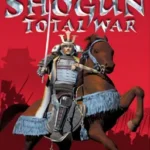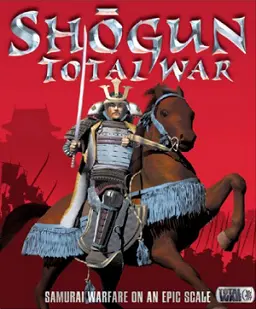
Shogun: Total War
 84
★ /10
84
★ /10
 PC
PC
 1C-SoftClub,
  Electronic Arts,
  SEGA Corporation


Shogun: Total War (2000) stands as one of the most critical turning points in the history of the legendary grand strategy and real-time tactics franchise. Following the exhausting market fatigue of hyper-fast, high-APM traditional RTS clones and the subsequent stagnation of flat, single-tier war games, the future of the tactical genre was highly uncertain.
British developer The Creative Assembly stepped in, boldly threw out established design limitations, and focused development duties on a groundbreaking dual-layer strategy concept. Faced with the intense task of creating a brand new sub-genre during the golden era of PC gaming, The Creative Assembly delivered a stellar, redemptive chapter that beautifully bridged turn-based board game logic with massive, fully 3D tactical battle technological leaps.
The Dual-Layer Revolution: A Masterclass in Hybrid Warfare
Shogun: Total War completely severed ties with the traditional resource-gathering base lines of traditional real-time strategy. Instead, it established a fresh, tightly constructed historical lore continuity: The Sengoku Jidai (Warring States Period) of Feudal Japan.
The game’s geopolitical landscapes, economic growth, and military maneuvers are split into two completely separate, beautifully intertwined gameplay loops:
- The Turn-Based Strategy Layer: Operating on a 2D “Risk-style” overview map of Japan, players manage provincial infrastructure, cultivate farmlands to harvest koku (the game’s agricultural currency), build dojos, and move army markers or specialized agents across neighboring borders on a seasonal timeline.
- The Real-Time Tactical 3D Layer: The moment opposing army markers collide on the map grid, the game instantly transitions into a sprawling, fully 3D tactical battle engine. Players command thousands of individual samurai and ashigaru soldiers simultaneously, transforming standard abstract conflict into an intense exercise in visual battlefield command geometry.
The Feudal Roster: Asymmetrical Clans & Strategic Advantages
To maximize macro-strategy variance, Shogun: Total War introduced seven legendary historical clans. While they shared a baseline unit roster, every faction was granted an entirely exclusive financial discount or operational buff that dictated their macro-strategy:
- The Takeda Clan (Black): Masters of the open field. They receive significant recruitment discounts on all cavalry units, emphasizing high-mobility flanking maneuvers.
- The Uesugi Clan (Dark Blue): Devout traditionalists who excel at ranged containment, enjoying a heavy cost reduction when training deadly Samurai Archers.
- The Oda Clan (Gold): Rely on superior numbers and defensive wall formations, gaining cheap access to disciplined Yari Ashigaru spearmen.
- The Imagawa Clan (Light Blue): The ultimate masters of espionage, training highly efficient, low-cost agents to systematically dismantle rival infrastructure from within.
- The Mori Clan (Red): Maritime commerce powerhouses who maximize coastal province growth and port efficiency to out-finance land-locked rivals.
- The Hōjō Clan (Purple): Masters of defensive siege architecture, gaining cheap construction metrics for massive castles and border watchtowers.
- The Shimazu Clan (Green): Fierce martial purists who receive heavy cost discounts on elite, high-damage No-Dachi Samurai swordsmen.
The Strategic Agent Matrix
Progression across the turn-based layer is driven heavily by specialized, single-character agents deployed directly onto the map grid. Emissaries negotiate fragile alliances, while Shinobi spies gather critical fog-of-war intelligence and combat local insurgencies. For wetwork, players utilize Ninjas to assassinate rival heirs and generals, culminating in the endgame deployment of the legendary Geisha—an elite, highly lethal assassin who cannot be counter-assassinated by basic enemy agents.
The Tactical Meat: Morale, Elevation, and Sun Tzu
The combat engine completely abandoned generic unit health bars for its soldiers. Instead, battle resolution is strictly governed by a complex Morale Matrix heavily influenced by the teachings of Sun Tzu’s The Art of War:
- The Psychology of the Field: Units do not fight to the death blindly. Sustaining heavy casualties, seeing their General slain, or getting flanked will shatter a unit’s morale, causing them to break ranks and flee in a panicked rout. Enemy cavalry will quickly make confetti out of these retreating foot soldiers.
- Geographical Leverage: The 3D landscape dictates weapon parameters. Positioning archers on high-elevation hills naturally multiplies their projectile range and structural damage profiles, while forcing an attacking army to cross a narrow river bridge turns the waters into a meat-grinder for incoming cavalry.
The Mongol Invasion Expansion & Alternate Strategies
In 2001, the game received its definitive expansion: The Mongol Invasion. This massive update introduced an alternate-history campaign detailing a successful 13th-century Kublai Khan landing in Japan. Operating on a completely separate tactical loop, the Mongol faction cannot recruit units locally, relying instead on periodic reinforcement waves to replenish their ranks.
More importantly, the expansion finalized several specialized unit counters for both the invaders and the defending Japanese clans:
| Faction Type | Specialized Unit Variant | Primary Weapon Profile | Tactical Combat Role |
| The Mongols | Mongol Light Cavalry | Compound Shortbow | Hyper-fast horse archers built for continuous kiting and breaking heavy infantry formations. |
| The Mongols | Thunder Bombers | Early Gunpowder Bombs | Short-range shock infantry hurling volatile explosives to instantly break enemy unit morale. |
| Japanese Clans | The Kensai | Heavy Nodachi Sword | A legendary, elite 1-man sword saint unit capable of single-handedly choking bridges or gates. |
| Japanese Clans | Battlefield Ninjas | Stealth & Throwing Blades | High-tier stealth infantry utilizing active cloaking passives to execute lethal rear ambushes. |
The Modern Standard: The Steam Preservation Meta
While its original 2000 disc code is an archaic relic of the Windows 98 era, Shogun: Total War experiences an active archival and retro renaissance today through its official Gold Edition / Collection release on Steam and GOG. Following decades of abandonware issues where the game’s vintage rendering pipeline triggered broken fonts and multi-core processor exceptions, Creative Assembly updated the client shell.
The modern standard successfully reconstructs the engine stability. Strategy communities utilize simple open-source wrappers (such as dgVoodoo2) to perfectly patch legacy mouse-clicking registration bugs on contemporary setups. This allows the iconic cinematic FMV cutscenes, tactical terrain height modifiers, and grand campaigns to run in sharp widescreen formats, operating beautifully on Windows 10 and Windows 11 out-of-the-box.
Release History
- Shogun: Total War (Base Game Launch): June 12, 2000 (North America) / June 16, 2000 (Europe)
- The Mongol Invasion (Expansion Pack): August 24, 2001
- Shogun: Total War – Gold Edition (Steam Re-Release): June 25, 2015 (Updated with modern OS scaling)
- Modern Packaging: Natively preserved and distributed as the SHOGUN: Total War – Collection, available digitally on PC via Steam and GOG.