Rome: Total War
 92
★ /10
92
★ /10
 Android,
  iOS (iPhone/iPad),
  PC
PC
 1C Company,
  Activision, Feral Interactive,
  SEGA Corporation
Where to buy

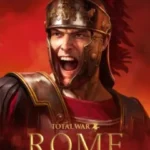
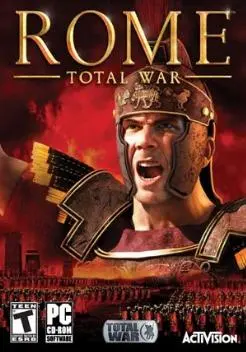
Rome: Total War (2004) stands as one of the most critical turning points in the history of the legendary grand strategy and real-time tactics franchise. Following the exhausting market fatigue of hyper-fast, high-APM traditional RTS clones and the subsequent structural stagnation of flat, spreadsheet-reliant war simulations, the future of the tactical genre was highly uncertain.
British developer The Creative Assembly stepped in, boldly shattered the established design limitations of the early 2000s, and focused development duties on an unprecedented, fully 3D engine framework. Faced with the intense task of defining a new gold standard for historical strategy gaming, Creative Assembly delivered a stellar, redemptive chapter that beautifully bridged complex imperial politics with massive, cinematic battlefield leaps.
The Grand Reset: The Classical Antiquity Sandbox
Rome: Total War completely severed ties with the flat 2D sprite “Risk-style” strategy boards of its predecessors, Shogun and Medieval. Instead, it established a completely fresh, tightly constructed historical lore continuity: Classical Antiquity from the Late Roman Republic to the Dawn of the Roman Empire (270 BC – 14 AD).
The game’s geopolitical landscapes, regional economics, and grand military movements are set across an immersive Mediterranean canvas spanning from Britannia down to the shifting sands of Egypt. The massive campaign plays out like an interconnected political thriller, tracking major ancient civilizations locked in an absolute, multi-front struggle for total territorial annexation, forcing players to balance domestic civil stability against brutal, unyielding expansion.
The Core Evolution: True 3D Topography & Polygonal Legions
Creative Assembly deliberately looked back at their hybrid turn-based/real-time roots while heavily evolving the engine’s limits:
- The Leap to a Fully Interactive 3D Campaign Map: The strategy layer threw out rigid flat tile grids. It introduced a living, fully 3D topographical map where custom armies, navies, and specialized agents navigate freely across physical geographic contours, exploiting mountain passes, utilizing paved trade roads, and establishing defensive watchtowers.
- The Polygonal 3D Battle Engine: Rebuilt from the ground up, the combat field completely abandoned flat 2D unit sprites. Every individual centurion, legionary, war elephant, and barbarian raider is rendered as a fully articulated, real-time 3D model, allowing up to 10,000 active troops to clash simultaneously on screen.
- Dynamic Formations & Physical Impact: The upgraded engine introduced hardcoded combat shapes that dictated combat calculus. Players deploy units into specialized tactical matrices—such as the missile-deflecting Roman Testudo shield wall or the impenetrable Greek Phalanx. Charging heavy cavalry inflicts true physics-based collision momentum, physically tossing infantry ranks back down hillsides upon impact.
The Deep Meta: S.P.Q.R. & Triumvirate Paranoia
To maximize macro-strategy tension, the core Roman campaign begins by splitting Roman power across three highly competitive family houses, all answering to a singular global AI authority: The Roman Senate (S.P.Q.R.).
- The House of Julii (Red): The northern vanguard. Positioned to wage grinding, low-yield attrition campaigns to pacify and conquer the fierce, unshielded warbands of Gaul and Germania.
- The House of Brutii (Green): The eastern expansionists. Targets the high-yield, economically dense commercial and cultural hubs of Greece, Macedon, and the Balkan coast.
- The House of Scipii (Blue): The maritime spearhead. Tasked with controlling vital Mediterranean shipping lanes, securing Sicily, and eliminating the formidable naval and armored forces of Carthage.
The Imperial Civil War Trigger
“Gods… I hate Gauls. My grandfather hated them too, even before they put out his eyes.” — Legate Gaius Julius
Progression is governed by a balancing act between executing Senate Missions (assassinations, blockades, diplomatic ultimatums) and capturing the adoration of the Plebeians (The Common People). Expanding your territories too rapidly spikes your popular support, causing a paranoid Senate to fear your absolute influence. Once your popularity peaks, the Senate will demand your faction leader commit suicide. Refusing this decree triggers an immediate, empire-shattering Roman Civil War, forcing you to cross the Rubicon, lay siege to the rival Houses, and seize Rome to declare yourself absolute Emperor.
The Expansions and Tactical Matrices
1. Barbarian Invasion (2005)
Shifts the timeline forward to the chaotic twilight of Late Antiquity (363 AD). The expansion tracks the fracturing of Rome into the Western and Eastern Roman Empires, introducing night battles, deep religious unrest, and the game-changing Horde Migration mechanic—allowing landless barbarian tribes to pack up their entire civilian population into massive, un-upkeeped military stacks to hunt for a new homeland.
2. Alexander (2006)
A highly focused, linear blitz campaign charting the historical conquests of Alexander the Great as he attempts to dismantle the Persian Empire within a strict, ticking turn limit.
The tactical depth of these eras plays out across specialized unit counter profiles:
| Faction Culture Group | Signature Unit Type | Primary Weapon Blueprint | Tactical Combat Role & Passives |
| Roman Republic / Empire | Urban Cohort / Legionaries | Gladius & Heavy Pilum | Hyper-disciplined heavy heavy infantry; unleashes armor-piercing javelins before initiating melee grinds. |
| Greek / Hellenistic | Armoured Hoplites | Monolithic Sarissa Pike | Forms a dense, stationary frontal wall; completely neutralizes frontal cavalry charges but vulnerable to flanking. |
| Barbarian Tribes | Chosen Axemen | Two-Handed Dane Axe | Armor-piercing shock vanguard built to rapidly shatter heavy armored defensive lines through raw kinetic impact. |
| Eastern Kingdoms | Cataphracts | Armored Lance & Steed Plating | Maximum steel-plated shock shock horsemen capable of crushing standard infantry ranks through pure momentum. |
The Modern Standard: The Remastered Modding Renaissance
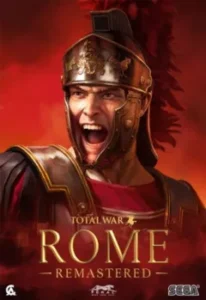
While the original 2004 software execution shell struggles on modern multi-core processors due to outdated Direct3D pipelines, the game experiences an active renaissance through Total War: ROME REMASTERED (2021), developed by porting experts Feral Interactive.
Operating on a heavily upgraded modern engine with a native 64-bit architecture, Feral’s master client introduced native 4K optimization, ultra-widescreen rendering, real-time lighting shaders, and a brand new Merchant agent loop to assert economic dominance. Crucially, through its milestone Patch 2.0.4, Feral permanently stripped away the legacy, hardcoded engine limits on factions, map regions, cultures, and units. This modding liberation fuels massive, highly ambitious community total conversions directly inside the Steam Workshop—such as RTR: Imperium Surrectum (expanding maps further east with massive region sets) and Total Conquest 2.0—turning the remastered client into the definitive sandbox for ancient strategy.
Release History
- Rome: Total War (Base Game Launch): September 22, 2004 (North America) / October 1, 2004 (Europe)
- Barbarian Invasion (Expansion Pack): September 27, 2005
- Alexander (Expansion Pack): June 19, 2006
- Total War: ROME REMASTERED: April 29, 2021 (Natively bundles all expansions and the classic version via Feral Interactive)
- Modern Packaging: Natively preserved and distributed as a unified digital package available on PC via Steam and GOG, alongside optimized mobile editions for iOS and Android.