Total War: Attila
 80
★ /10
80
★ /10
 PC
PC
 1C-SoftClub,
  SEGA Corporation


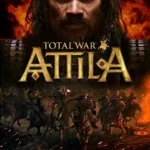
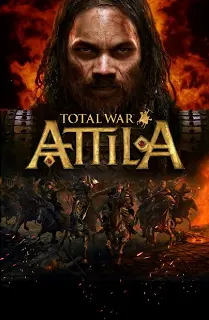
Total War: ATTILA (2015) stands as one of the most critical, unforgiving, and mechanically distinct turning points in the history of the legendary grand strategy and real-time tactics franchise. Following the massive, open-ended conquest sandbox of Total War: Rome II, which focused on building prosperous empires, the series executed a radical ideological pivot.
British developer The Creative Assembly stepped in, pushed their Warscape Engine into a dark, gritty, and hyper-challenging direction, and focused development duties on a theme entirely new to the franchise: Survival Strategy. Faced with the task of refreshing the player experience, Creative Assembly delivered a stellar, tension-filled chapter that transformed the traditional grand strategy map into a terrifying, apocalyptic race against environmental and military annihilation.
The Grand Reset: The Twilight of Antiquity
Total War: Attila completely severed ties with the triumphant, golden-age empire cultivation of its predecessors. Instead, it established a tightly constructed, bleak historical lore continuity: The Dawn of the Dark Ages and the Migration Period (395 AD).
The campaign map is a crumbling world on the brink of total collapse. The geopolitical landscape is anchored by the permanent split of the Roman world into the Western and Eastern Roman Empires. Rather than starting as a minor faction trying to expand, players choosing the Western Roman Empire are handed a massive, hyper-bloated territory that is immediately bleeding money, plagued by internal religious rioting, and assaulted on all borders by migrating barbarian tribes—all while the catastrophic shadow of Attila’s Hunnic hordes looms in the East.
The Core Evolution: Survival Systems & Scorched Earth
Creative Assembly heavily re-engineered the campaign mechanics to emphasize defense, scarcity, and destruction over unchecked territorial growth:
- The Nomadic Horde Mechanic: The campaign map threw out the rule that factions must hold static cities to survive. Entire cultures (such as the Vandals, Ostrogoths, and Huns) operate as mobile Hordes. They can pack up their entire civilization into their military stacks, moving freely across the globe and encamping anywhere to build mobile yurts, forge weapons, and gather population growth without owning a single brick.
- The Looming Climate Change Matrix: The turn-based layer introduced a dynamic global cooling system. As the years progress toward the arrival of Attila, a catastrophic climate shift causes the northern reaches of the map to freeze over. Regional Agricultural Fertility drops to zero layer by layer, forcing northern tribes to abandon their ancestral homelands and violently migrate south into Roman territory just to avoid starvation.
- The Scorched-Earth Raze Option: The infrastructure loop introduced absolute desolation. Any army that captures a settlement can choose to completely Raze it. Razing physically deletes the city from the campaign map, turning the entire province into a smoking, blackened wasteland void of resources, completely denying income and replenishment to anyone foolish enough to follow.
- Sanitation, Squalor, and Plagues: Managing cities required strict civic hygiene. Constructing industrial buildings or heavy military barracks spikes local squalor. If a faction neglects to build fresh-water aqueducts and public baths, a localized Plague will spontaneously ignite, spreading like wildfire along active trade routes, decimating civilian tax bases, and wiping out friendly army health.
The Deep Meta: Internal Politics & Real-Time Fire Dynamics
To maximize tactical and strategic tension, Attila introduced advanced psychological and physics-based systems:
- The Family Tree & Office Matrix: Resolving the widely criticized political layout of early Rome II, Attila brought back a deeply detailed, fully interactive Family Tree. Players must carefully manage the loyalty of their generals, arrange strategic political adoptions, and assign trustworthy family heirs to specific state offices (such as Magister Militum or Quaestor) to secure faction-wide economic and military modifiers while preventing sudden civil wars.
- Dynamic Real-Time Fire Spread: On the 3D tactical battlefield, sieges became terrifyingly chaotic. Projectiles, torches, and rampaging units can cause buildings to dynamically catch fire. High winds will actively spread the flames across an entire city block, destroying infrastructure in real-time. This structural collapse inflicts massive, continuous Morale penalties on the defending garrison, causing them to break and rout out of sheer panic.
Key Faction Archetypes & Strategic Roster Elements
The game’s primary cultural groups feature completely distinct operational playstyles, built around surviving or accelerating the end of the world:
| Faction Culture Group | Strategic Campaign Passive | Unique Mechanical Trait | Tactical Role & Battlefield Passives |
| The Roman Empires | Western: Extreme public order decay; Eastern: Massive interest yields on treasury reserves. | Imperial Management (Must balance crushing administrative corruption and religious shifts). | Defensive Shield Wall: Relies on hyper-heavy defensive infantry, testudo formations, and elite crossbowmen to hold choke points. |
| The Nomadic Huns | Natively immune to cold weather attrition loops. | Pure Destruction (Cannot settle down; gains massive income buffs from sacking and razing cities). | Horse Archer Domination: Emphasizes lightning-fast cavalry kiting, whistle-arrows to tank enemy morale, and heavy lancers. |
| The Migrating Tribes | High growth metrics when moving through foreign territories. | The Great Migration (Can settle down in rich Roman provinces, converting the cities to their own culture). | Shock Vanguard: Deploys high-damage, unshielded falxmen and heavy axemen designed to rapidly shatter Roman infantry lines. |
The Expansions: The Last Roman & Age of Charlemagne
The game’s structural framework supported two massive, critically acclaimed DLC expansions that shifted the timeline:
- The Last Roman (2015): Tracks the historical campaigns of Belisarius in 533 AD as he attempts to reclaim the fallen Western provinces for the Byzantine Empire, utilizing a unique Roman Expedition mobile army mechanic that answers directly to the Emperor in Constantinople.
- Age of Charlemagne (2015): Moves the timeline forward to 768 AD, serving as a highly polished, proto-medieval spin-off. It introduced a strict War Weariness system—where launching endless, un-decisive campaigns causes your population to violently revolt out of exhaustion—while layout out the foundational units (knights, early castles) that paved the way for the feudal era.
The Modern Standard: The 1212 AD Modding Renaissance
While Total War: Attila was notoriously criticized at launch for its brutal optimization requirements and high hardware strain—frequently causing frame drops on vintage setups due to its intense real-time particle effects and fire shaders—it has achieved legendary status among strategy purists.
Today, the base game stands fully preserved on Steam. Running the title on contemporary 64-bit multi-core processors under Windows 10 and Windows 11 allows modern hardware to finally brute-force past those legacy engine bottlenecks, enabling flawlessly smooth performance in native 1440p and 4K widescreen configurations out-of-the-box.
Furthermore, because of its advanced engine features (like true internal family trees, dynamic fire, and horde mechanics), Attila serves as the absolute premier platform for Medieval Kingdoms 1212 AD. This massive, community-driven total conversion mod completely rebuilds the client into a flawless, modern spiritual successor to Medieval II, featuring hundreds of custom 13th-century high-medieval duchies, royal rosters, and papal mechanics, keeping Attila permanently cemented as a grand strategy monument.
Release History
- Total War: Attila (Base Game Launch): February 17, 2015 (Published by Sega)
- The Last Roman (Campaign Expansion Pack): June 25, 2015
- Age of Charlemagne (Standalone-Style Expansion): December 10, 2015
- Modern Packaging: Readily available as a complete digital classic on PC via Steam, natively grouping all nomadic unit packs, culture expansions, and historical campaigns under a single launcher.