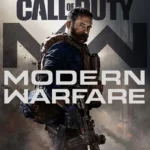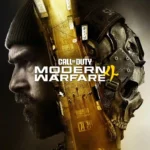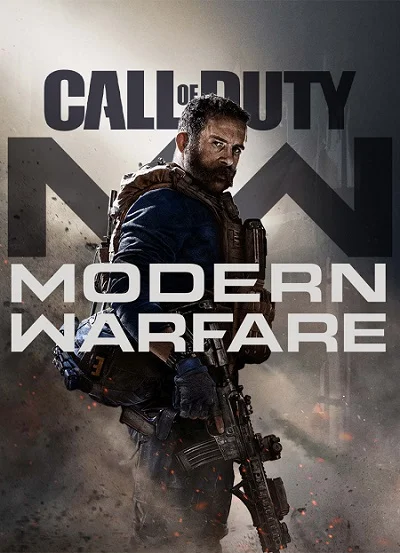
Call of Duty: Modern Warfare (2019)
 80
★ /10
80
★ /10
 PC
PC PS4
PS4 Xbox One
 Activision


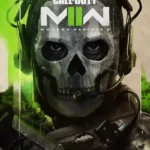
Call of Duty: Modern Warfare is a 2019 first-person shooter video game developed by Infinity Ward and published by Activision. Released on October 25, 2019, for Microsoft Windows, PlayStation 4, and Xbox One, the title serves as the sixteenth primary installment in the Call of Duty franchise and a full structural soft-reboot of the legendary Modern Warfare sub-series.
The game represents one of the most critical turning points in the franchise’s modern history. Developed with a massive budget, it discarded the established storylines of the original 2000s trilogy to ground Captain Price and Task Force 141 in a hyper-realistic, grit-focused contemporary setting.
Modern Warfare permanently reshaped the business model and mechanical baseline of the entire IP by introducing a groundbreaking new graphics engine, implementing native cross-platform multiplayer for the first time, and serving as the direct birthplace of the global free-to-play battle royale phenomenon, Call of Duty: Warzone.
Technical Specifications
| Attribute | Details |
| Developer | Infinity Ward (PC port by Beenox, support by High Moon Studios, Raven Software, and Sledgehammer Games) |
| Publisher | Activision |
| Director | Jack O’Hara, Pat Kelly |
| Narrative Director | Taylor Kurosaki |
| Engine | IW Engine 8.0 |
| Platform(s) | Microsoft Windows, PlayStation 4, Xbox One |
| Release Date | October 25, 2019 |
| Genre | First-person shooter (FPS), Tactical Action |
| Mode(s) | Single-player, Multiplayer, Special Ops (Cooperative) |
Narrative Architecture: Realism and Gray Morality
The single-player campaign intentionally stepped away from the bombastic, Michael Bay-esque summer blockbuster spectacle of older entries to deliver a mature, provocative depiction of modern warfare inspired by real-world contemporary conflicts. The plot outlines a tense, interconnected conflict involving a rogue Russian military faction, a chemical weapon crisis, and a localized resistance movement in the fictional Middle Eastern nation of Urzikstan.
The campaign drops players into a non-linear global itinerary, shifting between three primary perspective heroes:
- Sergeant Kyle “Gaz” Garrick (British SAS): Recruited by Captain John Price after surviving a catastrophic, coordinated terror cell attack in the heart of Piccadilly Circus, London.
- Alex Keller (CIA SAC/SOG): An American embedded operative working clandestinely alongside local freedom fighters behind enemy lines.
- Farah Karim: The fierce, battle-hardened leader of the Urzikstan Liberation Force, who fights to defend her homeland from foreign occupiers and local extremist factions alike.
The Threat Assessment System: To lean heavily into the realistic psychological horrors of modern counter-terrorism operations, the campaign introduced a dynamic moral evaluation metric. During tense, claustrophobic urban breach-and-clear operations (such as the highly acclaimed “Clean House” raid on a London townhouse), players must make split-second, reactionary determinations on whether target NPCs are hostile combatants or cowering civilians. Striking innocent bystanders penalizes the player’s post-level Threat Assessment score, directly altering character dialogue and tactical feedback.
Mechanical Revolution: The IW 8.0 Benchmark
Modern Warfare served as the debut software vehicle for the IW Engine 8.0, an entirely rebuilt, state-of-the-art tech stack that permanently unified the franchise’s development pipeline across multiple studios. The engine overhaul introduced advanced photogrammetry, high-tier volumetric lighting, and hardware-accelerated ray tracing (on PC), completely elevating the raw visual fidelity of tactical combat.
The updated engine codified several deep, tactical sandbox pillars that modernized first-person shooter physics:
- Tactical Sprinting: Introduced a secondary, high-velocity movement gear where the operator raises their weapon barrel vertically, sacrificing ready-to-fire response times to execute breakneck cross-corridor sprints.
- Weapon Mounting: Allowed players to dynamically anchor their weapon frames onto any physical geometric wall corner or horizontal barrier, heavily reducing recoil signatures while leaving only a fraction of their operator hitbox exposed to return fire.
- Dynamic Door Interaction: Players could seamlessly sprint straight through doors to forcefully breach rooms, slowly peek them open to toss in tactical equipment, or interact silently to retain an absolute stealth profile.
- Authentic Night Vision (NVG): Remodeled night-combat missions into intense tactical exercises. Activating NVG goggles completely strips away standard iron-sights or red-dot optics, forcing operators to rely on active laser-targeting indicators that are instantly visible to enemy combatants.
Multiplayer Overhauls & The Genesis of Warzone
The competitive multiplayer suite aggressively turned back the clock on arcade shooting, emphasizing slower, highly tactical movement, realistic audio propagation, and lethal time-to-kill speeds.
1. The Cross-Platform Unification
The game made historic waves as the first entry to natively support full cross-platform play and unified cross-progression across PC and consoles. Simultaneously, Activision permanently abandoned the highly fragmented “Paid Season Pass” multiplayer model, moving instead to a pro-consumer, free seasonal live-service architecture funded strictly by cosmetic Battle Passes.
2. Sandbox Diversity: Gunfight to Ground War
Lobbies scaled from hyper-compact arenas straight to grand battlefields:
- Gunfight: A highly tense, fast-paced 2v2 tactical mode featuring single-life elimination rounds on symmetrical micro-maps with randomized, identical weapon loadouts.
- Ground War: A massive 64-player combined-arms battlefield sandbox utilizing large-scale objective capturing, heavy armor vehicles, and dynamic troop helicopters.
3. The Birth of Warzone
In March 2020, Infinity Ward and Raven Software capitalized on the scale of the IW 8.0 engine to deploy Call of Duty: Warzone. Launching as a massive, free-to-play standalone battle royale, Warzone dropped 150 players onto the expansive, unified map of Verdansk. Combining the fluid gunplay of Modern Warfare with revolutionary mechanics like the 1v1 Gulag respawn arena and buy-station economies, the mode became an immediate global phenomenon, permanently dominating the franchise’s live-service lifecycle over the subsequent half-decade.
Contemporary Retrospective (2026 Perspective)
Sitting in mid-2026, the 2019 iteration of Modern Warfare is universally revered as a monumental, industry-defining masterpiece that effectively rescued and future-proofed a flagship franchise during a period of intense fatigue. Its engine upgrades, gunsmith weapon-customization matrices, and cross-platform architecture established the mandatory foundation for every single installment that followed.
The software’s legacy has experienced an intense spike in community attention following the June 7, 2026, Xbox Games Showcase, where developers showcased extensive gameplay for the upcoming Call of Duty: Modern Warfare 4, locked in to launch on October 23, 2026. Because Modern Warfare 4 expands directly on the realism-first tech stacks and the geopolitical lore pioneered by this 2019 soft-reboot, players have flooded back to the original client en masse.
The game remains magnificently preserved and active today:
On Xbox Series X/S and PlayStation 5 systems via native backward compatibility, the game runs flawlessly with immaculate performance pacing and optimized spatial scaling. On PC, the game stands as a thoroughly stable, highly active blueprint under modern 64-bit Windows 11 frameworks via Battle.net and Steam, serving as a premium tactical training ground for veteran squads preparing to deploy onto the Korean front lines later this autumn.
DLC & Expansions 4



Call of Duty news
More news
Xbox Game Pass September Wave 2: 13 Games Including E-Day
Doom Slayer Joins Call of Duty in Season 6's Halloween Update
Activision Films Cheat Maker Being Served Cease and Desist Order
Modern Warfare 4 Beta Update Adds Map, Mode, and Quieter Footsteps