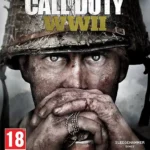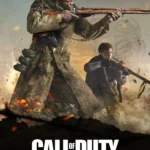
Call of Duty: WWII
 79
★ /10
79
★ /10
 PC
PC PS4
PS4 Xbox One
 Activision

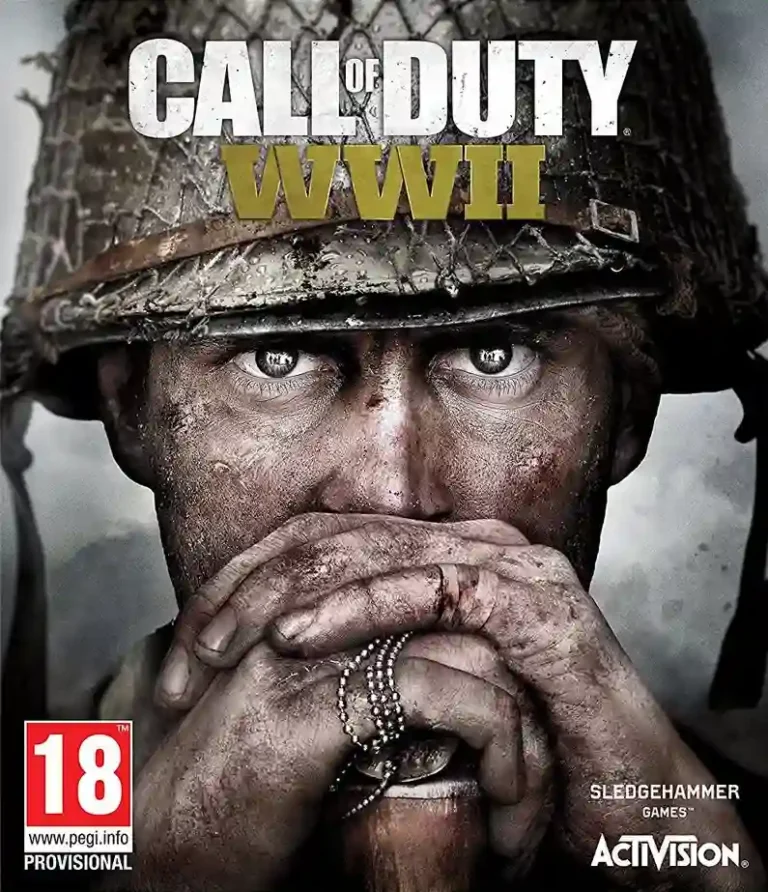
Call of Duty: WWII is a 2017 first-person shooter video game developed by Sledgehammer Games and published by Activision. Released worldwide on November 3, 2017, for Microsoft Windows, PlayStation 4, and Xbox One, the title stands as the fourteenth primary installment in the Call of Duty franchise.
WWII represents a monumental structural turning point for the IP. Following a three-year period of high-mobility “jetpack” entries (Advanced Warfare, Black Ops III, and Infinite Warfare) that had deeply polarized the player base, this entry served as the highly anticipated return to traditional “boots-on-the-ground” tactical gameplay, throwing the franchise back to its mid-2000s historical roots.
Technical Specifications
| Attribute | Details |
| Developer | Sledgehammer Games (with support from Raven Software) |
| Publisher | Activision |
| Engine | Sledgehammer Games Engine (Upgraded 2017 framework) |
| Platform(s) | Microsoft Windows, PlayStation 4, Xbox One |
| Release Date | November 3, 2017 |
| Genre | First-person shooter (FPS), Historical |
| Mode(s) | Single-player, Multiplayer, Nazi Zombies (Cooperative) |
Fighting Through Europe: Campaign and Narrative
The single-player campaign focuses heavily on the European theater of World War II, charting the operational timeline of the Allied forces from 1944 to 2045. Players primarily control Private Ronald “Red” Daniels (voiced and motion-captured by Brett Dalton) of the U.S. 1st Infantry Division. The narrative path traces iconic historical milestones, routing squads through the chaotic D-Day landings at Omaha Beach, the liberation of Paris, the grueling Battle of the Hurtgen Forest, and the definitive Battle of the Bulge.
The writing deliberately steps away from the “lone superhero” cinematic tropes of prior entries, zeroing in on the intense psychological friction between Daniels’ fiercely loyal best friend, Private Robert Zussman (Jonathan Tucker), and their hardened, cynical platoon leader, Technical Sergeant William Pierson (portrayed with severe intensity by Josh Duhamel).
The Squad Reliance System
To emphasize the vulnerability of fighting a conventional world war, Sledgehammer Games permanently removed the franchise’s signature automatic health regeneration from the campaign framework for the first time since the 2003 original.
Instead, players must actively manage their survivability by utilizing the Squad Reliance System. Moving through combat zones builds up proximity meters for Red’s companion AI squadmates. When fully charged, players must interact with specific squad members to stay supplied:
- Zussman: Tosses physical First Aid Kits to heal injuries.
- Pierson: Spotts and outlines distant enemy sniper positions through solid geometry.
- Turner: Drops extra ammunition clips for active primary armaments.
- Aiello: Supplies tactical smoke signals to call down targeted mortar strikes on entrenched machine-gun nests.
Multiplayer Overhauls: Headquarters and War Mode
The competitive multiplayer sandbox stripped away all wall-running and double-jumping mechanics, introducing structural design shifts to modernize the boots-on-the-ground loop:
1. The Headquarters Social Space
WWII introduced Headquarters, a massive, 48-player live social hub situated on the coastal sands of Normandy after liberation. Between matchmaking queues, players navigate a third-person perspective sandbox to physically interact with the game systems. The space features an active 1v1 Pit for quick-reflex duels, a live Firing Range to test customized weapon attachments, a theater to watch competitive events, and a central depot to open cosmetic Supply Drops in front of adjacent players.
2. The Divisions System
Replacing the classic “Pick 10” custom class matrix, player progression was re-architected around Divisions. Choosing a specific military branch unlocked gated weapon proficiencies and combat traits that evolved across four prestige tiers:
- Infantry: Specialized in mid-range rifles, utilizing built-in bayonet close-quarter attachments and extra primary attachment slots.
- Airborne: Optimized for run-and-gun submachine gun speed, enabling players to equip suppressors on the fly and sprint faster over extended distances.
- Armored: Built for heavy defensive anchoring, packing light machine guns, passive resistance to explosive grenade damage, and reduced bullet flinch.
- Mountain: The stealth-centric sniper branch, rendering operators completely invisible to enemy recon aircraft and masking silent footsteps.
- Expeditionary: Equipped shotguns with volatile, burning incendiary shells and scavenged tactical lethal equipment off fallen combatants.
3. War Mode
Co-developed alongside Raven Software, War Mode introduced a narrative-driven, asymmetric objective multiplayer experience. The mode splits teams into attacking and defending Allied or Axis forces across multi-stage maps. Players must coordinate smoke screens, build physical structural walls, escort rolling tanks down narrow lanes, or detonate communications equipment, completely neutralizing traditional kill-death-ratio tracking to focus entirely on macro tactical positioning.
Nazi Zombies: The Gritty Horror Rebirth
Shifting far away from the bright, self-aware pop-culture tropes of Treyarch or Infinity Ward’s previous iterations, Sledgehammer engineered Nazi Zombies as a terrifying, dark psychological horror game. Rooted deeply in historical occult mythos and body horror, the mode follows a team of international art experts who infiltrate the Bavarian village of Mittelburg to recover stolen cultural masterpieces, only to uncover a horrific plot led by Dr. Peter Straub (voiced by Udo Kier) to resurrect a cybernetically stitched army of the undead.
The cooperative survival suite features an exceptional cinematic cast: Katheryn Winnick (Marie Fischer), David Tennant (Drostan Hynd), Élodie Yung (Olivia Durant), and Ving Rhames (Jefferson Potts). The gameplay updated traditional round-based survival systems by embedding a comprehensive In-Game Quest Log, offering clear step-by-step guidance to help casual players unlock the central map easter eggs while keeping a hidden, far more brutal “Hardcore” path gated away for veteran survival purists.
Contemporary Stance & 2026 Perspective
From a mid-2026 perspective, Call of Duty: WWII is remembered as a highly successful, stabilizing palette-cleanser that successfully brought the franchise back to its core identity during a chaotic transitional era for first-person shooters.
The software remains highly functional, preserved, and easily accessible across modern computing architectures:
The title enjoys excellent technical health on contemporary setups. On Xbox Series X/S and PlayStation 5 hardware via native backward compatibility, the game executes with locked, stable frame rates and pristine spatial scaling.
On PC, the game is fully stable under modern 64-bit Windows 11 frameworks via Steam. While standard competitive Team Deathmatch playlists remain populated primarily during community-coordinated retro weekend events, the stellar, health-pack-dependent single-player campaign and the uniquely gritty Nazi Zombies mode remain premium, highly recommended destinations for historical shooter fans looking to look back at Sledgehammer’s definitive throwback.
Call of Duty news
More news
Activision Confirms Next COD After MW4 Will Be a New Sub-Franchise

EA Sports College Football's Future at Risk, Sources Say
Call of Duty: Modern Warfare 4 PC Specs, Ray Tracing, and Collateral Mode Detailed

Xbox Game Pass September Wave 2: 13 Games Including E-Day