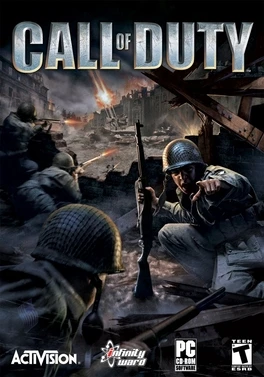
Call of Duty
 91
★ /10
91
★ /10
 PC
PC PS 3
PS 3 Xbox 360
 Aspyr Media
 1C-SoftClub
 Activision
Where to buy

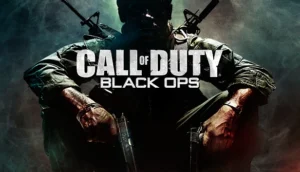
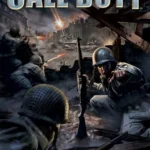
Call of Duty is a 2003 historical first-person shooter video game developed by Infinity Ward and published by Activision. Released on October 29, 2003, for Microsoft Windows (with subsequent ports arriving on Mac OS X, the N-Gage, and later remastered for PlayStation 3 and Xbox 360 as Call of Duty: Classic), the title stands as the foundational debut installment of the multi-billion-dollar Call of Duty franchise.
The creation of Call of Duty is one of the most famous corporate “revenge” stories in gaming history. The game was developed by a freshly formed Infinity Ward, a studio composed largely of ex-2015, Inc. developers who had previously created the critically acclaimed Medal of Honor: Allied Assault for Electronic Arts. Splitting away due to creative restrictions, the team partnered with Activision to build what was internally dubbed the “Medal of Honor killer.”
The game was an instant critical masterpiece, winning numerous “Game of the Year” awards for 2003. It permanently changed the landscape of historical shooters by shifting away from the “lone superhero” trope of older games, pioneering a cinematic, squad-focused philosophy summarized by its iconic marketing tagline: “No One Fights Alone.”
Technical Specifications
| Attribute | Details |
| Developer | Infinity Ward (Mac port by Aspyr, N-Gage port by Nokia) |
| Publisher | Activision |
| Directors | Jason West (Project Lead), Vince Zampella (Studio Head) |
| Lead Designer | Zied Rieke |
| Composer | Michael Giacchino |
| Engine | id Tech 3 (Heavily modified Quake III Arena framework) |
| Platform(s) | Microsoft Windows, Mac OS X, N-Gage, PlayStation 3, Xbox 360 |
| Release Date | October 29, 2003 |
| Genre | First-person shooter (FPS), Historical |
| Mode(s) | Single-player, Multiplayer |
The Cinematic Allied Trio: Campaign Architecture
The single-player campaign is split across three distinct national military tracks encompassing 24 interconnected narrative missions. Rather than tracking a singular super-soldier, the game utilizes an ensemble cast of ordinary conscripts and volunteers to showcase the macro scale of the European theater.
1. The American Campaign
Players control Private Infantry Martin of the 506th Parachute Infantry Regiment, 101st Airborne Division. The narrative opens with a grueling training gauntlet at Camp Toccoa before launching into a chaotic D-Day night drop behind enemy lines near Sainte-Mère-Église. Martin’s track focuses on high-stakes, asymmetric paratrooper operations: clearing heavy artillery positions at Brécourt Manor, ambushing German staff cars in Carentan, and executing a daring midnight rescue of British officers from a heavily fortified Bavarian chateau.
2. The British Campaign
Stepping into the boots of Sergeant Jack Evans of the 2nd Airborne Battalion, Ox and Bucks Light Infantry. The British track delivers some of the most intense tactical set-pieces of the era, opening with the iconic, dead-of-night glider assault to capture Pegasus Bridge hours before the Normandy landings. Evans is later transferred to the Special Air Service (SAS), where alongside the legendary, original Captain Price (making his historic franchise debut here), he undertakes sabotage missions to destroy the Eder Dam and infiltrates the German battleship Tirpitz.
3. The Soviet Campaign
Universally regarded as the emotional and cinematic high point of the game, players control Conscript (later Lieutenant) Alexei Voronin of the 13th Guards Rifle Division. The campaign opens with the harrowing, uncompromised crossing of the Volga River into the burning ruins of Stalingrad.
The Desperation of the Eastern Front: Reflecting historical realities, Voronin is stripped of a starting weapon upon docking, forced to sprint up a hill under blistering MG42 fire carrying nothing but a five-round clip of ammunition while political commissars shoot anyone who retreats.
Voronin survives to help coordinate the famous block-by-block defense of Pavlov’s House, eventually advancing through the tank-cluttered plains of the Battle of Kursk before storming Berlin to help raise the Soviet flag over the Reichstag.
Mechanical Foundations: Shifting the FPS Paradigm
While later entries modernized the series into a lightning-fast arcade shooter, the 2003 original was a highly calculated, tactical experience that introduced foundational pillars to the first-person shooter genre:
- Aim Down Sights (ADS): While select earlier PC titles experimented with magnification, Call of Duty globally popularized the modern ADS mechanic. Pressing the alternate fire button physically raises the weapon model to eye level, forcing players to align real iron sights or scopes to achieve accuracy, replacing the classic “run-and-gun” crosshair hip-firing of the 90s era.
- The Traditional Health Bar: Unlike its 2005 sequel, which invented automatic health regeneration, the 2003 original enforced strict, classic survival rules. Players command a static health bar that can only be replenished by actively scouring the battlefield geometry for physical First Aid Kits and medical supplies, making every stray bullet wound a permanent, high-stakes threat.
- The Shell Shock Effect: To heighten the chaotic audio-visual horror of conventional warfare, Infinity Ward engineered “Shell Shock.” Standing too close to an artillery blast or a heavy grenade explosion does not just deal damage—it dynamically blurs the player’s vision, tilts the camera axis, drastically slows down movement speed, and replaces the master game audio with a high-pitched, ringing tinnitus effect.
Multiplayer & The Quake Engine Legacy
The competitive multiplayer sandbox of Call of Duty was a pure, PC-centric tactical loop built directly upon a heavily modified version of the id Tech 3 (Quake III Arena) engine. Supporting up to 64 players on dedicated server networks, the game featured a completely flat, skill-driven combat ecosystem entirely devoid of perks, custom attachments, or killstreaks.
Lobbies were defined by rigid weapon pick-outs based entirely on your chosen nation (such as the American M1 Garand, British Lee-Enfield, or Soviet PPSh-41). Matchmaking popularized timeless, highly competitive tactical game modes like Search & Destroy, Behind Enemy Lines, and Retrieval, where victory depended entirely on raw iron-sights precision, cross-corridor smoke grenade placement, and tight team communication.
The massive success of this multiplayer baseline directly prompted the release of the highly acclaimed 2004 expansion pack, Call of Duty: United Offensive (developed by Gray Matter Studios), which introduced vehicle mechanics, rank-up bonuses, and base-capturing modes to the engine.
Contemporary Stance
Looking back from mid-2026, the original 2003 Call of Duty is revered as an immortal, untouchable museum piece—the grandfather blueprint that sparked a cultural empire. Within modern retrospective gaming circles, it is highly celebrated for its distinct, slower pacing and its gritty historical authenticity, standing as a sharp, refreshing contrast to the high-speed, futuristic Omnimovement sandboxes ruling the modern era in titles like Black Ops 6 and Black Ops 7.
Because the game is now twenty-three years old, preserving the software on modern hardware requires a dedicated community effort:
“The original 2003 vanilla PC client can struggle out-of-the-box on modern systems due to legacy OpenGL driver compatibility issues and an absolute lack of native widescreen support. To safeguard the granddad of the franchise under modern 64-bit Windows 11 desktop frameworks, the PC community relies heavily on open-source engine overhauls like CoD Extended or custom community wrappers. These independent patches seamlessly inject full 16:9 widescreen scaling, fix modern graphics card crashes, and secure the network pipeline. Thanks to these preservation efforts, retro clans continue to host highly active, secure dedicated servers today, keeping the original storming of Pegasus Bridge and the tactical lanes of Carentan fully alive and playable.”
Call of Duty news
More news
Doom Slayer Joins Call of Duty in Season 6's Halloween Update
Activision Films Cheat Maker Being Served Cease and Desist Order
Modern Warfare 4 Beta Update Adds Map, Mode, and Quieter Footsteps

A Call of Duty Studio May Be Tapped to Work on Halo