Call of Duty: World at War
 84
★ /10
84
★ /10
 Nintendo DS
 PC
PC PS 2
PS 2 PS 3
PS 3 Wii
Wii Xbox 360
 Activision
Where to buy

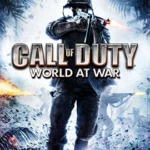
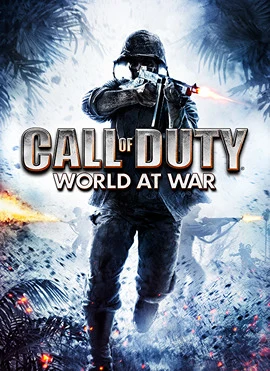
Call of Duty: World at War is a 2008 first-person shooter video game developed by Treyarch and published by Activision. Released in November 2008 for Microsoft Windows, PlayStation 3, Xbox 360, and Nintendo Wii, the title stands as the fifth primary installment in the Call of Duty franchise.
World at War represents a monumental, historically defining pivot for developer Treyarch. Standing directly in the shadow of Infinity Ward’s industry-shattering 2007 release Call of Duty 4: Modern Warfare, Treyarch chose to pull the franchise back to World War II. However, they abandoned the heroic, romanticized lens of older titles to deliver a terrifyingly gritty, visceral, and horror-infused depiction of war.
The game is celebrated as the absolute chronological genesis of the multi-billion dollar “Black Ops Universe” and is immortalized in gaming history for introducing a hidden, post-credits mini-game that would evolve into a massive cultural phenomenon: Nazi Zombies.
Technical Specifications
| Attribute | Details |
| Developer | Treyarch (Nintendo DS and PS2 companion ports by n-Space and Rebellion) |
| Publisher | Activision |
| Director | Cesar Stastny |
| Lead Writer | Craig Houston |
| Starring | Gary Oldman (Reznov), Kiefer Sutherland (Roebuck) |
| Engine | IW Engine 3.0 (Upgraded with an audio propagation matrix, structural fire physics, and a full gibbing/dismemberment engine) |
| Platform(s) | Microsoft Windows, PlayStation 3, PlayStation 2, Xbox 360, Nintendo Wii, Nintendo DS |
| Release Date | November 11, 2008 |
| Genre | First-person shooter (FPS), Military Horror |
| Mode(s) | Single-player, 4-Player Cooperative Campaign, Multiplayer, Nazi Zombies |
Unforgiving Realism: Campaign Overview
The single-player campaign focuses on the brutal final years of World War II (1942–1945). To emphasize the global scale of the devastation, the narrative splits its pacing across two distinct, uncompromised conventional warfare tracks:
1. The Pacific Theater
Players control U.S. Marine Raider Private Miller alongside Sergeant Roebuck (voiced with gritty intensity by Kiefer Sutherland) and Corporal Polonsky. This track focuses on the grueling island-hopping campaign against the Imperial Japanese Army (IJA).
The level design captures the claustrophobic paranoia of jungle warfare, introducing mechanics like dynamic IJA Banzai charges, camouflaged ambush pits, hidden sniper trees, and a devastating infantry Flamethrower engine that realistically spreads fire across dry brush and grass geometry.
2. The Eastern Front
Shifting to the European theater, players step into the boots of Red Army Private Dimitri Petrenko. The timeline opens with “Vendetta,” a highly acclaimed stealth sniper mission in the corpse-strewn ruins of Stalingrad, where Dimitri links up with the legendary, vengeful Sergeant Viktor Reznov (voiced masterfully by Gary Oldman).
The narrative tracks their bloody, merciless march of retribution across Germany, culminating in a final, chaotic assault on the Reichstag in Berlin, where Dimitri forcefully raises the Soviet flag over the roof to close the war.
The Moral Gray Zone: World at War handles its historical atmosphere with brutal honesty, presenting the atrocities committed by both sides. Reznov acts as a chilling psychological vector, actively encouraging the player to execute fleeing, unarmed German soldiers, while Chernov—a gentle, diary-writing recruit—serves as the squad’s failing moral conscience before his tragic, fiery death outside the Reichstag.
Gameplay Overhauls
Treyarch heavily modified the IW 3.0 graphics framework to accommodate a grimier, high-impact combat aesthetic:
- The Gore/Gibbing Engine: For the first time in the franchise, high-caliber weaponry, heavy machine guns, and explosive artillery shells realistically sever limbs, blast open torsos, and tear apart enemy geometry, emphasizing the raw physical trauma of high-density ordnance.
- 4-Player Co-Op Integration: The entire single-player narrative was engineered to support up to four players online or two players via local split-screen. The cooperative campaign introduced competitive Death Card Modifiers hidden across levels, allowing squads to apply gameplay updates like enabling headshot-only parameters or turning fallen enemies into explosive traps.
The Birth of Nazi Zombies
World at War holds an legendary legacy for creating the survival cooperative game loop. Originally coded in secret by a small group of Treyarch developers during their off-hours, the mode was hidden as an unmarketed surprise reward that triggered only after the campaign’s final credits rolled.
The mode tracks a desperate, round-based wave-defense loop that evolved across four map packs:
- Nacht der Untoten (Night of the Undead): The bare-bones launch map. Four players fortify a small, ruined concrete bunker against endless waves of slow-marching undead soldiers, spending points accumulated from weapon kills to repair window barriers and purchase firearms off the walls or from a randomized Mystery Box.
- Verrückt (Asylum): Set inside a terrifying German asylum. This map structurally modernized the mode by introducing the Power Grid mechanic, splitting cooperative squads into separate spawn rooms at the start, and creating the foundational Perk-a-Cola vending machines (Juggernog, Speed Cola, Quick Revive, Double Tap).
- Shi No Numa (Swamp of Death): A dense, tropical swamp outpost that introduced the hyper-mobile Hellhound rounds, environmental traps, the devastating Wunderwaffe DG-2 wonder weapon, and the immortal core cast of characters known as the Ultimis Crew: Tank Dempsey, Nikolai Belinski, Takeo Masaki, and Edward Richtofen.
- Der Riese (The Giant): A massive industrial factory map that permanently grandfathered in modern Zombies infrastructure by introducing the weapon-upgrading Pack-a-Punch Machine, interactive teleporters, and complex multi-stage narrative Easter Eggs.
Contemporary Stance & 2026 Perspective
Sitting in mid-2026, Call of Duty: World at War occupies a sacred, foundational status within modern gaming. Following the massive success of 2024’s Black Ops 6 and the current active live-service cycles of 2025’s near-future Black Ops 7 (which propelled the timeline into 2035), community eyes routinely circle back to this 2008 classic. Because the modern titles expand directly on the psychological fallout of Viktor Reznov’s legacy, the origins of Nova-6, and the multi-generational lore of the Dark Aether, World at War remains the absolute, uncompromised structural anchor of the entire Treyarch sub-series.
The legacy software remains brilliantly active and preserved through two primary channels:
Modern Console Backward Compatibility
On Xbox Series X and Series S hardware via native backward compatibility, the 2008 client runs with immaculate stability. System-level optimizations leverage FPS Boost to permanently unlock old frame rate dips, delivering a locked, high-performance 60 frames per second alongside native Auto HDR tone mapping, ensuring that legendary multiplayer maps like Castle, Makin, and Dome look exceptionally crisp on modern displays.
The Plutonium T4 PC Sanctuary
On PC, the vanilla Steam server backend is heavily vulnerable to modern security risks. To play safely under modern 64-bit Windows 11 desktop environments, the PC player base relies entirely on the independent Plutonium T4 Network. This highly secure custom launcher client completely replaces the old matchmaking backend to provide dedicated server browsers, robust built-in anti-cheat protections, and extensive custom modding features. Thanks to this community sanctuary, retro tournaments and custom Der Riese survival runs remain completely seamless and heavily populated today.
Call of Duty news
More news
Xbox Game Pass September Wave 2: 13 Games Including E-Day
Doom Slayer Joins Call of Duty in Season 6's Halloween Update
Activision Films Cheat Maker Being Served Cease and Desist Order
Modern Warfare 4 Beta Update Adds Map, Mode, and Quieter Footsteps