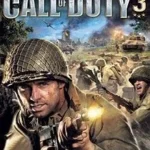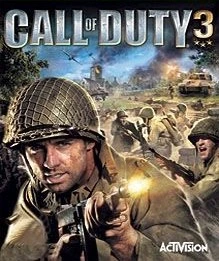
Call of Duty 3
 82
★ /10
82
★ /10
 PS 2
PS 2 Wii
Wii Xbox
Xbox Xbox 360
 Activision
Call of Duty: Third flagship installment is a 2006 historical first-person shooter video game developed by Treyarch and published by Activision. Released in November 2006, the title serves as the third primary entry in the Call of Duty franchise and the very first mainline flagship project spearheaded entirely by developer Treyarch, who took over primary production duties from Infinity Ward to establish a annualized release pipeline for the franchise.
Call of Duty 3 occupies a completely unique, historic position within the multi-billion-dollar franchise’s legacy. It stands as the only mainline flagship entry to never receive a native Microsoft Windows PC release, remaining strictly a console-exclusive title. Launched on seventh-generation platforms (Xbox 360, PlayStation 3, and Wii) alongside supporting legacy ports for sixth-generation systems (Xbox and PlayStation 2), the game functioned as a critical next-generation showcase, utilizing early motion-control capabilities and introducing vehicle-driven, large-scale tactical multiplayer modes to the series.
Technical Specifications
| Attribute | Details |
| Developer | Treyarch (with supporting development by Pi Studios) |
| Publisher | Activision (Spike in Japan) |
| Director | Richard Farrelly |
| Lead Writer | Marc Guggenheim |
| Engine | Treyarch NGL Engine |
| Platform(s) | Xbox 360, PlayStation 3, Wii, Xbox, PlayStation 2 |
| Release Date | November 7, 2006 (Wii Launch: Nov 14, 2006 / PS3 Launch: Nov 17, 2006) |
| Genre | First-person shooter (FPS), Historical |
| Mode(s) | Single-player, Multiplayer |
The Normandy Breakout: Campaign Architecture
While prior entries in the franchise scattered their campaigns across vastly different global theaters of World War II, Call of Duty 3 focuses its entire narrative architecture on a single, continuous, and grueling historical event: Operation Cobra and the Normandy Breakout (The Falaise Pocket) in the summer of 1944. Players navigate the intersecting, multi-national paths of four distinct Allied nations advancing to liberate Paris from Nazi occupation:
1. The American Track
Players control Private Nichols, a fresh replacement thrust into the veteran 29th Infantry Division (and later the 90th Infantry Division). His chapters track high-intensity, muddy infantry advances to capture Saint-Lô, secure the heavily defended Mayenne Bridge before demolition squads can detonate it, and hold out against waves of retreating German armor inside the blood-slicked crossroads of Chambois.
2. The British & French Resistance Track
Stepping into the boots of Sergeant James Doyle, a returning British Special Air Service (SAS) operative from 2004’s Call of Duty: United Offensive expansion pack. Alongside Major Gerald Ingram, Doyle parachutes behind enemy lines to link up with the French Maquis Resistance. Their operations lean heavily into guerrilla tactics—sabotaging German-held fuel plants in Autun, orchestrating midnight mansion rescues, and utilizing armed jeeps to execute hit-and-run strikes.
3. The Canadian Track
Following Private Cole of the Argyll and Sutherland Highlanders of Canada under the command of the aggressive, hot-headed Lieutenant Jean-Guy Robichaud. The Canadian missions track claustrophobic urban operations to clear out pockets of resistance near Caen, navigating booby-trapped industrial complexes, and clearing dense forest logging blocks.
4. The Polish Track
An entirely vehicle-focused campaign perspective, placing players in the seat of Corporal “Bohater” Wojciech of the Polish 1st Armored Division. Driving a heavily armored Sherman tank, players engage in massive armored warfare engagements across the plains of Saint-Aignan-de-Cramesnil before mounting a final, defensive stand on the heights of Mount Ormel (known historically as “The外 Mace”) against desperate, retreating Axis divisions.
Gameplay Mechanics & Motion Control Integration
Developed under a tight, legendary eight-month production timeline, Treyarch heavily adapted their proprietary NGL Engine to push physics immersion and physics tracking:
1. Close Quarter Battles (CQB)
The single-player campaign introduced a dynamic Quick-Time Event (QTE) system known as Close Quarter Battles. When breaching specific rooms or moving through tight blind spots, German soldiers can suddenly tackle the player to the ground. The gameplay camera instantly shifts to a frantic, up-close struggle, forcing the player to mash specific controller buttons to wrestle control of the rifle barrel, execute a fatal butt-stroke knock back, or plant an immediate point-blank shot to survive.
2. Early Hardware Motion Experiments
As a premiere launch title for both the PlayStation 3 and Nintendo Wii, Call of Duty 3 served as a prime mechanical sandbox for motion controls:
- The Wii Remote and Nunchuk: Players physically thrust the Wii remote forward to punch enemies during melee combat and twisted the controllers laterally to steer military vehicles.
- The PS3 SIXAXIS Controller: Players shook the gamepad upside down to execute physical rifle bashes and physically turned the entire controller frame like a steering wheel to pilot vehicles.
- Tactical Interactions: Sledgehammer planting, heavy crane turning, and setting chemical fuse timers required players to perform physical rolling motions on their analog sticks or gamepads, moving past basic button inputs.
Multiplayer Suite: The Class and Vehicle Blueprint
The competitive multiplayer sandbox of Call of Duty 3 served as the absolute layout blueprint for Treyarch’s later multiplayer innovations. On seventh-generation console setups (Xbox 360 and PlayStation 5), the engine supported unprecedented 24-player network lobbies, replacing the standard corridor shooting layouts of older entries with sprawling, wide, objective-driven battlefields.
Multiplayer Character Classes
The game completely discarded generic soldier selections to enforce strict, role-based Character Classes, each packing independent special abilities and attributes:
- Rifleman: The frontline standard infantry, equipped with general assault rifles and a built-in bayonet for instant melee lunges.
- Medic: Crucial team anchors, carrying high-velocity pistols and the active ability to physically revive downed teammates on the battlefield.
- Support: Packed heavy light-machine guns and dropped physical ammunition packs onto the geometry to resupply allies.
- Scout: Long-range snipers possessing active artillery-targeting binoculars to drop mortar barrages down on entrenched nests.
This class diversity was heavily amplified by the integration of Multi-Class Vehicular Combat. Arenas were populated by fully drivable Sherman and Panzer tanks, rapid-transport jeeps, and hyper-mobile motorcycles equipped with functional passenger sidecars, allowing players to execute high-speed tactical flag captures and armored flanking maneuvers across wide maps.
Contemporary Status & 2026 Perspective
Sitting in mid-2026, Call of Duty 3 holds a fascinating, nostalgically isolated position within the context of the modern franchise. Because it represents the missing technological link that was completely skipped on PC, it remains a literal “lost archive” for desktop enthusiasts. However, within retrospective game-design circles, the game has received a massive wave of appreciation. It is increasingly highlighted as the vital, essential developmental bridge where Treyarch honed their cinematic ensemble-cast storytelling, dark narrative pacing, and massive vehicle logistics before deploying their consecutive historical blockbusters like World at War and the original Black Ops.
The software remains fully active, preserved, and structurally accessible today through console architecture:
The title enjoys immaculate technical health on modern setups. On Xbox Series X and Series S hardware via native backward compatibility, the game executes with locked, high-performance stability.
System-level emulative optimizations push the legacy engine to deliver a flawlessly smooth performance profile, taking full advantage of modern SSD architectures to execute swift asset streaming and minimize loading gates. While finding an organic, uncoordinated public multiplayer match require community grouping apps or dedicated forum scheduling, the diverse, multi-national single-player campaign remains a pristine, highly recommended retro destination for historical shooter enthusiasts looking to witness the exact birthplace of Treyarch’s flagship vision.
Call of Duty news
More news
Xbox Game Pass September Wave 2: 13 Games Including E-Day
Doom Slayer Joins Call of Duty in Season 6's Halloween Update
Activision Films Cheat Maker Being Served Cease and Desist Order
Modern Warfare 4 Beta Update Adds Map, Mode, and Quieter Footsteps