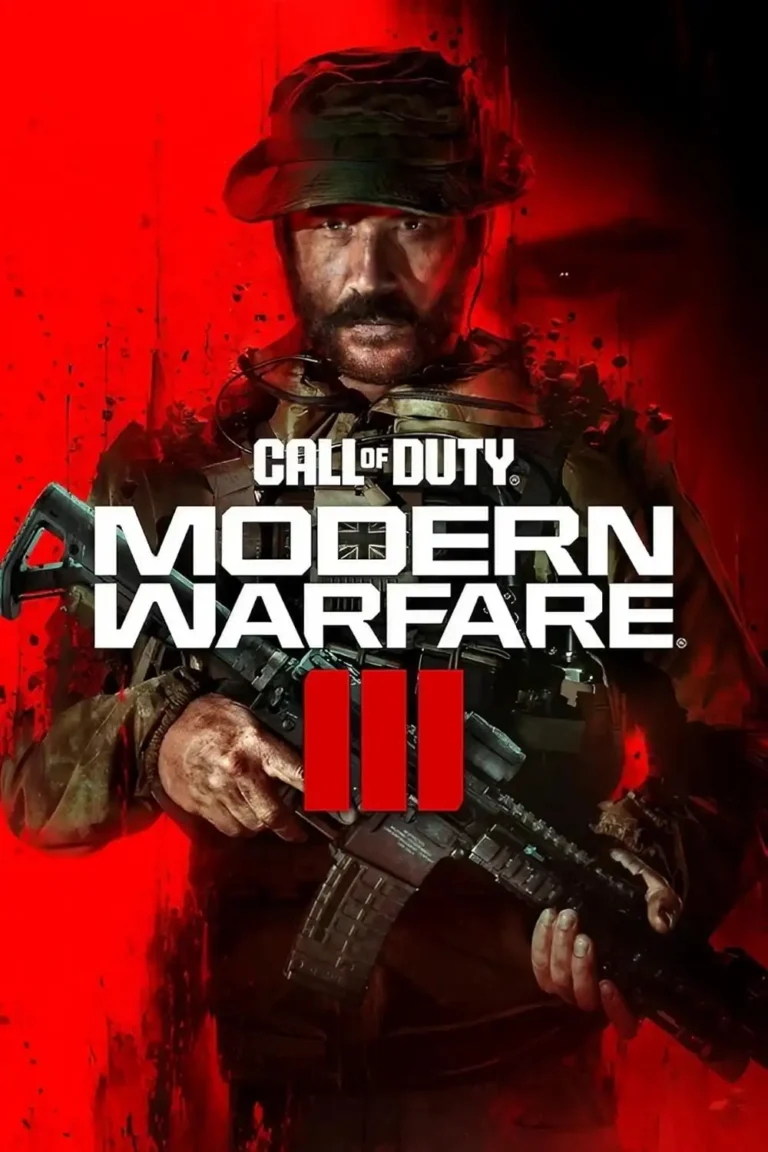
Call of Duty: Modern Warfare III
 56
★ /10
56
★ /10
 PC,
PC,  PS4,
PS4,  PS5,
PS5,  Xbox One,
  Xbox Series X/S
 Activision


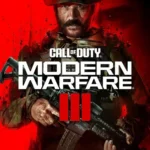
Call of Duty: Modern Warfare III is a 2023 first-person shooter video game developed by Sledgehammer Games and published by Activision. Released on November 10, 2023, for Microsoft Windows, PlayStation 4, PlayStation 5, Xbox One, and Xbox Series X/S, the title serves as the twentieth primary installment in the Call of Duty franchise and the direct narrative conclusion to the rebooted Modern Warfare trilogy.
The game’s development cycle is historically unique; originally conceived behind the scenes as a massive, premium expansion continuation for 2022’s Modern Warfare II, the project was upscaled mid-cycle into a standalone, full-price release. While its single-player campaign faced heavy critical backlash for its rushed execution and recycled sandbox elements, Modern Warfare III was widely celebrated by competitive multiplayer purists for actively reversing controversial design choices from the previous year, restoring classic movement mechanics, and serving as a massive nostalgia vehicle.
Technical Specifications
| Attribute | Details |
| Developer | Sledgehammer Games (with support from Treyarch, Infinity Ward, Raven Software, and Beenox) |
| Publisher | Activision |
| Director | Dave Swenson |
| Engine | IW Engine 9.0 (High-Mobility Architecture) |
| Platform(s) | Microsoft Windows, PlayStation 4, PlayStation 5, Xbox One, Xbox Series X/S |
| Release Date | November 10, 2023 |
| Genre | First-person shooter (FPS), Tactical Action |
| Mode(s) | Single-player, Multiplayer, Modern Warfare Zombies (Cooperative) |
Narrative Structure & Open Combat Missions
The single-player campaign functions as a direct narrative continuation of 2022’s Modern Warfare II. The plot marks the terrifying global return of Vladimir Makarov, the brilliant, cold-blooded Russian ultranationalist leader of the Konni Group PMC. Escaping an elite prison facility in Verdansk, Makarov instantly unleashes a series of hyper-coordinated, deceptive false-flag terrorist attacks across Europe and the Middle East, aiming to manufacture a catastrophic war between the West and the Russian Federation.
To stop the global escalation, Task Force 141—composed of Captain Price, Ghost, Soap, and Gaz—is granted absolute operational freedom. However, the campaign fundamentally disrupted traditional narrative delivery by introducing Open Combat Missions (OCMs).
Open Combat Missions (OCMs)
Rather than channeling players through tightly scripted, cinematic corridors, OCMs dropped players into wide, non-linear open sandboxes (heavily adapted from the Warzone engine map layouts).
Players were given total tactical autonomy: they could scour the environment for hidden armor plates and weapon supply crates, choose to execute silent stealth infiltration routes with suppressed weaponry, or go entirely loud by hijacking civilian vehicles and piloting attack drones. Despite this added structural freedom, critics heavily slammed the design, arguing that the lack of tight scripting diluted the franchise’s signature cinematic tension, resulting in one of the shortest and most controversial campaigns in Call of Duty history.
Multiplayer Refinement: Nostalgia Meets Modern Speed
While the single-player aspect faltered, Sledgehammer Games captured widespread critical acclaim from the multiplayer community by turning back the clock. The game launched on Day One with a historic nostalgia play: all 16 original launch maps from 2009’s legendary Modern Warfare 2 (including Terminal, Highrise, Favela, and Rust) fully remade and visually optimized from the ground up within the modern engine.
Furthermore, Sledgehammer actively scrubbed away structural limitations implemented in 2022 to deliver a highly aggressive, responsive “fan-service” mechanical suite:
- The Return of Slide Canceling: Fully restored fluid animation loops, allowing high-skill players to use the Slide Cancel mechanic to rapidly reset tactical sprints and maintain breakneck map velocity.
- Classic Red-Dot Minimap: Re-implemented traditional radar tracking, ensuring that firing an unsuppressed weapon instantly exposes a player’s physical coordinates on the lobby’s minimap.
- Map Voting: Returned full lobby agency to the players, reintroducing the democratic pre-match voting system to skip unpopular map rotations.
- Extended Time-to-Kill (TTK): Base player health pools were expanded up to 150 HP. This deliberate change extended firefight windows, placing a heavy mechanical premium on consistent accuracy and tracking rather than pure reaction-based first-strike visibility.
Modern Warfare Zombies (MWZ): The Extraction Paradigm Shift
For the first time in the sub-series’ history, the undead breached the Modern Warfare universe. Developed spearheaded by Treyarch, Modern Warfare Zombies (MWZ) completely discarded traditional, small-scale round-based wave survival to deploy a massive, PvE-only extraction-shooter framework staged across Warzone’s sprawling Urzikstan map.
Operating under the military designation Operation Deadbolt, up to 24 players split into 6 cooperative squads of three deploy simultaneously into a highly volatile containment zone to foil the corporate schemes of the Terminus Outcomes PMC.
Squads had a strict one-hour match timer to execute operational contracts (such as Escort Drills or Outlast Holds), accumulate Essence currency to upgrade weapons at the Pack-a-Punch machine, and scavenge rare Schematics. Successfully navigating to an exfiltration helicopter allowed players to permanently save their extracted acquisitions and craft advanced starting gear—including Perk-a-Cola cans, Aetherium Crystals, and Wonder Weapons like the Ray Gun—for subsequent deployments.
The 2026 Architectural Perspective
Looking back from mid-2026, Modern Warfare III occupies a fascinating, highly transformative position within the broader history of the franchise. While initially dismissed by casual critics at launch as a glorified premium DLC patch, retrospective game design circles have thoroughly validated Sledgehammer’s project. The game served as a vital mechanical laboratory; by restoring high-skill mechanics like slide-canceling, map voting, and extended TTK metrics, it laid the direct engineering foundation that eventually evolved into the game-changing Omnimovement era debuted in 2024’s Black Ops 6 and further refined for the highly anticipated launch of Call of Duty: Modern Warfare 4 on October 23, 2026.
Today, the software remains impeccably stable, actively preserved, and highly populated:
The title enjoys immaculate technical health inside the modern unified Call of Duty HQ launcher. On ninth-generation architectures like Xbox Series X/S and PlayStation 5, the game targets a flawlessly locked 60Hz or 120Hz refresh profile, taking full advantage of modern SSD architectures to execute swift asset streaming and minimal loading gates.
On PC, the engine runs beautifully under modern 64-bit Windows 11 frameworks via Steam and Battle.net, serving as an absolute gold standard for competitive retro warm-up matches as veteran squads look back at the origins of the modern fast-paced competitive ecosystem.
Call of Duty news
More news
Xbox Game Pass September Wave 2: 13 Games Including E-Day
Doom Slayer Joins Call of Duty in Season 6's Halloween Update
Activision Films Cheat Maker Being Served Cease and Desist Order
Modern Warfare 4 Beta Update Adds Map, Mode, and Quieter Footsteps