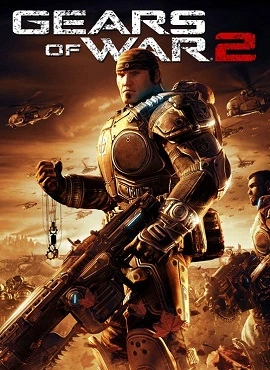
Gears of War 2
 Xbox 360
 Xbox One
 Microsoft Game Studios
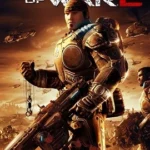
Gears of War 2 is a 2008 third-person cover-shooter video game developed by Epic Games and published by Microsoft Game Studios for the Xbox 360. Released worldwide on November 7, 2008, the title serves as the blockbuster second installment in the Gears of War franchise.
Lead designed by Cliff Bleszinski and co-written by comic book author Joshua Ortega, the game significantly expanded the scale of its 2006 predecessor.
By leveraging a heavily modified iteration of Unreal Engine 3, the title introduced massive, destructible environmental physics, screen-filling enemy counts, and foundational multiplayer innovations—most notably inventing the modern “Horde Mode”—that permanently reshaped the landscape of action gaming.
Technical Specifications
| Attribute | Details |
| Developer | Epic Games |
| Publisher | Microsoft Game Studios |
| Lead Designer | Cliff Bleszinski |
| Lead Writer | Joshua Ortega |
| Engine | Unreal Engine 3 (Modified Visual & Physics Pipeline) |
| Platform | Xbox 360 (Natively preserved via Xbox backward compatibility) |
| Release Date | November 7, 2008 |
| Genre | Third-person cover-shooter, Tactical Action |
| Mode(s) | Single-player, Local Split-Screen Co-op, Online Co-op, Multiplayer (5v5) |
Operation: Hollow Storm and Narrative Scale
The storyline takes place six months after the conclusion of the original Gears of War. Despite the detonation of the Lightmass Bomb inside the subterranean network, the Locust Horde survived the radioactive purge and returned with a devastating new tactical biological weapon: a gargantuan Riftworm capable of physically undermining and sinking entire human cities into the earth.
With the tectonic plate beneath humanity’s final sovereign sanctuary, Jacinto City, actively fracturing, COG Chairman Richard Prescott rallies the remaining military for a desperate, final counter-offensive: Operation: Hollow Storm.
Instead of waiting on the surface, thousands of Gears are deployed via armored “Grindlift” drilling pods, boring straight into the earth to take the war directly to the Locust’s home territory—The Hollow.
The narrative splits its focus across two major emotional tracks:
- The Military Meatgrinder: Marcus Fenix, Dominic Santiago, and Delta Squad (welcoming rookie Private Ben Carmine) battle their way through the Inner Hollow to assault the Locust capital city of Nexus and assassinate the high-priest Skorge.
- The Search for Maria: Dom’s agonizing, personal side-quest to find his missing wife, Maria, who was abducted into a Locust slave-labor camp. The search culminates in one of the most tragic sequences in the franchise when Dom finally uncovers her hollowed, tortured shell inside a stasis pod, forcing him to put her out of her misery.
Definitive Gameplay Overhauls & The Birth of Horde
Gears of War 2 meticulously polished the weight-heavy, cover-dependent movement of the original while adding multiple aggressive close-quarters mechanics:
- Chainsaw Duels: If a player and a Locust Drone rev their Lancer chainsaw bayonets at each other simultaneously, the engine triggers an intense, fast-paced button-mashing mini-game to determine who violently cuts through the other.
- Meat Shields: Falling down is no longer immediately fatal. Downed enemies can be picked up by the collar and used as bullet-absorbing human shields to advance down open corridors before executing them.
- Down-But-Not-Out (DBNO) Mobility: Unlike the strict immobilization of the first entry, players who sustain non-lethal critical damage can slowly crawl along the floor to drag themselves into cover while waiting for a teammate’s revive.
The Inception of Horde Mode
The crowning mechanical legacy of Gears 2 was the global debut of Horde Mode. The setup allowed up to five cooperative players to anchor a defensive position on any multiplayer map, holding out against 50 consecutive waves of increasingly aggressive Locust forces.
Every ten waves, the game applies a permanent statistical “Boss Wave” modifier, multiplying enemy health, accuracy, and damage attributes. This specific PvE survival loop became an immediate industry phenomenon, cloned by dozens of contemporary multi-platform shooters over the subsequent decade.
Expanded Multiplayer Sandbox
The competitive multiplayer layout was bumped up from 4v4 to 5v5 lobbies, utilizing dedicated party systems to keep friend groups together. It also introduced iconic tactical modes:
- Guardian: An evolved version of Assassination. Each team designates a Leader; as long as the Leader stays alive, their team possesses infinite respawns. Slaying the enemy Leader instantly halts their reinforcements, turning the match into a tense elimination hunt.
- Submission: A specialized capture-the-flag variant where the “flag” is an independent, hostile AI Stranded civilian wielding a shotgun. Teams must beat the civilian into a DBNO state, physically hoist them up as a meat shield, and escort them backward into a designated capture zone.
The game’s live-service lifecycle wrapped up with the massive All Fronts Collection (July 2009), which bundled all 19 downloadable multiplayer maps alongside a deleted campaign chapter titled Road to Ruin, allowing players to optionally complete an infiltration mission into Nexus using stealth tactics disguised in Theron Guard armor.
2026 Retro Review & Compatibility Status
As of mid-2026, Gears of War 2 occupies an incredibly sentimental place in the retro gaming community as the ultimate structural peak of 2000s blockbusting action design. With the highly anticipated prequel Gears of War: E-Day locked into a global launch on October 6, 2026, thousands of players have initiated full franchise marathons, returning to Gears 2 to re-analyze the early lore origins of the New Hope Research Facility, the genetic background of the Sires, and the tragic introduction of the Carmine family legacy via Ben Carmine.
The game remains beautifully preserved and completely playable without a PC port:
“Through the Xbox backward compatibility infrastructure on Xbox Series X and Series S hardware, Gears of War 2 is flawlessly optimized for modern displays. The legacy engine benefits from system-level FPS Boost, permanently unlocking the original 2008 30fps container to run at a locked, silky-smooth 60 frames per second. This is augmented by native Auto HDR tone mapping and 4K resolution upscaling, filtering out the muddy, gray-brown resolution constraints of the seventh console generation.”