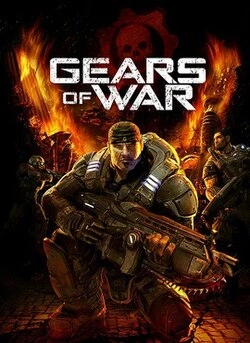
Gears of War
 94
★ /10
94
★ /10
 PC
PC Xbox 360
 Xbox One
 Microsoft Game Studios
Gears of War is a 2006 third-person tactical cover-shooter video game developed by Epic Games and published by Microsoft Game Studios. Released initially for the Xbox 360 on November 7, 2006, with a subsequent Microsoft Windows port arriving in 2007, the title is universally recognized as a watershed milestone in video game history.
Lead designed by Cliff Bleszinski, the game served as the definitive graphical showcase for the launch era of Unreal Engine 3.
More importantly, it permanently codified the mechanics of the modern third-person action genre. While older titles experimented with cover, Gears of War perfected the weight-heavy, cover-to-cover combat loop, the low-angle “roadie run” sprint, and the skill-based “active reload” system, inspiring dozens of multi-platform action titles over the subsequent decade.
Technical Specifications
| Attribute | Details |
| Developer | Epic Games |
| Publisher | Microsoft Game Studios |
| Lead Designer | Cliff Bleszinski |
| Lead Writer | Susan O’Connor |
| Engine | Unreal Engine 3 |
| Platform(s) | Xbox 360, Microsoft Windows (Original) |
| Release Date | November 7, 2006 |
| Genre | Third-person cover-shooter, Tactical Action, Sci-Fi Horror |
| Mode(s) | Single-player, Local Split-Screen Co-op, Online Co-op, Multiplayer (4v4) |
The Nightmare on Sera: Setting and Narrative
The story takes place on Sera, a beautiful, Earth-like planet that was previously torn apart by a century-long global war over a clean, volatile energy fluid known as Imulsion. Just as humanity finally brokered a global peace treaty, a subterranean nightmare unfolded. On Emergence Day (E-Day), a highly organized, subterranean race of mutated monsters known as the Locust Horde violently burst from the planet’s crust, slaughtering a massive percentage of the human population in a matter of hours.
The campaign kicks off 14 years after E-Day. Humanity is making a desperate, final stand within the fortified plateau of the Coalition of Ordered Governments (COG).
Players step into the boots of Marcus Fenix, a disgraced, legendary war hero who was court-martialed and imprisoned for abandoning his military post to unsuccessfully save his father. Marcus is broken out of a crumbling penitentiary by his fiercely loyal best friend, Dominic Santiago, to join the depleted ranks of Delta Squad.
Delta’s objective is a dangerous, multi-stage operation: deploy a mapping device called the Sonic Resonator deep into the Locust’s underground “Hollow” network, locate their central hive nodes, and detonate a high-yield weapon known as the Lightmass Bomb to obliterate the threat once and for all.
The Mechanical DNA of Modern Action Gaming
Epic Games built Gears of War on a foundational mantra: “Destroyed Beauty.” This design ethos extended past the crumbling, neo-classical architecture straight into a gritty, high-stakes tactical combat loop where standing out in the open meant instant death.
1. The Cover-Centric Tactical Loop
The game discarded the traditional run-and-gun shooting mechanics of the era to implement an absolute reliance on physical cover. By pressing a single contextual button, characters slam their bodies against stone pillars, Jersey barriers, or sandbags. From there, players can blind-fire over obstacles to suppress enemies, pop out down-sights to snap into precise aiming vectors, or slide laterally across intersecting geometry using the intuitive “cover-slip” maneuver.
2. The Active Reload System
To turn the standard, passive downtime of reloading a weapon into an active element of skill expression, Epic Games invented the Active Reload mechanic. When a player triggers a reload, a small slider bar moves across a specialized UI gauge beneath their weapon data.
- Perfect Active Reload: Tapping the button exactly within a tiny, glowing white sweet-spot rewards the player with a near-instant animation loop and a brief, high-damage bonus to the newly chambered ammunition.
- Standard Reload: Tapping the button within a broader gray segment completes a standard, un-buffed reload.
- Jammed Reload: Missing both zones completely causes the weapon to violently jam, forcing the player through a prolonged, vulnerable animation clean-out sequence while their character screams out in frustration.
3. The Lancer & The Chainsaw Bayonet
The game’s signature weapon—the Mark 2 Lancer Assault Rifle—perfectly encapsulated the game’s brutal, intimate design. While it functioned as a standard fully-automatic combat rifle at mid-range, holding down the melee button revved an integrated, under-barrel Chainsaw Bayonet. Running up to a Locust Drone with the chainsaw active triggered an unblockable, ultra-violent, screen-splattering execution animation that instantly became the defining visual signature of the franchise.
Terror in the Dark: The Locust Hierarchy
The original 2006 title leaned much more heavily into elements of survival horror than its bombastic, action-oriented sequels. Levels frequently subjected players to pitch-black urban ruins plagued by the Kryll—lethal, nocturnal bat-like swarms that would instantly shred Marcus or Dom to pieces the second they stepped out of a direct light source.
The battlefield introduced distinct tactical puzzles across the Locust army ranks:
- Wretches: Small, hyper-agile acrobat beasts that screech and rush cover slots to flush players out into open crossfires.
- Boomers: Heavily armored, giant infantry soldiers who slowly march forward while loudly bellowing “Boom!” right before firing a devastating explosive rocket.
- The Berserker: Blind, gargantuan female monsters that track players exclusively via smell and sound. Immune to all conventional bullet fire, players have to intentionally lure them out into open sky sectors and call down a satellite-targeted orbital laser weapon called the Hammer of Dawn to superheat and melt their thick hide.
- General RAAM: The game’s iconic, terrifying final boss encounter aboard a speeding train, defended by an active shield cloak of Kryll that players must disperse using explosive weaponry before inflicting real damage.
The Ultimate Edition Remaster
In August 2015, under the newly appointed development oversight of The Coalition, Microsoft released Gears of War: Ultimate Edition for the Xbox One and Microsoft Windows. Rather than a simple resolution upscaler, this ground-up remaster completely rebuilt the 2006 masterpiece using updated visual assets, modern motion-capture animations, fully re-rendered cinematic cutscenes, and an overhauled audio soundscape.
Crucially, the Ultimate Edition integrated five exclusive campaign chapters originally native only to the 2007 PC port—detailing Delta Squad’s intense, harrowing battle through a ruined theater district against a towering, mechanical Brumak monster—unifying the narrative timeline for modern console setups.
2026 Perspective & Pre-Launch Reverence
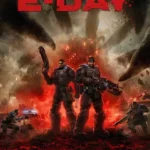
As of mid-2026, the cultural reverence surrounding the original 2006 Gears of War has surged to a decade-high peak. With the highly anticipated prequel Gears of War: E-Day officially locked in to launch on October 6, 2026, the entire global strategy and tactical shooter community has zeroed back in on the original 2006 blueprint. Because E-Day deliberately returns the franchise to the exact tight, horror-infused, and intimate tone of the first game, analyzing the original foundations of Delta Squad has become mandatory reading for series purists.
The software remains flawlessly preserved and highly accessible across contemporary platforms:
“The original 2006 classic executes beautifully on Xbox Series X and Series S hardware via backward compatibility, utilizing system-level hardware optimizations to grant native Auto HDR rendering alongside FPS Boost, lifting the original 30fps lock to a flawless, crisp 60 frames per second. Concurrently, the 2015 Ultimate Edition remains a popular, optimized staple under modern 64-bit Windows 11 architectures, offering native 4K output, un-capped frame rates, and full Xbox Play Anywhere integration for contemporary PC setups.”