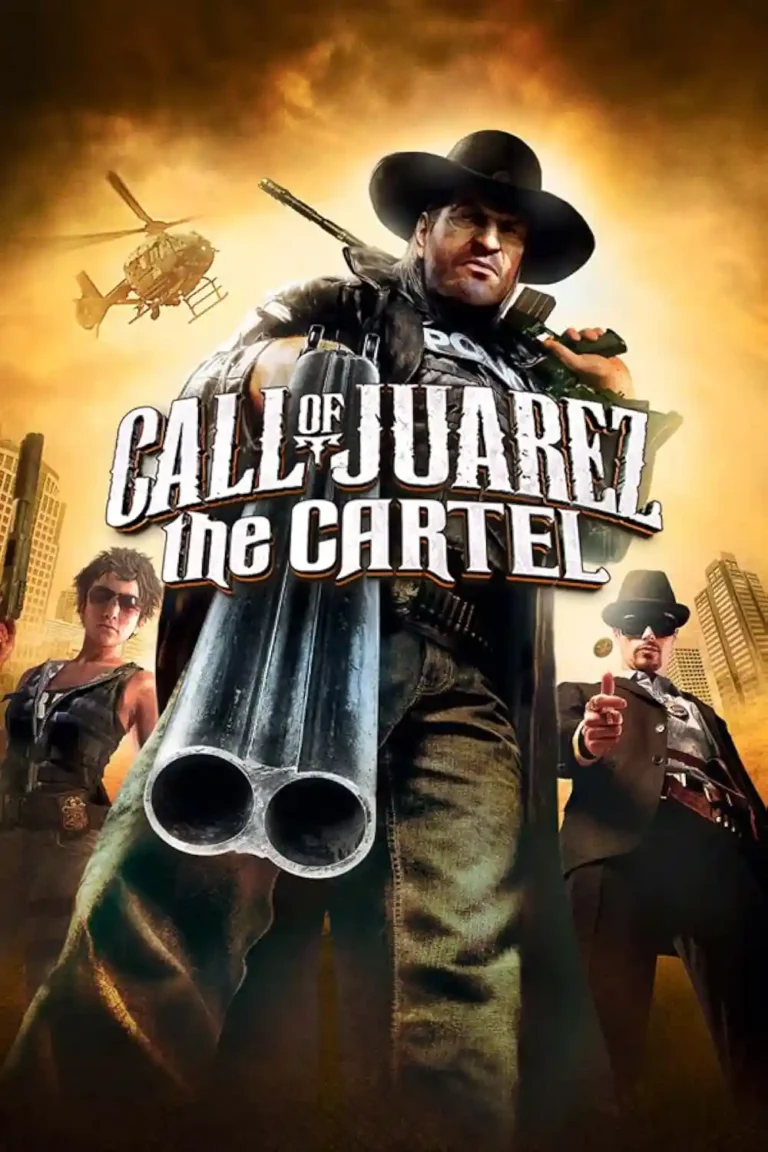
Call of Juarez: The Cartel
 47
★ /10
47
★ /10
 PC
PC PS 3
PS 3 Xbox 360
 1C-SoftClub
 Ubisoft
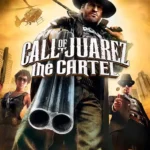
Call of Juarez: The Cartel is a 2011 first-person shooter video game developed by Polish studio Techland and published originally by Ubisoft. Released in July 2011 for the PlayStation 3 and Xbox 360 (with a Microsoft Windows version following that September), the title stands as the third installment in the Call of Juarez series.
The Cartel represents one of the most drastic, highly controversial tonal shifts in modern shooter history. Attempting to capitalize on the massive popularity of contemporary military and law-enforcement shooters like Call of Duty: Modern Warfare, developer Techland completely abandoned the historical 19th-century Wild West setting of its predecessors. Instead, the studio transplanted the franchise’s thematic concepts of lawlessness, vengeance, and greed into a gritty, modern-day drug war environment. The gamble was heavily rejected by both critics and fans, cementing the game as the definitive “black sheep” of the franchise.
Technical Specifications
| Attribute | Details |
| Developer | Techland |
| Publisher | Ubisoft (Publishing rights permanently transferred to Techland in 2018) |
| Lead Designer | Łukasz Muszyński |
| Writers | Haris Orkin, Paweł Selinger |
| Composer | Paweł Błaszczak |
| Engine | Chrome Engine 5 (Optimized for dense urban street environments and modern vehicle physics) |
| Platform(s) | Microsoft Windows, PlayStation 3, Xbox 360 |
| Release Date | July 19, 2011 (PC Launch: September 13, 2011) |
| Genre | First-person shooter, Tactical action |
| Mode(s) | Single-player, 3-Player Online Cooperative |
Welcome to the Neo-Western: Narrative and Cast
The plot ignites when the heavily fortified Los Angeles headquarters of the DEA is targeted in a devastating, catastrophic bomb attack orchestrated by the ruthless Mendoza Drug Cartel. Realizing the cartel has successfully infiltrated high-tier branches of the American federal government, the United States military and justice departments scramble to assemble an unconventional, cross-agency task force.
Tasked with operating outside standard legal boundaries to dismantle the cartel by any means necessary, the trio embarks on a bloody, high-stakes road trip tracing from the ganglands of Los Angeles through the deserts of Arizona, culminating in a violent siege inside Ciudad Juárez, Mexico.
Unlike previous entries that featured rotating perspectives, players choose a single character at the start of the game, locking into their unique narrative perspective, distinct weapon attributes, and personalized ending for the entire campaign:
- Ben McCall (LAPD): A brutal, uncompromising old-school robbery-homicide detective who frequently utilizes excessive force. Ben is a direct, multi-generational descendant of the legendary outlaw-turned-preacher Reverend Ray McCall from the 2006 original, inheriting his heavy leather trench coat, Bible quotes, and ruthless philosophy of street justice.
- Eddie Guerra (DEA): A smooth-talking, slick undercover field agent who struggles with a severe, crippling chronic gambling addiction. Eddie is heavily targeted by underground bookies and loan sharks, forcing him to walk a dangerous tightrope between federal loyalty and criminal self-preservation.
- Kim Evans (FBI): A highly analytical, brilliant tactical sniper who successfully escaped a youth defined by inner-city gang warfare. Kim fights fiercely to maintain her professional career while dealing with immense personal stress, as several of her childhood associates and family members remain high-ranking leaders within the LA gang syndicates targeted by the task force.
Mechanical Friction: “Secret Agendas” and Competitive Co-Op
The most innovative, widely discussed component of Call of Juarez: The Cartel was its highly unique Competitive Cooperative gameplay loop. Engineered explicitly for up to three players online, the campaign forces teammates into a state of severe, beautifully paranoid psychological friction via the Secret Agendas System:
The Anatomy of Corruption
While sprinting through active cartel combat zones (such as meth labs, underground brothels, or swanky yacht parties), individual characters will randomly receive private text-message or radio prompts from their respective handlers.
- The Theft Directive: Eddie might be ordered to secretly pocket a brick of cartel cash to pay off his bookies; Kim might be tasked with intercepting a cell phone containing sensitive gang intelligence; Ben might be told to execute a bound informant before they can testify.
- The Mechanics of Deception: To successfully pull off a secret agenda, a player must physically wait for their real-life co-op partners to look away, run into adjacent rooms, or reload their weapons behind cover. Sneaking over to grab the illicit item rewards that specific player with massive bonus XP and high-tier weapon unlocks.
- The Internal Whistleblower: However, if a co-op partner manages to dynamically catch you in the act of committing a crime, the theft is instantly canceled. The whistleblower is rewarded with a major XP payout for exposing your corruption, transforming standard co-op progression into a tense game of mutual surveillance.
Combat also features a unified iteration of the series’ signature bullet-time mechanic, renamed Team Concentration Mode. When a player breaches a locked door or triggers a massive ambush, entering the mode slows down time collectively for the entire three-person squad, allowing players to coordinate crossfires to clean out entrenched cartel executioners in slow motion.
Political Backlash & Critical Rejection
The Cartel faced immense controversy from the moment of its public announcement. Government officials and human rights activists in the real-world Mexican state of Chihuahua formally petitioned for the game to be legally banned, arguing that turning the ongoing, horrific human casualties of the real-world drug war into a casual arcade shooter was profoundly insensitive to the citizens of Ciudad Juárez, who were actively living through a humanitarian crisis defined by systemic violence and human trafficking.
Upon release, the game was heavily hammered by critics. While reviewers found the paranoid competitive co-op ideas conceptually fascinating, the execution was severely dragged down by technical flaws.
The software was plagued by a highly unstable framerate, muddy environmental textures, clunky driving physics, and repetitive modern-military level designs that completely stripped away the atmospheric, sweeping cinematic majesty that originally put Techland’s Western universe on the map.
Contemporary Stance & 2026 Perspective
Looking back from mid-2026, fifteen years separated from its turbulent rollout, Call of Juarez: The Cartel is universally recognized as a fascinatingly bizarre, highly experimental misstep. Fortunately, the severe critical failure of the game did not kill the franchise; Techland beautifully stabilized the ship just two years later with the magnificent, cell-shaded 2013 Wild West masterpiece Call of Juarez: Gunslinger.
Today, The Cartel occupies an incredibly rare, highly fragmented position within the landscape of software preservation, displaying a complete role-reversal across computing channels:
The PC Abandonware Void
On the PC ecosystem, the game’s digital health is completely dead. In March 2018, as the intellectual property publishing rights officially reverted from Ubisoft back to Techland, The Cartel was permanently expunged and delisted from the Steam marketplace.
Unlike Gunslinger and Bound in Blood, which Techland happily preserved and brought back to digital storefronts, The Cartel was intentionally left behind due to its negative reputation. With digital keys fetching astronomical prices on third-party collector sites, the PC client is functionally classified as digital abandonware, requiring enthusiasts to seek out archived community torrents to run the game under modern 64-bit Windows 11 frameworks.
The Paradoxical Xbox Sanctuary
Shockingly, while the game is completely dead on PC and PlayStation networks, the original Xbox 360 client of The Cartel remains fully preserved and digitally purchasable on the modern Xbox Store via native backward compatibility.
Microsoft officially added the game to its backward compatibility catalog alongside Bound in Blood in late 2018. On Xbox Series X and Xbox Series S hardware, the system’s architecture effortlessly brute-forces the old Chrome Engine 5 code. The emulative layer entirely irons out the old 2011 screen-tearing bugs and locks the framerate to a highly stable, smooth presentation profile, transforming modern Xbox consoles into the only official, legal digital pipeline left on Earth to experience Ben McCall’s deeply flawed, paranoid war against the Mendoza Cartel.