Call of Juarez
 71
★ /10
71
★ /10
 PC
PC
 1C Company,
  Focus Home Interactive,
  Ubisoft


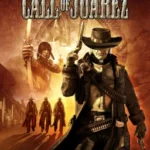
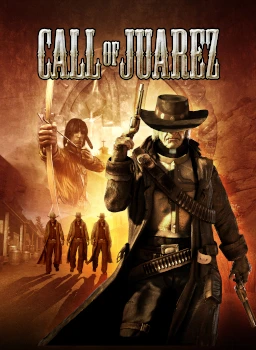
Call of Juarez (originally announced under the working title The Lawman) is a 2006 Western-themed action-adventure first-person shooter video game developed by Polish studio Techland and published originally by Ubisoft. Released initially for Microsoft Windows in September 2006 across Europe, it received an enhanced port for the Xbox 360 in June 2007. The title stands as the foundational first entry in the Call of Juarez franchise.
Long before developer Techland achieved massive global superstardom with Dead Island and the Dying Light series, they built Call of Juarez as a passionate creative counter-response to a mid-2000s gaming landscape over-saturated by generic sci-fi and World War II shooters. Built on the studio’s proprietary Chrome Engine, the game is highly celebrated for its cinematic narrative duality, its gritty historical authenticity, and for helping revive the Wild West sandbox sub-genre alongside titles like Activision’s GUN and Rockstar’s early Red Dead entries.
Technical Specifications
| Attribute | Details |
| Developer | Techland |
| Publisher | Focus Home Interactive (EU PC), Ubisoft (NA PC & Worldwide Xbox 360) (Publishing rights permanently transferred to Techland in 2018) |
| Lead Designers | Paweł Selinger, Paweł Marchewka |
| Composer | Paweł Błaszczak |
| Engine | Chrome Engine 3 (Pioneering dynamic physics particles, complex smoke behaviors, and early HDR rendering) |
| Platform(s) | Microsoft Windows, Xbox 360 |
| Release Date | September 15, 2006 (EU PC) / June 5, 2007 (NA PC) / June 2007 (Xbox 360) |
| Genre | First-person shooter, Tactical action |
| Mode(s) | Single-player, Online Multiplayer |
The Bloodline of Juarez: Dual Protagonists & Narrative
The single-player campaign takes place in 1884 along the lawless, sun-scorched Texas-Mexico border. The plot revolves around the dark mythos of the Gold of Juarez, a legendary, accursed Aztec treasure hoard said to be the ransom of Montezuma, lost to history and driven mad anyone who seeks it. The narrative structures itself completely around a high-stakes, cat-and-mouse chase, swapping perspectives automatically between two fiercely clashing, deeply complex characters:
1. Billy Candle (The Fugitive)
Billy is a young, cynical biracial fugitive who returns home to his family’s farm in Hope, Texas, after an exhausting, fruitless search for the legendary gold. Upon his arrival, he discovers his mother and stepfather have been brutally murdered, with the ominous words “Call of Juarez” smeared in blood on the wall. Panicked and holding the smoking gun left by the actual killers, Billy is spotted by his uncle, who assumes he is the murderer. Billy is forced to sprint into the wilderness to live as a desperate fugitive, hunting for the enigmatic “Juarez” killers to clear his name.
2. Reverend Ray McCall (The Avenger)
Ray is Billy’s step-uncle, an older, terrifyingly imposing former outlaw and gunslinger who permanently abandoned his violent past to find spiritual redemption as an iron-willed town preacher. Upon witnessing the slaughter of his brother and sister-in-law, Ray’s fragile mental state shatters. Believing God has appointed him as a divine instrument of pure wrath, Ray unearths his twin silver-plated revolvers from a locked bible crate, dons a heavy metal chest-plate armor piece, and marches into the desert to hunt down his step-nephew.
The Scriptural Contrast: The game’s narrative power stems from this tragic misunderstanding. While players spend one chapter helping the vulnerable Billy survive starvation and avoid traps, the very next chapter forces them into the heavy boots of Reverend Ray, who actively quotes scripture, kicks down saloon doors, and slaughters anyone standing between him and the boy he mistakenly believes to be a cold-blooded killer.
A Contrast of Mechanics: Stealth vs. Absolute Firepower
To reflect the clashing natures of the two leads, Techland engineered two completely distinct first-person gameplay systems that rotate chapter by chapter:
- Billy’s Traversal and Survival Layer: Billy’s chapters play like an atmospheric puzzle-platformer. Unarmed and vastly outnumbered by bandits and posse members, Billy relies heavily on stealth, crouching through tall grass and utilizing shadows to stay hidden. He relies on a Tactical Whip to swing across vast mountain chasms, climb trees, and manipulate physical environmental assets out of reach. For hunting and quiet defense, Billy utilizes a classic wooden bow, featuring an active focus mechanic that slows down time to pull off precise precision shots.
- Reverend Ray’s Gunslinger Matrix: Ray’s levels completely abandon stealth to deliver an uncompromised power trip of destructive action. Immune to minor physical damage thanks to his steel breastplate, Ray dual-wields heavy pistols and commands an active Concentration Mode. Drawing his weapons triggers a cinematic bullet-time window where two targeting reticles sweep inward from opposite sides of the screen; players manually align the crosshairs across multiple hostiles to execute near-instantaneous, multi-target execution barrages. Ray also participates in formal, high-tension Quick-Draw Duels that test the player’s analog reflexes against rival gunslingers.
The PC vs. Xbox 360 Architectural Divide
When Techland undertook the task of porting the PC game over to the Xbox 360 in 2007, they executed far more than a basic code wrapper, resulting in highly distinct balance variations between the platforms:
- Health Systems: The original 2006 PC client utilized a classic, punishing survival framework where health did not automatically recover, forcing players to actively track down scattered vital fluid bottles to heal 25-point increments. The 2007 Xbox 360 port replaced this entirely with a modern, automated regenerating health system.
- Weapon Degradation: Both versions featured active weapon conditions (Rusty, Normal, and Prime). On PC, using rusty firearms for prolonged periods caused the barrel to dynamically degrade, eventually resulting in the gun violently exploding in the player’s hands. The 360 port significantly scaled back the severity of this structural risk.
- Stealth Balancing: Due to early PC reviews criticizing Billy’s stealth chapters for being overly frustrating and unforgiving, Techland heavily re-balanced the asset configurations for the Xbox 360 edition, removing several tedious platforming puzzles, altering AI detection cones, and supplying Billy with more proactive combat options.
Contemporary Stance
The first Call of Juarez holds an incredibly vital, highly vindicated position as a foundational classic. While the series eventually reached its mechanical and commercial peak with the stellar 2013 arcade spin-off Call of Juarez: Gunslinger, the 2006 debut remains heavily revered by retrospective game circles for its structural ambition, its outstanding Paweł Błaszczak score, and its uncompromisingly mature script.
The software’s modern preservation layout presents a distinct technical divide across modern ecosystems:
The Gated Console Disconnect
Tragically for console purists, the original 2007 Xbox 360 version of Call of Juarez was completely excluded from Microsoft’s official backward compatibility program. While all three of its sequels (Bound in Blood, The Cartel, and Gunslinger) are fully backward compatible and digitally purchasable on modern hardware, the first game is completely locked out. Inserting the original 360 disc into an Xbox One or Xbox Series X/S will result in a compatibility error, meaning original seventh-generation console hardware remains mandatory to play the console port today.
The Premium PC
On the PC ecosystem, the game’s health is absolutely immaculate. In 2018, Techland successfully bought back the unified publishing rights to the IP from Ubisoft. Consequently, the game remains permanently preserved and highly stable on digital store networks like GOG and Steam.
Running natively under modern 64-bit Windows 11 desktop environments, the Chrome Engine 3 framework handles beautifully. Free from old console limitations, modern GPUs effortlessly scale the game’s old physics loops, lush forest flora, and heavy dynamic smoke trails to native 4K resolutions at un-capped frame rates far exceeding 120Hz, ensuring that Reverend Ray’s divine crusade through the Old West remains perfectly preserved for historical action squads.