 87
87  PC
PC
 1C-SoftClub,
  Ubisoft
Where to buy

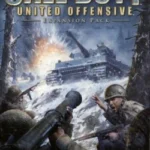
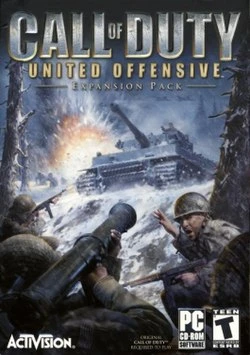
Call of Duty: United Offensive is a 2004 historical first-person shooter video game expansion pack developed by Gray Matter Studios (with supporting contributions from Pi Studios) and published by Activision. Released on September 14, 2004, for Microsoft Windows (followed by an OS X port by Aspyr Media), the title stands as the first and only official expansion pack in the history of the original Call of Duty (2003).
The development of United Offensive represents a highly successful passing of the torch. Rather than assigning the expansion to original creators Infinity Ward, Activision drafted Gray Matter Studios—celebrated for their stellar work on Return to Castle Wolfenstein.
Gray Matter pushed the aging id Tech 3 engine to its absolute limits, delivering a significantly harder, more chaotic single-player campaign and introducing large-scale, vehicle-driven multiplayer innovations that fundamentally laid the gameplay blueprints Treyarch would later inherit for Call of Duty 3 and World at War.
Technical Specifications
| Attribute | Details |
| Developer | Gray Matter Studios (with contributions from Pi Studios) |
| Publisher | Activision (Mac OS X port by Aspyr) |
| Engine | id Tech 3 (Modified Quake III Arena framework) |
| Platform(s) | Microsoft Windows, OS X |
| Release Date | September 14, 2004 |
| Genre | First-person shooter (FPS), Historical |
| Mode(s) | Single-player, Multiplayer |
Escalating the Western and Eastern Fronts: Campaign Architecture
The single-player campaign acts as a mechanical continuation of the 2003 original, maintaining the classic static health bar and first-aid kit scavenging loops. However, Gray Matter drastically increased the AI density and structural scale of combat, introducing a multi-national theater tracking three new Allied soldiers across some of the bloodiest turning points of World War II:
1. The American Campaign
Players control Corporal Scott Riley of the 101st Airborne Division during the freezing, brutal reality of the Battle of the Bulge. The narrative drops the player into the foxholes of the Bois Jacques woods outside Bastogne, forcing them to survive relentless German artillery barrages before launching counter-offensives to clear entrenched machine-gun nests in the snow-covered towns of Foy and Noville.
2. The British Campaign
Stepping into the flight suit of Sergeant James Doyle, a Royal Air Force B-17 Flying Fortress gunner. The campaign opens with an intense aerial combat set-piece where players manually cycle between top, tail, and waist machine-gun turrets to fend off waves of Luftwaffe fighters over the Netherlands. After being shot down, Doyle is rescued by the Dutch Resistance and links up with the SAS (alongside a returning Major Gerald Ingram) to execute high-stakes sabotage raids on German radar stations and naval vessels.
3. The Soviet Campaign
Following Private Yuri Petrenko during the monumental Battle of Kursk. This track centers heavily on industrial and armored mass warfare. Petrenko’s squad defends trench networks against incoming Tiger tanks, clears out the war-torn rail yards of Ponyri, pilots a T-34 tank across the massive clash at Prokhorovka, and culminates in a brutal, multi-stage urban assault to liberate the heavily fortified city of Kharkov.
The Half-Life Node: Proving they kept a fun sense of humor amidst the grim mud and snow, Gray Matter embedded a classic Easter Egg during an American barn-clearing sequence. Two of the expendable AI squadmates assigned to Riley’s unit are named Private Gordon and Private Freeman—a direct, cheeky nod to Valve’s silent, crowbar-wielding protagonist from Half-Life.
Multiplayer Overhaul: Vehicles and the In-Match Rank Loop
While the campaign was highly praised, United Offensive secured its legendary status via a complete, ground-up architectural revolution of the competitive multiplayer sandbox. It completely exploded the tight, infantry-only limits of the 2003 original to establish a large-scale, combined-arms combat engine:
1. Multi-Class Vehicular Combat
Maps expanded drastically in scale to accommodate drivable military vehicles. Players could freely jump into the driver or gunner seats of American M4 Shermans, Soviet T-34s, and German Panzer IV and Tiger tanks, or pilot rapid-transport jeeps and motorcycles to ferry squads across massive maps. To counter this armored threat, infantry classes were retrofitted with heavy anti-tank ordnance, introducing the Panzerschreck and Bazooka to the series for the first time.
2. The In-Match Promotion System
The expansion pioneered a localized, arcade-style progression mechanic. As players secured kills, captured flags, or completed objectives during a live match, they accumulated points that triggered mid-game battlefield promotions:
[ PRIVATE ] ---> [ CORPORAL ] ---> [ SERGEANT ] ---> [ LIEUTENANT ] ---> [ CAPTAIN ]
• Base Spawn     • Extra Primary   • Secondary       • In-Match Radar    • Binoculars for Calling
  Inventory        Ammunition        Grenade Buffs     Increments          Mortar Air Strikes
3. Iconic Objective Modes
The title officially birthed three core multiplayer modes that became mandatory, multi-generation pillars for the entire franchise: Capture the Flag, Domination (capturing and defending three static flags to accumulate team points over time), and Base Capture (a heavy combined-arms mode forcing squads to utilize armor vehicles to destroy three heavily fortified enemy bunkers).
Contemporary Stance
Sitting in mid-2026, Call of Duty: United Offensive is celebrated as a pristine, nostalgic masterpiece from the PC platform’s foundational golden era. Within retrospective PC design communities, it is widely recognized as the exact laboratory where the franchise successfully learned how to scale up its network maps, manage vehicular sandbox balance, and implement score-based tier reward systems.
Because the expansion is now over twenty-two years old, modern preservation requires a bit of community-driven configuration:
The software remains fully accessible on modern setups via Steam. To run the legacy id Tech 3 code flawlessly under modern 64-bit Windows 11 desktop environments, the modern community utilizes community configuration wrappers or localized engine source-ports. These light fixes effortlessly implement native 16:9 widescreen resolutions, fix classic screen-tearing bugs tied to high-refresh-rate monitors, and secure the network layer against old software exploits. While official global matchmaking servers went dark long ago, a dedicated community of retro clans continues to host active custom master server browsers today, keeping 32v32 vehicular tank battles on timeless maps like Kursk and Kharkov beautifully alive and kicking.
Call of Duty news
More news
Xbox Game Pass September Wave 2: 13 Games Including E-Day
Doom Slayer Joins Call of Duty in Season 6's Halloween Update
Activision Films Cheat Maker Being Served Cease and Desist Order
Modern Warfare 4 Beta Update Adds Map, Mode, and Quieter Footsteps