Call of Duty 4: Modern Warfare
 94
★ /10
94
★ /10
 Nintendo DS,
  PC,
PC,  PS 3,
PS 3,  Wii,
Wii,  Xbox 360
 Activision
Where to buy

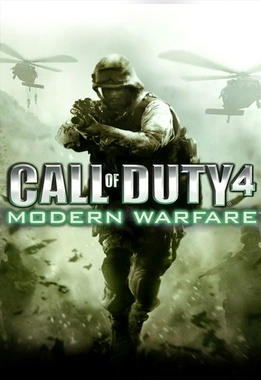
Call of Duty 4: Modern Warfare is a 2007 first-person shooter video game developed by Infinity Ward and published by Activision. Released in November 2007 for Microsoft Windows, PlayStation 3, and Xbox 360 (with a subsequent Wii port developed by Treyarch arriving in 2009 under the title Reflex Edition), the title stands as the fourth primary installment in the Call of Duty franchise and the historic genesis of the highly acclaimed Modern Warfare sub-series.
The game represents an absolute sea-change for the first-person shooter genre and the interactive entertainment industry at large. Breaking sharply away from the World War II settings of its predecessors, the title successfully transitioned the franchise into contemporary warfare. It became a colossal commercial and critical phenomenon, selling nearly 16 million copies worldwide. It revolutionized online infrastructure by pioneering the modern multiplayer progression loop, establishing standard elements like customizable perks, leveling systems, and killstreaks that permanently defined an entire generation of competitive shooter design.
Technical Specifications
| Attribute | Details |
| Developer | Infinity Ward (Wii port by Treyarch, DS version by n-Space) |
| Publisher | Activision |
| Directors | Jason West (Project Lead), Vince Zampella (Studio Head) |
| Lead Designers | Todd Alderman, Steve Fukuda |
| Composer(s) | Harry Gregson-Williams (Main Theme), Stephen Barton (Score) |
| Engine | IW 3.0 (Proprietary 60Hz physics, dynamic shadows, and advanced lighting pipeline) |
| Platform(s) | PC, PlayStation 3, Xbox 360, Mac OS X, Wii (Reflex Edition), Nintendo DS |
| Release Date | November 5, 2007 |
| Genre | First-person shooter (FPS) |
| Mode(s) | Single-player, Multiplayer |
The Shock and Awe of Modern Conflict: Campaign Overview
The single-player campaign takes place in a fictionalized 2011, detailing a complex global crisis orchestrated by an alliance between Russian Ultranationalist rebels and a radical Middle Eastern separatist movement. The narrative splits its gameplay focus across two distinct international military perspectives, weaving their separate operational paths into a singular geopolitical thriller:
- The British SAS (22nd SAS Regiment): Players control Sergeant John “Soap” MacTavish under the command of the iconic, cigar-chomping Captain John Price. Their track focuses on black-ops espionage, raiding a cargo ship in the Bering Strait, rescuing a deep-cover informant named Nikolai in the Caucasus Mountains, and hunting down nuclear weapons channels.
- The U.S. Marine Corps (1st Recon Force): Players step into the boots of Sergeant Paul Jackson as his platoon conducts a massive conventional invasion of an unnamed Middle Eastern country to depose the radical dictator Khaled Al-Asad.
The masterminds behind the chaos are Imran Zakhaev, a ruthless one-armed Russian Ultranationalist seeking to restore Soviet-era dominance, and Al-Asad, his proxy. The campaign builds toward a final, frantic chase across a Russian highway where Price slides his M1911 pistol to Soap, enabling him to execute Zakhaev moments before friendly reinforcements arrive.
The Structural Innovations: Call of Duty 4 is historically celebrated for shattering traditional narrative plot armor through two legendary levels:
- “Shock and Awe”: After executing a massive urban assault to capture Al-Asad, a nuclear device is suddenly detonated in the heart of the city. Instead of a cinematic cutscene rescue, players witness the shockwave destroy their evacuation helicopter. The subsequent level, “Aftermath,” forces players to stumble through the radioactive fallout as Sergeant Paul Jackson, directly experiencing his final, tragic moments before succumbing to radiation sickness—marking a historic instance of a mainline video game forcing the player to control the death of their primary protagonist.
- “All Ghillied Up”: A flashback mission widely cited as one of the greatest levels ever designed. Taking place in 1996, players control a young Lieutenant Price under the mentorship of Captain MacMillan. Wearing camouflaged ghillie suits, they must utilize absolute stealth, tracking wind patterns and hiding in brush centimeters away from patrolling Soviet armor divisions, to execute a long-range sniper assassination attempt on Imran Zakhaev in the radioactive ruins of Pripyat, Chernobyl.
The Multiplayer Revolution: The Birth of the Modern XP Loop
The competitive multiplayer sandbox of Call of Duty 4 represents the architectural foundation of the modern online multiplayer ecosystem. Prior to 2007, shooters typically relied on static, arena-style map pickups or basic lobby matchmaking. Infinity Ward completely disrupted this paradigm by introducing an addictive, reward-heavy XP progression engine:
1. Create-a-Class & The Perk Matrix
Players accumulate experience points to systematically unlock weapons, attachments, and secondary gear. This introduced the Perk System, dividing customizable character passive abilities across three distinct strategic tiers:
- Tier 1: Utility inventory upgrades, enabling players to carry extra explosive claymores, RPGs, or special grenades.
- Tier 2: Firepower modifiers, featuring meta-defining perks like Stopping Power (increased bullet damage) and Juggernaut (increased health resistance).
- Tier 3: Tactical awareness shifts, including Extreme Conditioning (extended sprint duration), Steady Aim (increased hip-fire accuracy), and Martyrdom (dropping a live fragmentation grenade instantly upon death).
2. The 3-5-7 Killstreak Economy
The game introduced the thrill of Killstreaks, granting players powerful tactical support assets for eliminating enemies without dying. The system was strictly fixed, creating a highly readable match flow:
- 3 Kills (UAV Radar): Briefly scans the mini-map to expose active enemy coordinates for the user’s entire team.
- 5 Kills (Airstrike): Allows the player to designate a directional bombing run across a specific line on the map geometry.
- 7 Kills (Attack Helicopter): Summons an AI-controlled combat helicopter to hover over the arena, actively tracking and eliminating opposing players for an extended duration.
3. Prestige Mode
To future-proof the game’s lifespan, developers engineered Prestige Mode. Upon reaching the maximum military rank of 55, players chose to voluntarily reset their entire unlock tree and weapon camouflages back to level 1. In exchange, they earned a specialized legacy badge next to their username, providing ten tiers of ultimate bragging rights for the hardcore community.
Alternative Versions: Modern Warfare Remastered
In November 2016, Activision released Call of Duty: Modern Warfare Remastered, developed by Raven Software. Packaged initially alongside Infinite Warfare before securing a standalone release, this ground-up remaster completely overhauled the 2007 original within a modern technical framework. Raven rebuilt the game’s lighting engines, replaced legacy textures with high-density current-gen assets, updated audio propagation arrays, and added full integration for current-generation network architectures, while perfectly preserving the exact physics, map layouts, and weapon handling of the 2007 masterpiece.
Contemporary Preservation & 2026 Standing
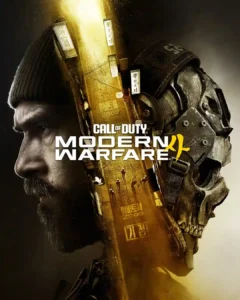
Sitting in mid-2026, the 2007 original Call of Duty 4: Modern Warfare occupies a sacred, legendary pillar in the history books of gaming. Following the massive May 28, 2026, global reveal of Call of Duty: Modern Warfare 4 (slated for launch on October 23, 2026), community eyes have completely locked back onto this original title. Because Modern Warfare 4 is a current-gen exclusive built to act as the ultimate narrative and mechanical culmination of the modern reboot timeline—and with its campaign focusing on a grueling modern conventional war on the Korean Peninsula—the player base has flooded back to the 2007 classic to look back at the original foundation of Captain Price and Soap’s legacy.
The legacy software remains impeccably active and preserved across a divided landscape:
Console Backward Compatibility
On Xbox Series X and Series S hardware via backward compatibility, the 2007 classic runs with flawless precision. The game benefits from system-level hardware optimizations, utilizing FPS Boost to permanently unlock old performance dips to deliver a locked, high-performance 60 frames per second alongside native Auto HDR tone mapping, ensuring timeless maps like Crash, Crossfire, and Shipment look incredibly crisp on contemporary 4K displays.
The Modded PC Sanctuary
On PC, the vanilla Steam server backend can be finicky. To ensure an absolute premium experience under modern 64-bit Windows 11 frameworks, the community relies on dedicated, community-driven client networks like Cod4X. These independent server launchers completely patch old network security flaws, provide dedicated server browsers with active anti-cheat metrics, and support extensive custom modding tools, keeping the legacy of the 2007 revolution perfectly alive and thriving today.
Call of Duty news
More news
Xbox Game Pass September Wave 2: 13 Games Including E-Day
Doom Slayer Joins Call of Duty in Season 6's Halloween Update
Activision Films Cheat Maker Being Served Cease and Desist Order
Modern Warfare 4 Beta Update Adds Map, Mode, and Quieter Footsteps