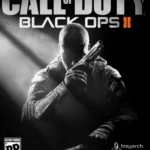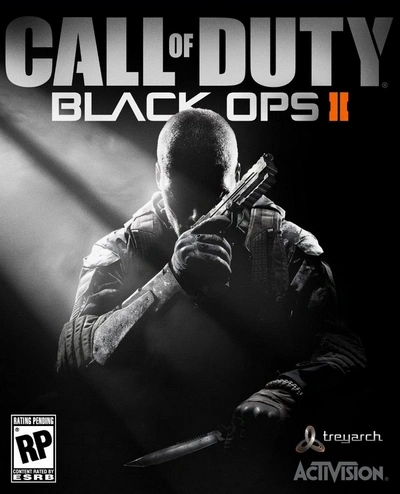
Call of Duty: Black Ops II
 83
★ /10
83
★ /10
 PC
PC PS 3
PS 3 Wii U
Wii U Xbox 360
 Activision
Where to buy

Call of Duty: Black Ops II is a 2012 first-person shooter video game developed by Treyarch and published by Activision. Released on November 13, 2012, for Microsoft Windows, PlayStation 3, and Xbox 360, and on November 18, 2012, for the Nintendo Wii U, the title stands as the ninth primary installment in the Call of Duty franchise and the direct sequel to 2010’s Call of Duty: Black Ops.
Black Ops II is widely considered by competitive purists and franchise historians to be one of the absolute greatest, most feature-complete entries in Call of Duty history. It was a massive commercial juggernaut, grossing over $500 million within its first 24 hours. The game revolutionized the franchise’s multiplayer foundation by inventing the “Pick 10” customization system, laid the groundwork for modern Call of Duty esports through League Play, and introduced branching, multi-ending narrative architecture to the single-player campaign.
Technical Specifications
| Attribute | Details |
| Developer | Treyarch |
| Publisher | Activision |
| Director | Dave Anthony |
| Lead Writer | David S. Goyer, Craig Houston |
| Composer | Jack Wall (Theme by Trent Reznor) |
| Engine | Black Ops II Engine (Upgraded IW 3.0 proprietary branch with DirectX 11 API optimization) |
| Platform(s) | Microsoft Windows, PlayStation 3, Xbox 360, Wii U, Xbox Series X/S (via Backward Compatibility) |
| Release Date | November 13, 2012 |
| Genre | First-person shooter (FPS), Tactical Action |
| Mode(s) | Single-player, Multiplayer, Zombies (Cooperative) |
Split Timelines and Consequences: Campaign Overview
The single-player campaign features a non-linear narrative structure that shifts between two distinct eras: the twilight of the First Cold War in the late 1980s and a fictional Second Cold War set in the year 2025. The entire plot centers on Raul Menendez, a charismatic, vengeful Nicaraguan narco-terrorist who orchestrates Cordis Die, a massive populist movement aimed at crippling capitalist superpowers.
- The 1980s Timeline: Follows a returning Alex Mason, Frank Woods, and Jason Hudson as they track the initial rise of Menendez across localized conflicts in Angola, Afghanistan, Nicaragua, and Panama.
- The 2025 Timeline: Shifts perspective to Mason’s estranged son, David “Section” Mason, an elite JSOC Commander navigating a high-tech landscape defined by robotics, cyberwarfare, unmanned drone swarms, and rare earth elements.
1. Branching Choice Architecture
Black Ops II shattered the traditionally linear “rail-shooter” design of its predecessors by embedding active player agency into the narrative. Decisions made during active gameplay permanently ripple outward to determine the survival of key characters and the ultimate geopolitical fate of the world.
Crucial choice matrix elements include:
- Defending or Killing Chloe Lynch (“Karma”): Determines whether Menendez can successfully hack the global automated tactical network.
- The Fate of Alex Mason: A split-second gunplay decision during the 1980s Panama invasion decides whether Section can dynamically reunite with his father in 2025, or if Mason dies permanently.
- The Final Judgment: Slaying or capturing Raul Menendez at the climax branches the finale into multiple distinct endings, ranging from global anarchist revolutions to peaceful resolutions.
2. Strike Force Missions
The campaign introduced Strike Force Missions, a suite of tactical, real-time strategy hybrid levels staged within the 2025 timeline. Players command various military assets—including infantry squads, autonomous quad-rotor drones, and heavily armored CLAW walkers—from an overhead tactical map, with the ability to instantly possess and pilot any individual unit in a first-person view. Failing or ignoring these permadeath operations permanently alters the political allegiances of global factions on the tactical board, directly impacting the final cinematic outcome.
Multiplayer Revolution: Pick 10 and League Play
The competitive multiplayer suite of Black Ops II completely re-engineered the balance and structure of online arcade shooter loops, creating systems that are still actively emulated across the industry today.
1. The Pick 10 System
Treyarch permanently discarded fixed, rigid class categories to introduce the Pick 10 Loadout Engine. Players are granted exactly ten allocation points to spend entirely as they see fit across weapons, attachments, perks, and equipment.
If a player chooses to completely forfeit their secondary weapon and tactical grenades, they can reallocate those points to stack three attachments on their primary rifle or equip a third Perk. This introduced Wildcards—special modifications that break standard loadout rules—maximizing competitive class flexibility.
2. The Scorestreak Transition
The game officially transitioned the reward economy away from traditional “Killstreaks” to Scorestreaks. Instead of exclusively rewarding players for securing raw weapon eliminations, the meter advances dynamically based on objective teamwork. Capturing hardpoints, shooting down enemy spy planes, or defending flags multiplies score points, successfully incentivizing the community to play the actual game parameters rather than hiding for personal kill ratios.
3. The Esports Foundation: League Play
Black Ops II served as the absolute birthplace of modern Call of Duty esports by integrating League Play. This dedicated ranked mode sorted players into skill-based tiers following placement matches, enforcing strict competitive rulesets, mirroring Call of Duty Championship parameters, and introducing built-in shoutcasting tools (Codcaster) that revolutionized the live-streaming viewership experience.
Zombies: The Victis Era and Masterpiece Maps
The cooperative Zombies sandbox received a massive hardware scaling upgrade, transitioning onto the modified multiplayer engine to support up to eight players across innovative game modes like Grief and Turned. The mode tracks the Victis Crew (Misty, Marlton, Samuel, and Russman) navigating a shattered, post-apocalyptic Earth following the destruction of the moon in Black Ops.
While the base map Tranzit polarized fans due to its aggressive lava hazards and vision-blocking fog creatures, the DLC lifecycle delivered two of the most critically acclaimed maps in survival history:
- Mob of the Dead: Set inside a nightmare, purgatorial rendition of Alcatraz Island. It introduced the Afterlife mechanic, where players intentionally electrocute themselves to step into a ghost plane to power up physical map geometry and unlock the Blundergat Wonder Weapon.
- Origins: A massive, dieselpunk-infused trench map set in France during World War I. It detailed the very first chronological meeting of the iconic Primis crew (Dempsey, Nikolai, Takeo, Richtofen), tasking players with constructing and upgrading four powerful Elemental Staffs while evading giant, roaming mechanical robots.
Retrospective Standing & 2026 Perspective
Viewed from mid-2026, Call of Duty: Black Ops II holds a highly unique, legendary temporal status. Because the game’s futuristic campaign was explicitly set in the year 2025, the community has officially passed the historical benchmark that Treyarch attempted to predict back in 2012. Retrospective design circles regularly celebrate the fascinating ways the game forecasted modern realities—ranging from the military implementation of automated drone warfare and kinetic strikes to the global geopolitical battle over rare earth element mining rights.
Furthermore, the game’s chronological ceiling has become highly relevant following the release of 2024’s Black Ops 6 and 2025’s Black Ops 7 (which propelled the sub-series into 2035). Because modern entries expand directly on the family legacy of David Mason and the fallout of the Cordis Die uprising, Black Ops II remains the definitive chronological anchor point for the entire sub-series.
The software is brilliantly preserved and actively accessed today across modern frameworks:
Console Enhancement
On Xbox Series X and Series S hardware via backward compatibility, the 2012 client executes with flawless stability. The original engine profits immensely from modern hardware-level scaling, utilizing FPS Boost to permanently lock frame rates to a high-performance 60 frames per second alongside Auto HDR integration, sharpening the visual fidelity of timeless maps like Raid, Standoff, and Hijacked on contemporary displays.
The Plutonium PC Sanctuary
On PC, the vanilla Steam client is heavily bottlenecked by security vulnerabilities and a lack of official maintenance. To counter this, the PC community natively relies on the Plutonium T6 Network. This highly sophisticated, secure custom client completely replaces the old matchmaking backend to provide the player base with full dedicated server browsers, robust built-in anti-cheat pipelines, custom modding tools, and unlock commands. Thanks to this independent community preservation hub, competitive tournaments and cooperative Origins survival runs execute flawlessly under modern 64-bit Windows 11 desktop environments.
Call of Duty news
More news
Xbox Game Pass September Wave 2: 13 Games Including E-Day
Doom Slayer Joins Call of Duty in Season 6's Halloween Update
Activision Films Cheat Maker Being Served Cease and Desist Order
Modern Warfare 4 Beta Update Adds Map, Mode, and Quieter Footsteps