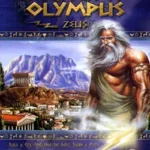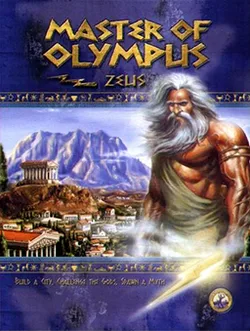
Zeus: Master of Olympus
 87
★ /10
87
★ /10
 PC
PC
 Activision,
  Sierra


Zeus: Master of Olympus (2000) stands as one of the most brilliant, structurally transformative, and tonally vibrant high-water marks in the history of the classic 2D isometric city-building era. Following the punishing, highly mathematical logistics of Caesar III and Pharaoh, developer Impressions Games and publisher Sierra On-Line executed a brilliant mechanical pivot.
Released on October 16, 2000, Zeus traded the somber, rigid atmospheric layers of its predecessors for a colorful, humor-infused, and highly stylized rendering of Ancient Greece. It bridged classic resource-management loops with active mythology, hero-summoning mechanics, and a branching dynamic narrative that injected unprecedented life into the city-building genre.
The Mythological Pivot: A Universe of Gods and Monsters
Zeus completely altered how the franchise structured its narrative campaign. Instead of dragging players through a single, linear chronological timeline, the game introduced a highly modular, adventure-driven Episode Framework.
The grand campaigns play out like interactive mythological storybooks, tracking everything from the founding of legendary city-states like Athens, Sparta, and Thebes, to high-stakes mythological epics like Jason and the Argonauts or the Trojan War. Rather than wiping your city grid clean between missions, Zeus features a persistent city-state design: players return to their original, customized capital cities across multiple consecutive episodes, utilizing their pre-built infrastructures to launch colonial expeditions onto entirely separate side-maps to secure rare resources.
The Core Evolution: Streamlined Grid & Heroic Architecture
Impressions Games heavily optimized their foundational engine code, addressing the steep learning curves of previous entries by introducing three massive mechanical innovations:
- The Housing Bifurcation: The convoluted 20-tier single-housing evolution track was completely dismantled. Zeus split society into two distinct, manageable branches: Common Housing (compact, hovel-to-townhouse plots that supply the city’s raw industrial workforce) and Elite Housing (sprawling, luxury-demanding manors that provide massive tax revenues and equip your elite military forces, the Hoplites and Cavalry).
- The Sanctuary Engine: Monuments were no longer just massive, passive economic drains. Constructing grand Sanctuaries to individual Greek deities triggers a physical reward: the god personally manifests onto the map, walking along your road coordinates to actively bless localized industries, restock warehouses, or forcefully combat enemy armies and rival gods during invasions.
- The Hero Summoning Loop: To combat the randomized map disasters of previous games—such as an active Minotaur, Kraken, or Cyclops tearing through your industrial blocks—players must construct a dedicated Hero’s Hall. Summoning a legendary champion (like Hercules, Perseus, or Odysseus) requires fulfilling a highly specific checklist of local civic goals, such as stockpiling wine, maintaining high cultural coverage, or ensuring a god actively blesses the city. Once summoned, the Hero hunts down and destroys the roaming monster in real-time.
The Deep Meta: Global Colonies & Vassal Hegemony
Diplomacy shifted away from simply satisfying a distant Emperor’s favor meters to managing a cutthroat international trade network. Players interact dynamically with dozens of autonomous rival city-states across the Aegean Sea.
Through the macro-world map, you can forge lucrative trade alliances, shower neighbors with diplomatic gifts, or launch aggressive military invasions to forcefully reduce rival kingdoms to Vassals. Once vassalized, sub-cities will periodically dispatch massive, liquid tribute payments of gold, bronze, olive oil, or grain straight into your capital’s storage yards, allowing you to completely outsource your raw food production and focus entirely on micro-optimizing your capital’s architectural aesthetics.
Signature Masterworks: The Sanctuary Matrix
The table below maps out the core pantheonic sanctuaries introduced in the game, detailing their structural components and their absolute tactical or economic impact on your city-state:
| Sanctuary Name | Patron Deity | Architectural Resource Cost | Explicit Tactical / Economic Town Buff |
| Stronghold of Ares | Ares | Marble, Sculpture, and extensive Armor stockpiles. | Summons the God of War to march into battle alongside your armies, supported by a personal, fire-breathing Dragon bodyguard. |
| Sanctuary of Athena | Athena | Cut Limestone, Marble blocks, and refined Olive Oil. | Grants a permanent orchard of sacred olives while the goddess personally stands guard on your city walls to instantly repel foreign invasions. |
| Hades’ Gate | Hades | Black Marble blocks, Sculptures, and minted Drachmas. | Passively fills your state treasury with subterranean gold deposits while Cerberus patrols the city boundaries to shred rogue enemy infiltrators. |
| Artemis’ Orchard | Artemis | Timber reserves, Fleece, and Marble accents. | Summons the Goddess of the Hunt to automatically slaughter roaming map monsters; grants a permanent abundance of free meat to local hunting lodges. |
| Bower of Aphrodite | Aphrodite | Fine Marble, Sculpture, and imported Wine caches. | Radiates a massive aura of pure adoration that completely immunizes your housing sectors from population abandonment or emigration. |
The Expansions and Standalone Spinoffs
1. Poseidon: Master of Atlantis (2001)
The official expansion pack shifted the theater away from the Greek mainland to the legendary concentric rings of the lost continent of Atlantis. Operating on an expanded technological blueprint, the expansion introduced the Scientist Social Class (replacing traditional cultural stages with Observatories, Laboratories, and Inventories), added new industrial layers like Orichalcum mining and Blackstone masonry, and unlocked two entire new deities: Poseidon (Oceanic Mastery) and Atlas (Monumental Architecture acceleration).
The Modern Standard: 2026 Preservation Status
While the official development lifecycle concluded over two decades ago, Zeus: Master of Olympus experiences an active, highly vibrant casual and optimization renaissance. The title is fully preserved and legally available as a unified digital download on PC via both Steam and GOG.
The modern software package is distributed under the compilation title Zeus + Poseidon (frequently cataloged as Acropolis). The modern installation comes pre-patched to scale seamlessly on contemporary Windows 10 and Windows 11 operating frameworks. Furthermore, the modern community relies heavily on open-source widescreen resolution display patches, ensuring that the bright, beautiful 2D hand-painted Greek sprites, brilliant voice-acted citizen dialogue, and intricate city-planning logistics execute flawlessly on ultra-wide desktop environments.
Release History
- Zeus: Master of Olympus (Base Game): October 16, 2000 (Global Release)
- Poseidon: Master of Atlantis (Expansion Pack): June 5, 2001 (Global Release)
- Modern Packaging: Natively bundled together as a definitive digital package, the complete legacy experience is sold globally as Zeus + Poseidon on digital storefronts like Steam and GOG.