Caesar II
 PC
PC
 Sierra
Where to buy

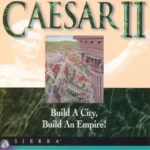
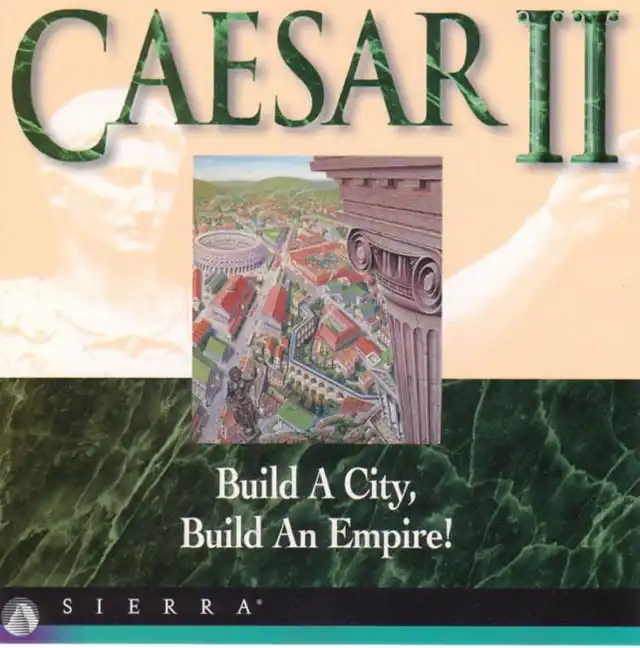
Caesar II (1995) is universally celebrated as the breakout masterpiece that permanently redefined the historical city-building genre. Released on September 4, 1995, for MS-DOS and Microsoft Windows (with a Macintosh port following in 1996), the game was designed by David Lester and Christopher J. Foster at Impressions Games and published by Sierra On-Line.
While the 1992 original laid down the conceptual laws of Roman town planning, Caesar II blew its predecessor out of the water by introducing breathtaking Super VGA (SVGA) graphics, a beautifully rendered 27° slanted isometric grid, and a fully integrated standalone tactical combat engine. It was a massive critical and commercial juggernaut, eventually selling over 2.5 million copies worldwide and cementing the structural blueprint for future genre legends like Pharaoh and Zeus.
The Dual-Layer Sandbox: Province vs. City View
The absolute structural masterstroke of Caesar II was its division of gameplay across two completely distinct, yet deeply codependent geographical simulation layers: The City View and The Province View.
Unlike modern city builders that isolate you strictly to a local grid, Caesar II forced you to act simultaneously as an urban architect and a macro-level provincial governor:
- The City View: The microscopic layer where you clear rocks, lay down plazas, route water networks via reservoirs, and build neighborhood blocks to satisfy citizens’ immediate daily needs.
- The Province View: The macroscopic layer mapping your entire assigned Roman territory (e.g., Corsica, Illyricum, or Britannia). Here, you manage regional logistics: constructing paved roads to link your central capital city to autonomous border towns, pacifying independent barbarian tribes, and constructing resource pipelines.
Key Mechanical Masterstrokes
1. The Provincial Supply Chain and Industry Nodes
To fund your sprawling capital city, you could not rely on local city taxes alone early on.
When you located a natural resource node (like Iron, Marble, or Vines) on the provincial map, the game dynamically prompted a modular build chain: clicking “Yes” would automatically swap your cursor to deploy a Work Camp, followed by a localized Warehouse. You then had to pave a continuous road network connecting that resource facility to your capital city and an international border town or maritime Port. This funneled raw materials straight into your urban factories and allowed you to export lucrative surpluses back to Rome to keep your treasury overflowing.
2. The Integrated Tactical Combat Engine
The first Caesar game handled invasions via a clunky system that required saving your city and loading an entirely separate video game executable (Cohort 2) to resolve battles. Caesar II permanently solved this by natively integrating an active, real-time tactical battle module right inside the core game client.
When barbarian raiders or foreign empires marched across your province lines, you could deploy your trained Cohorts to intercept them. Combat shifted to a dedicated battlefield screen where you manually commanded unit formations—balancing heavy legionnaires, light infantry auxiliaries, and specialized horse-bowmen to break enemy lines. If your field army failed, the battle descended straight into your City View, transforming invaders into destructive rioters that your local town Prefects had to hunt down in the streets before they burned your infrastructure to the ground.
3. Service Allocation and the Plazas Meta
The Walker System was heavily refined from the 1992 first draft. Civic services were physicalized: constructing a Prefecture or a Bath House spawned visible worker sprites onto your road network. Neighborhoods were only protected from fires or granted access to clean water if a physical walker unit walked directly past their front doors.
The Plaza Meta: Because walkers would randomly turn at every single road intersection, long, winding street grids frequently caused service distribution to fail, causing houses to spontaneously devolve or catch fire. Hardcore players invented a brilliant counter-strategy: completely replacing inner-city roads with Plazas. Plazas acted as valid pathfinding terrain for citizens and land value, but because they lacked explicit road intersections, they allowed players to strictly control walker paths, forcing them to move in perfect, predictable loops.
The Emperor’s Imperial Hierarchy Matrix
To achieve a successful promotion and advance through the historical campaign, your province had to systematically satisfy the Roman Empire across four unyielding core rating bars:
| Imperial Rating Category | Core Simulation Focus | Strategic Management Driver |
| Population | Absolute citizen headcount inside your province lines. | Boosted by clearing terrain, building vast housing blocks, and upgrading town sizes. |
| Prosperity | The net financial health and luxury status of your economy. | Driven by optimizing factory production methods, siphoning high export trade profits, and maintaining low tax margins. |
| Culture | The educational, spiritual, and entertainment status of your city. | Achieved by blanketing your residential zones with Forums, Temples, Shrines, Grammaticus schools, and massive Theaters. |
| Peace | The security status and complete lack of crime or violence in your borders. | Maintained by building perimeter city walls, deploying frequent Prefect street patrols, and wiping out barbarian tribes. |
Modern Preservation & Storefront Status
Today, this absolute high-water mark of 90s DOS strategy is beautifully preserved and legally available on PC via GOG under the title Caesar II (often bundled alongside Caesar I or Caesar III).
The digital version comes fully pre-configured inside an automated DOSBox compatibility wrapper out-of-the-box. This ensures that the gorgeous SVGA 2D graphics, iconic Roman music tracks, and the intricate dual-layer simulation mechanics execute flawlessly on modern Windows 10 and Windows 11 desktop environments right from the first click, with no manual compatibility adjustments required.