 PC
PC Sierra

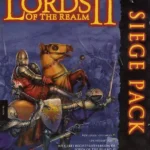
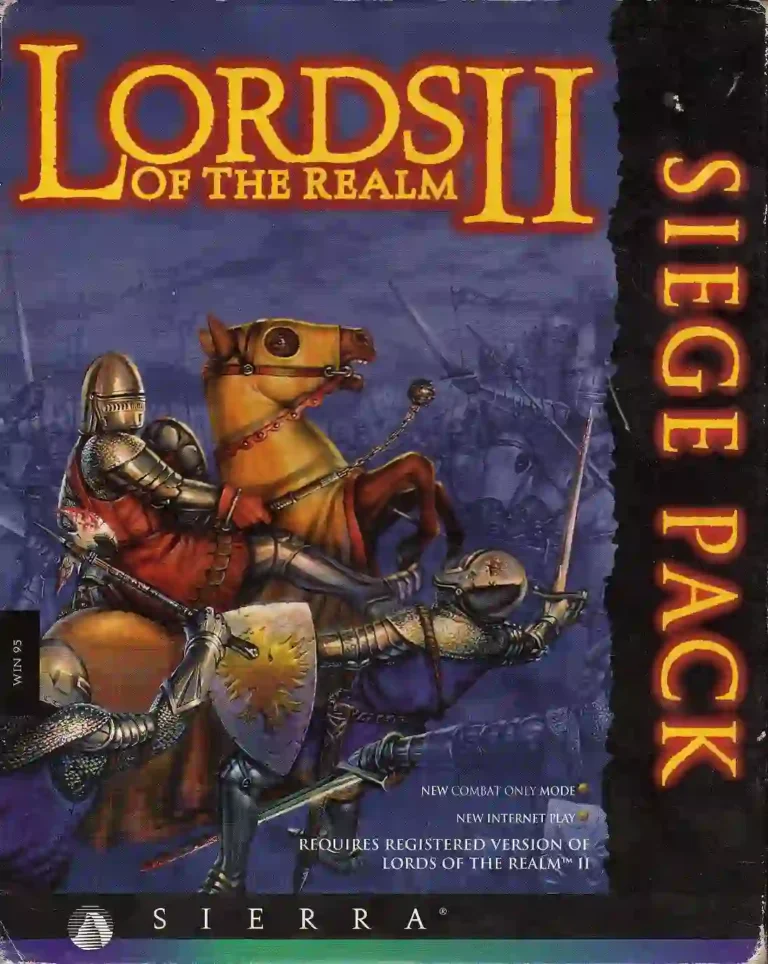
Released in June 13, 1997 by Impressions Games and published by Sierra On-Line, the Siege Pack expansion is highly regarded by the strategy community as the ultimate companion piece to Lords of the Realm II.
Instead of rewriting the core medieval engine, Impressions Games treated the expansion as a tactical tune-up. They identified what hardcore players loved most—the high-stakes, real-time siege warfare—and expanded it by introducing new defensive systems, complex battlefields, and an unsparing leap in mechanical difficulty designed to test series veterans.
1. The Crown Jewel: Skirmish Mode
The foundational base game forced you to play through the full, hours-long turn-based overworld campaign just to experience a massive castle siege. Siege Pack changed this loop by introducing Skirmish Mode:
- Instant Real-Time Action: Players could bypass county taxation, crop rotations, and iron mining entirely.
- Complete Army Customization: The menu allowed you to instantly configure standalone, isolated battles. You could choose between an open-field clash or a full-scale fortress assault, assign yourself as the attacker or defender, and manually buy your own custom layout of Macemen, Crossbowmen, and Knights using a pre-allocated budget. Alternatively, you could let the computer generate a randomized, balanced opposing force for immediate tactical training.
2. Physical Battlefield Innovations: The Introduction of Pitch
The expansion added a brutal new environmental hazard to the real-time grid that fundamentally shifted tactical choke-point defenses: Pitch (Tar).
- The Trap Is Set: Defenders could pre-arrange hidden, volatile pools of black pitch outside their castle walls or directly inside narrow gate entry chokepoints.
- Igniting the Horde: When an invading army’s infantry (like the Baron’s massive swarms of cheap Pikemen) stepped onto the pitch tile, the defending player could command their Bowmen to fire specialized fire arrows onto the grid.
- The Fire Wall: The pitch instantly erupted into a massive wall of raging, tile-consuming flame. This dealt catastrophic, armor-piercing damage over time, turning narrow castle approaches into absolute meat-grinders and forcing attackers to rethink their pathfinding routes.
[Defenders Place Pitch Outside Walls] -> [Enemy Armies Step Into Chokepoint]
                                                       |
[Catastrophic Inferno Damage]         <-   [Archers Fire Flaming Arrows]
3. Structural Engineering: 10 New Castle Layouts
While the base game limited building parameters to five rigid, hardcoded tiers (Palisade, Motte & Bailey, Norman Keep, Stone Castle, and Royal Castle), Siege Pack added 10 entirely new custom-engineered castle layouts into the real-time siege loops.
These maps threw out standard rectangular geometry in favor of historical tactical designs:
- Multi-Layered Inner Courtyards: Advanced designs forced attackers to breach an outer curtain wall, only to find themselves trapped in a secondary killing field surrounded by interior archer towers.
- Devious Chokepoint Moats: Water networks were intricately wrapped around gatehouses, maximizing the distance unarmored Peasants had to crawl through arrow fire just to drop dirt to fill the trenches.
4. Overworld Expansion: Devious Events and Aggressive AI
For players who preferred the grand strategy layer, the expansion added several dynamic variables into the turn-based campaigns:
- The Cranky AI Overhaul: The five rival lords (the Baron, Bishop, Countess, and Knight) received a major intelligence boost. They prioritized defensive counter-garrisoning, utilized siege weapons more efficiently, and aggressively targeted your weakest economic counties with sudden, multi-front border raids.
- Criminal Random Events: Siege Pack added several unique, punishing random notifications to the seasonal lifecycle. Beyond traditional plagues, players now had to navigate structural setbacks like Embezzlement (where corrupt county stewards stole massive chunks of treasury gold) and localized sabotage, shaking up late-game economic stability.
- Historical Scenarios: The campaign roster expanded to include 20 brand new maps featuring complex historical and fictional challenge scenarios, built with higher default aggressive handicaps favoring the AI.
5. Creative Freedom: The Intuitive Map Editor
To maximize replayability, the expansion shipped with a fully integrated, user-friendly Tactical Map Editor.
- Terrain Painting: Players could paint their own custom grids from scratch—sculpting defensive mountain ridges, laying down movement-slowing marsh swamps, placing dense forests to conceal flanking Macemen, and positioning tactical rivers.
- Limitations: While players could customize battlefields and assign custom starting garrisons for skirmish testing, the software did not allow you to design original architectural castle layouts from scratch or stitch maps together into brand-new custom overworld campaigns.
Modern Packaging Notice
You no longer need to track down a separate, individual retail disc for this 1997 data pack. When Rebellion acquired and digitally preserved the franchise, they permanently baked the expansion straight into the baseline client.
Whether you launch the game via Steam or GOG using the Lords of the Realm II listing, the installation automatically includes the complete Siege Pack out-of-the-box. Skirmish Mode, the pitch-burning mechanics, the 10 advanced castle designs, and the custom map editor are fully unlocked and configured to run smoothly on modern Windows 10 and 11 architectures right from your very first click.