Europa Universalis II
 87
★ /10
87
★ /10
 PC
PC
 1C Company, CyberFront, Leader, PAN Vision, Paradox Interactive, Strategy First,
  Ubisoft, Virtual Programming
Where to buy

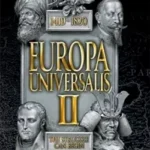
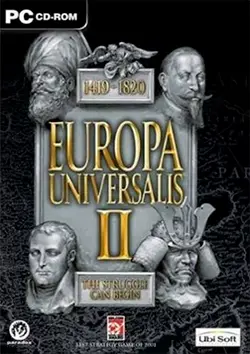
Europa Universalis II (2001) is the legendary, massively expanded masterpiece that firmly anchored Paradox Interactive’s absolute dominance over the grand strategy genre. Released on December 11, 2001, it took the rough, board-game-shackled foundations of the 2000 original and transformed them into the definitive, ultimate sandbox of global historical statecraft.
Rather than settling for an incremental patch, Paradox blew the game’s boundaries wide open. They created a living, pausable real-time chronicle where a player could take command of an absolute global empire or a tiny, forgotten duchy and completely forge an alternate history across four centuries of world drama.
The Grand Chronological Canvas: 1419–1819
While the first game tightly bracketed the discovery of the New World from 1492 to 1792, Europa Universalis II vastly scaled out the narrative timeline. The grand strategy simulation now stretched from 1419 to 1819:
- The Starting Gun (1419): Drops you directly into the chaotic end of the Middle Ages, allowing you to participate in the final, bloody phases of the Hundred Years’ War alongside historical figures like Jeanne d’Arc.
- The Finish Line (1819): Explodes into the industrial and geopolitical tremors following the rise and cataclysmic fall of the Napoleonic Empire.
The Mechanical Choice Matrix: The “Play Anyone” Meta
The absolute defining revolution of the 2001 client was its structural freedom. The original game locked human selection strictly to eight major European colonial powers. Europa Universalis II completely threw this rule out, unlocking every single independent nation, kingdom, tribe, and unrecognized khanate on the global map for playable human control—representing hundreds of asymmetric setups:
| Playable Nation Type | Starting Geopolitical Footprint | Core Strategic & Economic Reality |
| The Ming Empire | East Asia | The Fragile Giant: Starts with staggering, unrivaled territory and tax revenue, but heavily bottlenecked by isolationist political factions and crushing stabilization tech penalties. |
| The Byzantine Empire | Greece / Morea | The Ultimate Survival Challenge: Reduced to a tiny, vulnerable pocket in 1419; requires masterful diplomatic tap-dancing to survive the immediate expansionist jaws of the neighboring Ottoman Empire. |
| The Iroquois Confederacy | North American Woodlands | The Primitive Isolationist: Locked inside dense Terra Incognita; relies on a purely agrarian economy and tribal dynamics, racing to modernize before European gunboats land. |
| Kingdom of France | Western Europe | The Continental Colossus: Blessed with astronomical native manpower reserves and fertile farmland, engineered to dominate land warfare and shape the European theater. |
| The Mameluk Sultanate | Egypt and the Levant | The Crossroads Merchant: Controls highly lucrative trade hubs and spice links, but suffers from structural instability and internal succession crises. |
Key Mechanical Masterstrokes
1. The Domestic Policy Sliders
To simulate internal social engineering, the engine introduced an incredibly influential, multi-tier Domestic Policy (DP) Slider Matrix. Once every ten calendar years, players could click to nudge one of eight interlocking sliders a single step to change their nation’s internal laws.
Every single adjustment was a strict mathematical trade-off that radically reconfigured your empire’s parameters:
- Aristocracy vs. Plutocracy: Aristocracy boosted cavalry shock damage and lowered army maintenance, while Plutocracy scaled up merchant bidding power and production revenue.
- Centralization vs. Decentralization: High centralization maximized global tax collection and accelerated technology investment, but severely magnified the destructive power and size of provincial rebel stacks.
- Innovative vs. Narrowminded: Innovative empires hyper-accelerated technology research speeds but suffered from catastrophic stability-restoration costs and fewer available colonist units.
- Mercantilism vs. Free Trade: Mercantilism provided cheap, highly protected home merchant spots, while Free Trade scaled global trade income and accelerated colonist generation.
2. The Rigid Scripted Railroad (Historical Events & Monarchs)
Unlike modern grand strategy games that lean fully into pure random procedural sandboxes, Europa Universalis II was fiercely, beautifully railroaded by real-world history. The engine utilized a monolithic database consisting of thousands of hardcoded historical scripts bound to explicit calendar dates:
[Fixed Calendar Year] -> [Trigger Scripted Event] -> [Choose Option A or Option B]
                                                            |
                                        (Forces Permanent National Dynamic Shifts)
If you played as Spain, you knew that on a specific date, the game would force a massive prompt regarding the Spanish Inquisition. If you played as England, the engine would forcefully trigger the English Civil War, swapping your ruling system out. Furthermore, your rulers were not random procedurally generated figures; they were real historical monarchs with fixed birth and death dates, tracking their real-world attribute ratings. This meant a player had to actively plan their economy around a real-world linear list—preparing for periods of hyper-competent golden ages or bracing for immediate financial stagnation when a historically insane king was scripted to inherit the throne.
3. Religious Fracture and the Reformation
Religion operated as a central, highly volatile geopolitical mechanic. Nations were bound to explicit state faiths (Catholic, Orthodox, Sunni, Shiite, Confucian, etc.), which directly impacted tax scaling, stability costs, and diplomatic limits.
Midway through the campaign, the engine would forcefully simulate the Protestant Reformation. This event caused individual provinces across Europe to organically flip to Protestant or Reformed faiths. Rulers were faced with a tense, realm-shattering choice: stick with the Pope to maintain old alliances, or forcefully embrace the Reformation to seize Catholic church properties for an immediate financial windfall—at the cost of plunging their entire kingdom into decades of religious civil war.
The Community Savior: For the Glory (2009)
The engine logic of Europa Universalis II was so fundamentally sound and deeply beloved that in November 2009, Paradox Interactive officially licensed the source code out to a team of dedicated community modders and programmers operating under the name Crystal Empire Games.
They released For the Glory: A Europa Universalis Game, which permanently rebuilt the 2001 client for modern systems. It kept the core, historic scripting and slider mechanics of EU2 completely intact but natively integrated widescreen resolution support, an overhauled user interface, heavily upgraded AI pathfinding, and thousands of newly scripted historical flavor events.
Modern Preservation & Storefront Status
The original 2001 release of Europa Universalis II is preserved and fully accessible today on PC via GOG. The digital installation is fully patched to patch version 1.09 and comes pre-wrapped inside a modern compatibility layer, ensuring the massive 15th-century trade networks, domestic policy adjustments, and strict historical railroad events execute seamlessly out-of-the-box on modern Windows 10 and Windows 11 frameworks.
Alternatively, for players looking for the exact same mechanical experience but with modern resolution and scaling support, the community-built engine upgrade For the Glory is actively available on both Steam and GOG, keeping the golden era of Paradox’s early grand strategy alive and thriving.