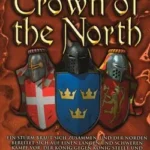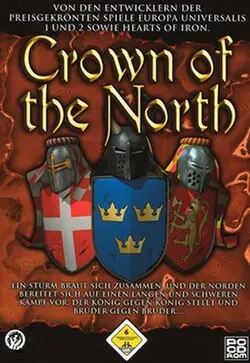
Europa Universalis: Crown of the North
 61
★ /10
61
★ /10
 PC
PC
 1C Company, Koch Media, Levande Böcker, PAN Vision, Strategy First
Europa Universalis: Crown of the North (2003) occupies a unique, highly localized, and somewhat bizarre position in Paradox Interactive’s history. It isn’t an original sequel or a mainline expansion. Instead, it is an international rebranding trick.
Originally released in Sweden in November 2000 under the title Svea Rike III, Paradox later localized, translated, and published the game for North America and Europe in July 2003. They attached the Europa Universalis brand name to the box to capitalize on the sudden, massive mainstream strategy success of EU1 and EU2.
Running on the original 2D Europa Engine, Crown of the North is a hyper-focused, streamlined grand strategy game that trades global colonization and global empires for gritty, low-fantasy medieval Scandinavian politics.
The Historical Backdrop: The Nordic Power Vacuum (1275–1340 A.D.)
Instead of dropping you onto a massive map of the entire planet, the game features a single, highly focused geographic theater mapping Sweden, Norway, Denmark, Finland, and minor German/Russian borders along the rim of the Baltic Sea.
The single baseline scenario kicks off in 1275 A.D.—a critical turning point where the region is poised on a political precipice. King Magnus Ladulås of Sweden has passed, leaving a sprawling power base with far too much territory and far too many ambitious, backstabbing royal sons vying for a single crown. Simultaneously, the Danish kingdom is fracturing after a series of incompetent rulers have mortgaged away their birthright, and Norway sits vulnerably on the Western flank. Your ultimate goal is simple: survive until 1340 A.D. and accumulate the highest score, or completely eliminate your rivals to unify the Nordic crown.
Core Mechanics: Simplified Statecraft
Because the title was designed as an entry point for a more mainstream audience, it stripped away the heavy economic sliders and complex global trade networks of the mainline Europa Universalis games, substituting them with a streamlined, localized economy.
1. The Four Social Pillars (The Estates Framework)
Domestic policy is entirely governed by monitoring the happiness thresholds of Four Social Groups. Rulers must continuously track simple satisfaction bars visible at the top of the interface:
                     /---> Nobles -------> Boosts Military Cavalry/Army Morale
                    /----> Clergy -------> Lowers National Revolt Risk
Ruler's Edicts ----+-----> Townspeople --> Multiplies Global Market Gold Income
                    \----> Peasants -----> Generates Max Grain/Labor Pools
Maintaining the peace is a zero-sum game because the interests of these social groups inherently clash. Passing a royal edict to favor the Nobles (such as granting them tax exemptions) will instantly tank the happiness of your Peasants. If any group’s satisfaction craters completely, their respective provinces will immediately break out into massive, synchronized peasant or noble rebellions that halt resource gathering and force military civil wars.
2. Fixed Infrastructure Upgrades
Provinces do not have abstract development values. Instead, every territory contains exactly 7 to 8 hardcoded building nodes visible right on the main map canvas:
- The Core Roster: The Castle, Church, Farm, Market, City, Defensive Walls, and Muster Field (alongside Harbors for coastal locations).
- Upgrading infrastructure is as simple as clicking directly on the building’s animated map sprite and spending your gold reserves. Upgraded Farms scale your max food limits, fully upgraded Cities attract wealthier Townspeople, and advanced Muster Fields unlock access to higher-tier military regiments.
3. Low-Fantasy Random Events
To inject Scandinavian flavor, the game uses randomized text prompts based on regional folktales and transitioning Viking traditions. While some events present serious political or diplomatic trade-offs, others lean into the bizarre, forcing you to spend gold or sacrifice army morale to deal with Troll or Sea Serpent sightings across your coastal territories.
The Playable Contenders Matrix
The campaign features six main asymmetric playable factions, each reflecting a specific historical noble line or claimant from the 13th-century civil war:
| Playable Faction | Starting Strategy Profile | Core Geopolitical Game Reality |
| The Sons of Magnus (Sweden) | Dynamic Royal Brothers | The Sprawling Powerhouse: Starts the match with unrivaled domestic wealth and vast territory, severely offset by immediate, inevitable internal family wars. |
| King Erik Menved (Denmark) | Imperial Traditionalist | The Fractured Counterweight: Holds incredibly wealthy core trade hubs, but starts heavily overextended and surrounded by hostile land tenants. |
| Haakon V (Norway) | Regional Duke / Underdog | The Western Shield: Structurally and economically weaker than Sweden, but holds easily defensible mountain choke-points and valid claims to foreign duchies. |
| Stig Andersson (Danish Rebel) | Proud Anti-Monarchist Nobility | The Insurgent Saboteur: Starts with minimal starting infrastructure; relies on executing aggressive border raids and exploiting peasant anger. |
Reception, Legacy, & Current Status
Upon its western launch in 2003, Crown of the North received heavily mixed reviews from critics (securing a mediocre 54/100 on Metacritic). Hardcore Paradox fans criticized it for lacking the monolithic depth, global scope, and grand diplomatic options of Europa Universalis II, while mainstream strategy outlets found the interface clunky and the AI behavior frustratingly passive. In North America, publisher Strategy First ultimately bundled the game as a free bonus disc alongside a re-release of EU2 (patch 1.07) to incentivize sales.
Modern Preservation Notice
Unlike Europa Universalis 1 and 2, which have been beautifully preserved on GOG, Europa Universalis: Crown of the North is completely unavailable on modern digital storefronts. It currently languishes on community wishlists and GOG “Dreamlists” without an active retail page.
To experience this unique Nordic spin-off today, retro strategy gamers must track down a rare physical retail CD-ROM or utilize legacy 32-bit abandonware emulation tools to run the 2003 software package inside a modern Windows 10 or 11 desktop architecture.