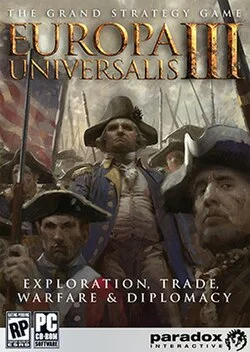
Europa Universalis III
 83
★ /10
83
★ /10
 PC
PC
 1C Company, Cenega Poland, CyberFront, Paradox Interactive, Runesoft, Virtual Programming


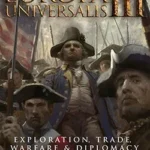
Europa Universalis III (2007) represents one of the most radical, fiercely debated, and historically defining philosophical turning points in the entire history of grand strategy. Released on January 23, 2007, this entry took the strict, script-railroaded board game adaptations of the early franchise and permanently threw them out the window.
Under the direction of Johan Andersson, Paradox used this title to invent the modern blueprint for the entire genre: moving away from strict historical determinism to champion the rise of the procedural global sandbox. It was a massive gamble that initially terrified purists, but it successfully laid the groundwork for everything Crusader Kings, Victoria, and subsequent Europa sequels would become.
The Big Philosophy Shift: Conditional vs. Railroaded History
The defining evolution of Europa Universalis III was its pivot from historical railroading to dynamic conditioning.
In Europa Universalis II, events happened on an exact calendar date because they happened in real-world history (e.g., the Spanish Inquisition or the English Civil War would forcefully fire regardless of whether Spain was a tolerant utopia or England was a stable absolute monarchy). Europa Universalis III completely broke this logic.
If your kingdom was stable, highly literate, and religiously tolerant, radical revolts simply wouldn’t occur. History became a clay mold in the player’s hands. This was further amplified by expanding the campaign timeline—initially tracking 1453–1789, but expanding via data packs to span from 1399 to 1821, allowing players to save the Byzantine Empire right before the Ottoman siege or push past the Napoleonic Wars into early industrial rearmament.
Key Mechanical Masterstrokes
1. The Debut of the Clausewitz Engine
Europa Universalis III marks a major tech milestone as the literal birth of the Clausewitz Engine, replacing the aging, flat 2D Europa engine maps. Clausewitz migrated the entire global board into a lush, fully topographic 3D terrain viewport. For the first time, players could seamlessly rotate cameras, zoom through fog clouds, and watch individual animated pixel soldiers march across over 1,700 physically rendered land and sea coordinates.
2. Procedural Monarchs & Dynamic Advisors
The game completely discarded the database of historically fixed monarchs and generals. Outside of your starting ruler, when a king died, the engine procedurally generated a completely new, randomized heir with specialized attribute scores across three pillars: Administrative, Diplomatic, and Military (ADM). This meant you couldn’t rely on historical hindsight; you had to dynamically adapt your geopolitical strategy to whoever inherited the crown. This was paired with a competitive court system where players hired specialized Historical Advisors (such as specialized artists or scholars like Isaac Newton) to harvest passive, monthly tech point bonuses.
3. The National Ideas Specialization Matrix
To differentiate cultures without resorting to hardcoded rails, the engine introduced National Ideas. As you invested financial capital into Government Technology, your nation unlocked dedicated ideological slots. Choosing a National Idea fundamentally altered how your country interacted with the global sandbox:
- Quest for the New World: Universally required to hire Explorers and Conquistadors to pull back the white fog of Terra Incognita.
- Grand Army: Permanently scales your global land force limit capacity up by a flat 33%, perfect for sustaining brutal continental slugfests.
- Deus Vult (Divine Will): Grants an immediate, permanent Casus Belli (Reason for War) against every single country holding a different religious faith group, bypassing stability penalties.
- Smithian Economics: Drastically multiplies production efficiency ratings across all urban centers, accelerating mid-game industrialization.
4. Reworked Rebel Archetypes (In Nomine)
In the early days of the genre, rebels were simply generic, black-flagged “rebel scum” that spawned randomly to pillage territory. The expansion In Nomine permanently overhauled this by breathing intent into insurrections.
Rebels gained explicit ideological agendas, forming distinct factions with clear, negotiable demands. Nationalist Rebels fought to break away and resurrect dead kingdoms; Religious Zealots captured provinces to forcefully convert state faiths; and Pretender Rebels marched on the capital to depose your current king to install a higher-attribute ruler. Rulers could no longer just execute rebels; you had to actively choose whether to submit, negotiate, or accept their constitutional terms.
The 4 Pillars of Expansion
Because EU3 operated during Paradox’s foundational era, the game was developed using a linear waterfall pipeline: every expansion pack required all previous expansions installed underneath it to function properly.
| Expansion Name | Launch Window | Crucial Mechanical Upgrades & Paradigm Shifts |
| Napoleon’s Ambition | August 22, 2007 | Extended the chronological clock out to 1820. Introduced automated trade-merchant placement loops and deep post-war peace treaty restructuring options. |
| In Nomine | May 28, 2008 | Pushed the starting gun back to 1399, allowing the Byzantine Empire to be playable. Rebuilt rebels with individual motivations and debuted the dynamic Missions System to give players context-aware goals. |
| Heir to the Throne | December 15, 2009 | Focused heavily on dynastic diplomacy, adding Monarch Legitimacy values. Completely re-engineered the Casus Belli framework to categorize explicit war goals (e.g., Reconquest, Holy War, Imperialism). |
| Divine Wind | December 14, 2010 | Deeply customized East Asian Geopolitics. Implemented the complex, internal Celestial Factions system for Ming China, added shifting Shogunate/Daimyo rivalries for Japan, and created terrifying nomadic horde dynamics. |
The Naming Trap: “Complete” vs. “Chronicles”
For players exploring the legacy catalog today, Europa Universalis III is famous for a hilariously confusing digital publishing blunder regarding its editions:
- The Trap: Paradox released a physical and digital compilation bundle named Europa Universalis III: Complete in October 2008. At the time, it was complete, containing the base game alongside the first two expansions (Napoleon’s Ambition and In Nomine). However, Paradox later surprised everyone by developing Heir to the Throne and Divine Wind, meaning the “Complete” edition is missing half of the actual game content.
- The Definitive Fix: To get the full, feature-complete strategy experience, you must completely avoid the standard “Complete” version and purchase Europa Universalis III: Chronicles (or the master Collection bundle), which packages all four essential expansions together to bring your game client up to the final, fully polished patch version 5.2.
Modern Preservation Status
The title is beautifully archived and preserved on PC via Steam and GOG. To experience the procedural world-building loops optimally on modern machines, the fanbase highly recommends purchasing the bundle via GOG under the title Europa Universalis III Collection. The digital installer is fully pre-configured to run flawlessly out-of-the-box on modern Windows 10 and Windows 11 frameworks, keeping the exact catalyst of Paradox’s dynamic 3D sandbox era alive and fully operational.