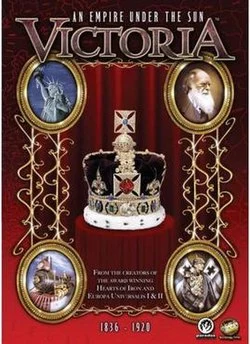
Victoria: An Empire Under the Sun
 58
★ /10
58
★ /10
 PC
PC
 1C Company, Auran, CyberFront, Koch Media, PAN Vision, Paradox Interactive, Virtual Programming


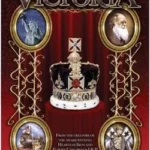
Victoria: An Empire Under the Sun (November 14, 2003) is widely revered by grand strategy purists as Paradox Interactive’s ultimate, most uncompromisingly complex economic beast. Developed under the direction of Johan Andersson on a heavily modified version of the legacy 2D Europa Engine, Victoria traded the raw territorial expansion of Europa Universalis and the pure military warfare of Hearts of Iron for the gritty, terrifying realities of the Industrial Revolution.
It wasn’t just a strategy game; it was a full-scale simulation of global macroeconomics, social engineering, and political radicalization disguised as an empire builder. Its learning curve was so notoriously vertical that it earned a mythic status among fans, setting the blueprint for what would eventually evolve into one of Paradox’s most beloved flagship franchises.
The Historical Canvas: 1836–1920
The campaign kicks off on the absolute dawn of the Victorian era in 1836 and marches through the explosive social, mechanical, and geopolitical changes of the 19th and early 20th centuries, concluding just after World War I in 1920 (extended to 1936 with the expansion).
Players can pick up the reins of any sovereign nation on Earth during this timeline. Your ultimate goal isn’t simply painting the world map your color; it is successfully dragooning your country from an agrarian, absolute monarchy into an industrialized, technologically dominant, and politically stable Great Power before your society tears itself apart from the inside out.
The Foundational Engine: The POP Matrix
The absolute masterstroke of Victoria—and the mechanic that made it a terrifyingly deep simulation—was the POP (Population) System. The game didn’t just track abstract population numbers; it simulated every single demographic slice of your global citizenry as a distinct physical entity.
Every single POP across the globe possessed a specific culture, religion, occupational class, geographic province location, and dynamic levels of Consciousness (how aware they were of their social condition) and Militancy (how willing they were to pick up rifles and overthrow your government). Managing your empire meant delicately balancing the economic output and political demands of an asymmetrical social matrix:
| POP Occupational Social Tier | Primary Workplace Domain | Economic Resource Utility | Underlying Political / Social Behavior |
| Aristocrats | Country Estates | Passive tax extraction; boosts local raw material generation. | Hyper-conservative; aggressively blocks voting rights and social welfare reforms. |
| Capitalists | Industrial Complexes | Generates private investment pools to automatically build factories and railroads. | Lassez-faire liberals; demands minimal state taxation and free international trade. |
| Clerks | Urban Factories | Multiplies factory production efficiency and accelerates national literacy/research rates. | Highly progressive; quick to demand constitutional voting structures and safety laws. |
| Craftsmen | Urban Factories | The foundational blue-collar labor pool required to turn raw inputs into refined goods. | Socialist-leaning; heavily prone to organizing massive industrial strikes and labor unions. |
| Soldiers | Military Regiments | Dictates the maximum baseline size of your standing professional army and manpower pool. | Nationalistic; heavily reactionary if the homeland undergoes military losses. |
| Laborers / Farmers | Mines & RGO Fields | Harvests foundational raw resources (Coal, Iron, Wheat, Timber, Cotton). | Traditionalist early game; easily radicalized into anarchism if basic food demands aren’t met. |
The Global Economy & Production Chains
The economic system in Victoria remains an absolute marvel of algorithmic design, utilizing a completely simulated, living World Market. Every resource in the world operated on a pure global supply-and-demand automated bidding queue, completely subverting the static “Command and Conquer” resource pools of contemporary games.
To fund your empire, you had to construct elaborate, multi-tiered industrial pipelines. You couldn’t just produce high-value Luxury Furniture out of thin air; you had to own or conquer provinces producing Timber, build a factory to process that timber into Lumber, secure Coal to keep the factory engines running, and manually split and train your peasant POPs into literate Craftsmen and Clerks to staff the assembly lines.
If your empire lacked a resource, you had to buy it off the World Market. However, buy order priority was directly dictated by your global Great Power Ranking—meaning if Great Britain hoarded the global supply of sulfur to manufacture ammunition, minor nations like Belgium or Siam were completely choked out from manufacturing modern artillery, forcing a reliance on raw gunboat diplomacy.
The Political Powder Keg
While keeping your factories profitable was one challenge, managing the political fallout of industrialization was the game’s true final boss. As literacy and industry scaled, your POPs’ Consciousness naturally skyrocketed. They started forming political parties—spanning Anarcho-Liberals, Socialists, and Communists—and demanding active voting rights, minimum wage protections, and maximum work-hour limitations.
Ignoring these demands caused Militancy to surge, triggering catastrophic, multi-province rebellion waves that could splinter your nation into civil war or force a complete regime change into an absolute dictatorship.
The Expansion Milestone: Victoria: Revolutions (2006)
In August 2006, Paradox released Victoria: Revolutions, a massive, structural overhaul expansion pack that fans consider completely mandatory to experience the game properly.
Revolutions systematically rebuilt the title’s core logic with definitive upgrades:
- The Chronological Extension: Pushed the end date back by 15 additional years, extending gameplay deep into the interbellum period of 1936.
- The Interwar Tech Explosion: Expanded the technology tree to track 20th-century warfare advancements, allowing players to manufacture Aircraft Carriers, fighter planes, and advanced armor divisions.
- The Rise of Fascism: Introduced a highly destructive new late-game radical ideology—Fascism—complete with totalitarian state intervention mechanics.
- The Doomsday Converter: Shipped with an automated save-game compiler, letting players cleanly export their final 1936 Victoria world map straight into Hearts of Iron II: Doomsday to play out an alternate-history World War II.
Release Lifecycle & Archival Timeline
- Microsoft Windows (Original Launch): November 2003 (Sweden/Europe) / November 24, 2003 (North America)
- Mac OS X Port: July 7, 2004 (Ported by Virtual Programming)
- Victoria: Revolutions Expansion: August 17, 2006
- Victoria I Complete Collection: August 20, 2010 (The definitive digital compilation bundling the base game and Revolutions expansion together for modern digital distribution platforms).
Modern Availability Notice
The debut masterpiece is fully preserved and legally accessible on PC today via GOG and Steam under the title Victoria I Complete. The digital installation comes fully pre-patched and bundled with the critical Revolutions expansion data, optimized to run out-of-the-box inside an automated compatibility wrapper on modern Windows 10 and Windows 11 architectures.