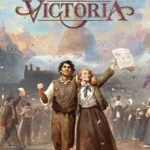
Victoria 3
 81
★ /10
81
★ /10
 PC
PCWhere to buy

Victoria 3 (2022) represents a bold, visually striking, and deeply transformative evolution for Paradox Interactive’s premier society simulation franchise. Released on October 25, 2022, under the direction of Martin “Wiz” Anward, the title was built from the ground up on a heavily modernized iteration of the 3D Clausewitz Engine.
Stepping away from the rigid, mathematical micro-management of Victoria II, Victoria 3 re-engineered the series as a living, breathing “Society Simulator.” It places its ultimate focus on the internal plumbing of a nation—how passing a single domestic law can trigger a butterfly effect that alters global trade, bankrupts industries, enrages powerful political interest groups, and sparks a devastating civil war.
The Historical Canvas: 1836–1936
The simulation tracks the tumultuous, hyper-transformative century stretching from 1836 to 1936. Players can pilot any of the roughly 200 sovereign nations or unrecognized regional entities across the globe.
Rather than merely conquering adjacent map coordinates, your primary mandate is to build an ideal society. You must guide your population through the chaotic demographic shifts of the Industrial Revolution, navigate the rise of global capitalism and socialism, and secure a dominant position on the world stage before the ideological pressures of the early 20th century tear your borders apart.
Key Mechanical Masterstrokes
1. The Standard of Living (SoL) & The Radical Loop
Population management shifts from abstract demographic categories to a living socio-economic feedback loop. Every citizen cohort (POP) operates under a dynamic Standard of Living (SoL) metric.
- SoL is determined by a POP’s net income versus the physical cost of their consumed goods (like grain, clothes, and heating).
- If you heavily tax consumer goods or allow wages to stagnate, your POPs’ SoL collapses, rapidly generating Radicals who fund political movements to overthrow your government.
- Conversely, raising their SoL generates Loyalists who help stabilize your realm during structural transitions.
2. Production Methods & The National Construction Queue
The game revolutionized traditional economic expansion by separating factories from generic production levels. Every single mine, farm, and factory utilizes explicitly toggleable Production Methods.
- For example, you can transition your iron mines from Pick & Shovel to Steam-Powered Donkey Engines. This radically scales raw iron output but shifts your labor demands—firing uneducated laborers while hiring higher-wage engineers and consuming massive amounts of coal.
- This ties directly into a shared National Construction Queue, which balances your state treasury spending against a private sector Investment Pool funded by your domestic capitalists and merchants.
3. Diplomatic Plays & Power Blocs
Victoria 3 completely discarded the traditional strategy trope of clicking an instant “Declare War” button. Weapon conflict is managed through a multi-phase Diplomatic Play system.
- Demanding a territory opens an international staging arena where back-and-forth demands, threats, and concessions are traded in real-time. Nearby empires can weigh in, leveraging their military projection to demand bribes or trade concessions in exchange for allying with either side.
- This architecture was massively deepened to allow great powers to forge permanent, fully customizable international Power Blocs (such as Trade Unions, Ideological Blocs, or Sovereignty Empires) to dominate geopolitics without firing a single shot.
The Interest Groups Matrix
POPs do not act independently; their political desires are funneled through eight powerful, dynamic Interest Groups (IGs). The laws you can pass, your government’s legitimacy, and your overall stability depend entirely on which IGs are welcomed into your ruling coalition:
| Interest Group | Core Class Base | Definitive Ideological Preference | Strategic Utility / Threat |
| Landowners | Aristocrats | Traditionalist, Monarchist, Anti-Taxation | Heavily blocks early-game voting rights, industrial laws, and slavery abolishment. |
| Industrialists | Capitalists, Shopkeepers | Laissez-Faire, Free Trade, Private Investment | Accelerates private investment pool capital to rapidly construct railroads and factories. |
| Intelligentsia | Academics, Clerks | Liberal, Secularist, Constitutionalist | Crucial for expanding national literacy, research rates, and separating Church from State. |
| Trade Unions | Craftsmen, Machinists | Socialist, Communist, Pro-Welfare | Demands late-game workplace safety laws, child labor bans, and graduated income taxes. |
| Devout | Clergy | Religious, Traditionalist, Charity-Focused | Bolsters baseline pop authority and early education but vehemently fights secular public schooling. |
| Armed Forces | Officers, Soldiers | Patriotic, Jingoistic, Professional Army | Boosts military tech, offense multipliers, and eases war exhaustion, but demands high defense spending. |
| Petit Bourgeoisie | Shopkeepers, Clerks | Nationalistic, Protectionist, Xenophobic | Promotes strict anti-migration laws and state security, running high risks of fascism if radicalized. |
| Rural Folk | Farmers, Peasants | Agrarian, Homesteading, Traditionalist | Fights for peasant land ownership laws but strongly resists free-market industrial globalization. |
The Progressive DLC & Expansion Timeline (2023–2026)
True to Paradox’s continuous design lifecycle, Victoria 3 expanded over its first several years via major mechanical reworks and content packages:
- Voice of the People (May 22, 2023): Introduced the dynamic Historical Agitator system (allowing figures like Karl Marx or John Brown to spark domestic political movements) and fully overhauled the fractured factions of France.
- Colossus of the South (November 14, 2023): Expanded the narrative mechanics of South America, focusing heavily on the internal struggles of the Empire of Brazil and the dissolution of the Peru-Bolivian Confederation.
- Sphere of Influence (June 24, 2024): A monolithic mechanical expansion that added customizable Power Blocs, deep foreign investment loops, subjects management, and the central Great Game narrative engine tracking Britain and Russia vying for Central Asia.
- Pivot of Empire (November 21, 2024): Deeply re-engineered the Indian Subcontinent, detailing the internal social structures, caste management systems, and eventual national awakening under the East India Company.
- Charters of Commerce (June 17, 2025): Delivered a major structural overhaul to the baseline global economy, introducing competitive commercial corporations, fully active treaty ports, and reworked international trade nodes.
- National Awakening & Iberian Twilight (Late 2025): Injected extensive geopolitical flavor scripts into Central Europe (The Austrian Empire) and the Mediterranean basin (Spain, Portugal, and their colonial holdings).
- The Great Wave (April 28, 2026): The game’s newest, highly anticipated expansion. It introduces a fully realized Ship Designer and Flagship mechanic, dedicated naval power projection interests, and a comprehensive “Gunboat Diplomacy” framework designed to simulate the modernization struggles and imperial interventions across East Asia, primarily focusing on Qing China and Tokugawa Japan.