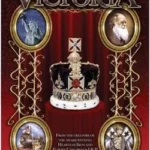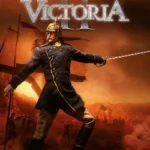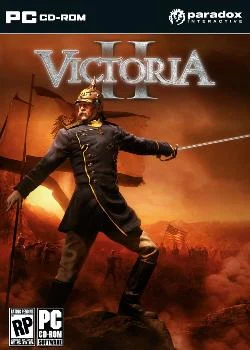
Victoria II
 75
★ /10
75
★ /10
 PC
PC
 1C-SoftClub, Paradox Interactive, Virtual Programming


Victoria II (2010) is a legendary milestone in grand strategy gaming, widely considered by the fanbase to be Paradox Interactive’s most intricately tuned, unsparingly complex socioeconomic simulation. Released on August 13, 2010 (with an OS X port following on September 17, 2010), it took the notoriously intimidating mechanics of the 2003 original and successfully ported them into the fully 3D Clausewitz Engine.
Paradox producer Johan Andersson famously joked that Victoria II was designed to fix an interface that “God forgot” in the first game. By introducing smart economic automation, a cutthroat diplomacy matrix, and a living world market, the game became an absolute masterpiece of algorithmic design. It captured the macro-tensions of a century defined by smoking chimneys, gunboat diplomacy, and political revolutions.
The Historical Arena: 1836–1936
The sandbox spans exactly one hundred years, dropping players into the volatile geopolitical landscape of 1836 and concluding on the eve of global rearmament in 1936.
Players can assume absolute control over any of the roughly 200 sovereign states or unrecognized tribes across the globe. Your ultimate objective goes far beyond mere conquest. You are tasked with steering your society through the industrial revolution, managing explosive demographic shifts, colonizing uncharted frontiers, and securing a position as a recognized Great Power before the ideological powder keg of the early 20th century explodes into World War I.
Key Mechanical Masterstrokes
1. The Autonomous World Market & Spheres of Influence
Victoria II discarded the tedious manual trade management of the original game in favor of a dynamic, global supply-and-demand automated market. Every resource harvested from localized RGOs (Resource Gathering Operations)—such as sulfur, cotton, iron, or coal—is continuously funneled into a worldwide bidding engine.
Critically, a country’s right to purchase goods off the global market is directly determined by its mathematical National Rank:
$$\text{National Rank} = \text{Prestige Score} + \text{Industrial Score} + \text{Military Score}$$
The top eight nations are crowned Great Powers, gaining access to the defining diplomatic weapon of the game: Spheres of Influence. By spending diplomatic influence points over minor countries, a Great Power can forcefully lock them into their economic orbit. This allows the Great Power to siphon away the minor nation’s raw materials before they ever hit the open world market, systematically starving rival empires of the industrial inputs required to build modern dreadnoughts or advanced factories.
2. The Delicate Pop Balancing Act
The game’s internal population (POP) database tracks millions of individual citizens across distinct social classes. Every POP evaluates whether its Life Needs, Everyday Needs, and Luxury Needs are being successfully met by the state economy.
Failing to feed your citizens or over-taxing them triggers an immediate inflation in two central psychological metrics:
- Consciousness: A measure of how politically aware your citizens are of their societal conditions. High consciousness increases literacy and technological research speeds, but makes your population aggressively demand voting franchises and healthcare reforms.
- Militancy: A measure of how willing your citizens are to launch an armed insurrection. High militancy directly tanks your tax efficiency and forces the generation of highly aggressive underground rebel factions.
3. The Rebel Meta: Navigating the Legislative Upper House
Unlike traditional strategy games where rebels are generic barbarians, Victoria II features sophisticated, ideologically driven domestic factions. Depending on how you manage your state, your provinces will routinely break out into synchronized revolutions:
- Jacobins: Radical liberals demanding immediate constitutional democracy and universal voting rights.
- Anarcho-Liberals: Extreme laissez-faire capitalists who intend to dismantle state social programs entirely.
- Reactionaries / Fascists: Totalitarian traditionalists fighting to close borders, rollback voting franchises, and establish absolute dictatorial control.
To pass progressive laws and pacify these factions, you must delicately manipulate your Upper House (Ruling Legislature), using high militancy as a political lever to terrify conservative politicians into passing critical minimum-wage or workplace safety reforms before the capital is burned to the ground.
The Two Essential Expansions
Because Paradox utilized an older, non-modular development pipeline during the early 2010s, Victoria II requires its two primary expansion packs to function properly. Running the baseline vanilla client leaves the global economy unstable, whereas the full expansion stack delivers the definitive, polished grand strategy experience:
Expansion 1: A House Divided
- Release Date: February 2, 2012
- Core Enhancements: Explicitly engineered to overhaul political and economic simulation with a heavy historical focus on the American Civil War era. It introduced localized War Justification engines (requiring you to manufacture a casus belli to avoid international infamy penalties), foreign financial investments, navigable rally points, and split the Chinese Empire into autonomous warlord cliques to deepen Far East gameplay.
Expansion 2: Heart of Darkness
- Release Date: April 16, 2013
- Core Enhancements: Completely re-engineered the global Scramble for Africa by implementing a competitive, point-allocated colonization mechanic. It introduced tactical international Crisis Systems—allowing minor border skirmishes in Europe to scale into full-fledged, multi-empire diplomatic brinkmanship. This expansion also debuted a dynamic naval combat model, a revamped land combat system, and simulated international newspapers that reported real-time global event feedback to players.
The Modding Ecosystem: HPM & HFM
The Victoria II community is legendary for keeping the 2010 client alive and thriving via massive, sweeping total overhaul conversions:
- Historical Project Mod (HPM): Considered the gold standard for a definitive, semi-vanilla experience. HPM maintains the core layout of the base game but fixes thousands of economic bugs, introduces historically accurate micro-cultures, expands the historical decision matrix, and deepens the complexity of anti-slavery struggles and native colonization.
- Historical Flavor Mod (HFM): Built directly upon the bones of HPM, HFM injects a massive array of alternate-history events, unique dynamic country-splitting paths, and highly detailed railroading scripts to model complex diplomatic interactions across the 19th century.
Technical State & Modern Packaging
- The Current Build Status: The final, definitive version of the software operates on Patch 3.04 (fully wrapping the base game and both primary expansions together).
- Current Storefront Status: Victoria II is fully operational and preserved across Steam and GOG. The digital versions come pre-wrapped to scale cleanly on modern architectures, ensuring that the global spreadsheets, factory input mechanics, and complex population migration loops run flawlessly out-of-the-box.