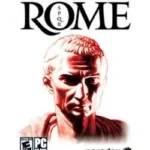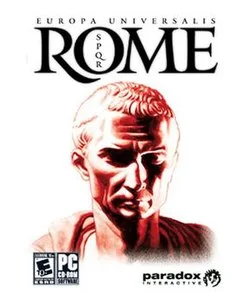
Europa Universalis: Rome
 73
★ /10
73
★ /10
 PC
PC
 1C-SoftClub, Paradox Interactive


Europa Universalis: Rome (2008) occupies a fascinating, experimental, and deeply unique position in the genealogy of grand strategy. Released in North America on April 15, 2008 (and in Europe on April 18, 2008), this title was only the second game in history to be built upon Paradox’s then-brand-new 3D Clausewitz Engine.
Rather than a pure sequel, EU: Rome was a mechanical mashup. It took the grand statecraft, colonization, and provincial warfare of Europa Universalis III and fused it directly with the intimate character traits, individual ambitions, and internal loyalty dynamics of Crusader Kings I. This specialized framework served as the direct spiritual design blueprint that Paradox would later resurrect a decade later for Imperator: Rome (2019).
The Historical Arena: 280 B.C. to 27 B.C.
The grand strategy board narrows its focus from the entire planet down to the Mediterranean basin, Europe, North Africa, and the edge of the Middle East. The game allows players to select any day on a continuous calendar timeline stretching through antiquity:
- The Starting Gun (280 B.C.): Drops players directly into the onset of the Pyrrhic War, right as the young Roman Republic begins its aggressive push to unify the Italian peninsula against Pyrrhus of Epirus.
- The Finish Line (27 B.C.): Concludes exactly at the historic collapse of the Roman Republic and the official rise of the Pax Romana under the absolute imperial consolidation of Augustus Caesar.
- Players can step into the governing seats of over 53 playable factions representing 10 distinct, highly asymmetrical cultural groups—including the expansionist Romans, the mercantile Carthaginians, the wealthy Ptolemaic Egyptians, and fragmented Celtic and Germanic tribes.
Core Gameplay Mechanics: The State/Character Hybrid
1. Character Attributes & The “Caesar” Loyalty Loop
Every army general, provincial governor, and state official is a living character tracking three core attributes: Martial (warfare proficiency), Charisma (diplomatic popularity), and Finesse (economic management skill). Characters accumulate individualized traits (like Honorable, Corrupt, Cowardly, or Lunatic) that alter their baseline efficiency.
The most critical factor you must manage is Character Loyalty. If a highly skilled general commands a legion for too long and wins consecutive, glorious border victories, the individual cohorts will start switching their allegiance away from the state to become personally loyal to that general. If that general’s loyalty drops too low, they will refuse your commands, ignore state edicts, and eventually trigger a sudden, catastrophic civil war, crossing the Rubicon to march their personal army directly on your capital.
2. Barbarian Incursions & Migrations
The unmapped outer boundaries of Europe are populated by decentralized, dark gray coordinates called Barbarian Provinces. Over time, these regions passively accumulate a Barbarian Power metric.
When the power threshold crosses a certain tipping point, massive, aggressive barbarian horde armies will spawn dynamically onto the map, moving across border lines to pillage infrastructure, slaughter local populations, and permanently downgrade your provincial trade efficiency. Rulers must either field armies to systematically destroy them, pay them off with massive liquid gold bribes, or let them settle inside conquered territories to convert them into a tax-paying peasant populace.
Government Architectures Matrix
The way you interact with the game changes fundamentally based on your chosen faction’s underlying structural Government Type:
| Government Type | Primary Faction Examples | Core Political Infrastructure | Unique Strategic Constraint / Threat |
| The Republic | Rome, Carthage | Governed by an active leader (Consul) who undergoes mandatory democratic elections every few calendar years. | The Senate Trap: You cannot declare wars or pass state laws unless you maintain majority support among the ruling senate factions. |
| The Monarchy | Egypt, Macedonia | Governed by an absolute King or Queen with lifelong rule, supported by an internal royal court. | Succession Crises: Bad royal marriages can trigger structural legitimacy collapses, spawning rival pretenders to fight for the crown. |
| The Tribal Council | Gaul, Germania | Governed by a supreme Clan Chief supported by minor autonomous tribal sub-chiefs. | Retinue Independence: Sub-chiefs recruit and fund their own military forces at zero cost to your treasury, but run incredibly high risks of staging inner coups. |
The Essential Expansion: Vae Victis (2008)
On November 19, 2008, Paradox released the game’s sole, monumental expansion pack: Europa Universalis: Rome – Vae Victis (Latin for “Woe to the Vanquished”). Prior to this expansion, the game’s internal political layer felt empty; Vae Victis systematically re-engineered the client to turn domestic management into a cutthroat sandbox.
The expansion fully realized The Roman Senate by dividing it into five fluid, competing internal political parties. If the Populist Faction gained absolute majority control via elections, they would actively veto your war declarations, block tax reforms, and stall province building, forcing you to use underhanded tactics—like staging dynamic character imprisonments, assassinating political rivals, or orchestrating smear campaigns—just to keep your government operational. It also introduced specialized National Omens (allowing you to slaughter livestock to gain temporary stability or research buffs) and dynamic character agendas.
Modern 2026 Status & Preservation
For modern players exploring the retro strategy vault, the software is cataloged and available digitally on both Steam and GOG under the unified compilation title Europa Universalis: Rome – Gold Edition (sometimes listed as Rome Complete).
This digital package completely merges the original 2008 base game client alongside the critical, mandatory Vae Victis data pack out-of-the-box. The installation comes pre-wrapped to scale smoothly on contemporary Windows 10 and Windows 11 architectures, ensuring that the ancient Mediterranean faction feuds, general loyalty mechanics, and senate voting block blocks execute cleanly right from launch day.