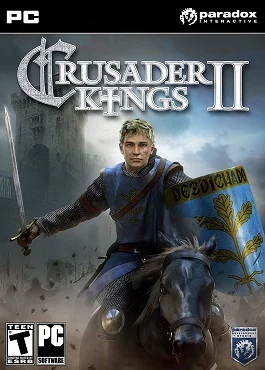
Crusader Kings II
 82
★ /10
82
★ /10
 PC
PC

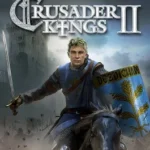
Crusader Kings II (2012) is universally recognized as the legendary monster sandbox, commercial breakout hit, and structural blueprint that officially launched Paradox Interactive into the stratosphere of modern gaming. Released on February 14, 2012, for Microsoft Windows (followed by OS X on May 24, 2012, and Linux on January 14, 2013), this title took the clunky, text-heavy niche framework of its 2004 predecessor and transformed it into a global phenomenon.
By migrating to the Clausewitz 2.0 engine, the game traded flat 2D canvases for a beautiful, topographic 3D map. It became less of a traditional, cold strategy wargame and more of an emergent, highly chaotic generator of dark medieval comedy—where plotting your spouse’s untimely death, managing dynamic genetics, and fighting off sudden plagues became standard imperial statecraft.
The Narrative Sandbox: Dynastic Continuity Across Centuries
Crusader Kings II leaves historical accuracy completely in the player’s hands. The game launches your custom or historical noble family house into a simulated Middle Ages.
The baseline logic remains absolute: you do not pilot an immortal flag, but rather a single, living ruler. When that ruler succumbs to stress, battlefield trauma, or a rival’s poison, your perspective seamlessly jumps to your primary heir. The game’s main campaign spans generations of political planning, ending on January 1, 1453. If your royal bloodline runs completely dry or you fail to leave a landed heir of your exact house name, the simulation cuts to an immediate Game Over screen.
The Unprecedented Modular Expansion Timeline
The true defining legacy of Crusader Kings II is its massive, decade-long operational lifecycle. Paradox pioneered a radical rolling update strategy, using major paid expansion drops to permanently push back chronological start dates, rewrite engine features, and expand the map borders all the way from Western Europe into India and Central Asia.
| Expansion Name | Exact Release Date | Major Structural Addition & Paradigm Shift |
| Sword of Islam | June 26, 2012 | Unlocked fully playable Muslim rulers, introducing polygamy laws and the delicate Decadence balancing loop. |
| Legacy of Rome | October 16, 2012 | Overhauled the Byzantine Empire, adding custom factions and introducing Retinues (permanent, professional standing armies). |
| Sunset Invasion | November 15, 2012 | A controversial fantasy scenario adding a mid-to-late game historical threat: a massive, bloodthirsty Aztec invasion attacking Western Europe by sea. |
| The Republic | January 15, 2013 | Unlocked playable Merchant Republics (Venice, Genoa, Pisa, the Hanseatic League), introducing trade post infrastructure and patrician family feuds. |
| The Old Gods | May 28, 2013 | Pushed the chronological start date back to 867 AD, unlocking fully playable Pagans, Norse Viking coastal raiding mechanics, and Zoroastrians. |
| Sons of Abraham | November 18, 2013 | Deepened Abrahamic faiths, adding the College of Cardinals to manipulate the Papacy, Holy Orders, and playable Jewish rulers. |
| Rajas of India | March 25, 2014 | Massively expanded the global map layout Eastward, unlocking the Indian continent along with Hindu, Buddhist, and Jain religions. |
| Charlemagne | October 14, 2014 | Pushed the ultimate start date back to 769 AD, adding custom kingdom/empire construction mechanics and a dynamic year-by-year historical Chronicle. |
| Way of Life | December 16, 2014 | Realigned the game as a deep RPG, introducing Character Focuses (Seduction, War, Hunting, Rulership) to unlock custom roleplaying event loops. |
| Horse Lords | July 14, 2015 | Overhauled Central Asia by introducing a dedicated Nomadic clan government style and dynamic trade routes along the Silk Road. |
| Conclave | February 2, 2016 | Completely revolutionized internal realm diplomacy, forcing rulers to satisfy a powerful council of vassals who vote directly on state laws. |
| The Reaper’s Due | August 25, 2016 | Deepened mortality systems by introducing widespread epidemics (The Black Death), court physicians, hospitals, and dynamic physical mutilation. |
| Monks and Mystics | March 7, 2017 | Introduced secret societies, monastic orders, underground demonic cults, alchemy networks, and a dynamic inventory system for holy relics. |
| Jade Dragon | November 16, 2017 | Physicalized China as a massive off-map geopolitical entity, letting rulers trade with, submit to, or launch full-scale imperial wars against the Emperor. |
| Holy Fury | November 13, 2018 | The ultimate sandbox expansion; overhauling Pagan religious reformations, adding legendary Bloodlines, warrior lodges, and randomized worlds. |
Core Mechanical Masterstrokes
1. The Retinue Meta vs. Feudal Levies
In the 2012 baseline launch, waging war required manually raising local levies from your castles, marching them across provinces to assemble, and dismissing them immediately after the conflict to avoid draining your economy.
- The Paradigm Shift (Legacy of Rome): The introduction of Retinues changed the combat meta. Players could invest a tech-capped resource to maintain a permanent, standing professional standing army that sat on border coordinates even during times of absolute peace. This let large empires instantly blitz vulnerable neighbors before the AI could even organize its feudal defenses.
2. The Internal Vassal Council (Conclave)
Before 2016, a sufficiently wealthy emperor could completely ignore their vassals, passing absolute state laws or revoking duchies with minimal pushback.
- The Paradigm Shift (Conclave): This expansion introduced a strict Council Contract. Your most powerful Dukes demanded physical seats on your council. If left unappointed, they would form massive internal factions to plunge your kingdom into civil war. Rulers had to balance bribes, assign political favors, and trade voting rights just to secure permission from their own council to declare external wars or alter inheritance taxes.
3. Pandemic Attrition (The Reaper’s Due)
The Reaper’s Due transformed map coordinates from a simple pathfinding board into a terrifying vector for disease.
- The Invisible Enemy: Minor outbreaks like consumption, slow fever, or smallpox would physically drift across province borders.
- Maxing out prosperity inside a trade city actively accelerated its exposure to The Black Death, which would systematically butcher up to half of the map’s active character database. Rulers had to shut their castle gates, build expensive hospitals, and rely on erratic Court Physicians whose experimental surgeries could accidentally result in your king being castrated or blinded just to cure a common cold.
Post-Lifecycle Evolution & Modern Availability
On October 18, 2019, following more than seven consecutive years of massive retail success, Paradox Interactive made a historic, monumental transition: the baseline client of Crusader Kings II became permanently Free-to-Play across all digital storefronts. To further modern accessibility, Paradox introduced an optional digital DLC Subscription model on February 18, 2021, allowing players to instantly experience the game’s massive expansion catalog via a rotating monthly service tier.
The Legendary Modding Renaissance
Beyond its official patch history, CK2 hosts one of the most vibrant, technically staggering user-generated modding scenes in history.
- The Masterpiece: The premier conversion project is CK2: A Game of Thrones, initially launched in May 2012. This massive mod maps the entire continent of Westeros and Essos directly into the Clausewitz engine client, modifying the dynastic framework to cleanly track dragon warfare, Trial by Combat loops, the unique logistics of the Night’s Watch wall, and the complex mega-wars of George R.R. Martin’s universe. Other conversion projects, like Elder Kings (The Elder Scrolls) and After the End (a post-apocalyptic neo-medieval America), showcase how flexible the 2012 engine remains.