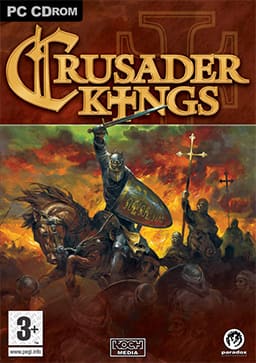
Crusader Kings
 73
★ /10
73
★ /10
 PC
PC
 1C Company, Auran, Koch Media, Paradox Interactive, Strategy First


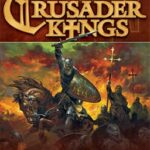
Crusader Kings (April 23, 2004) is the foundational, uncompromisingly deep blueprint that launched Paradox Interactive’s most successful grand strategy franchise. Released in April 2004 and designed by Henrik Fåhraeus and Joakim Bergqwist, this title was a massive gamble.
At a time when global strategy games were strictly focused on macro-economics and moving military figures across a map, the original Crusader Kings introduced a highly intimate, character-driven narrative framework. It was the first game to firmly state that the key to conquering the medieval world wasn’t a standing professional army—it was strategic marriage matchmaking, family political management, and keeping your treacherous vassals happy.
Narrative Framing & Historic Scenarios
The overarching timeline spans roughly four centuries, tracking the high Middle Ages from December 26, 1066 (the day after William the Conqueror’s coronation) until December 30, 1452 (just months before the fall of Constantinople).
Rather than standard nation selection, players choose to play as the active patriarch or matriarch of a specific historical family house (such as the Jimena, Rurikid, or Capet dynasties). The base game shipped with three iconic bookmark scenarios:
- The Battle of Hastings (1066): The foundational starting point, tracking the multi-front invasion of England by Normans and Norwegians.
- The Third Crusade (1187): A highly volatile geopolitical theater mapping Richard the Lionheart, Philip Augustus, and Saladin clashing over the Levant.
- The Hundred Years’ War (1337): A late-game, high-tier military grind locking the royal houses of England and France in an endless cycle of territorial claims.
The Engine Blueprint: The “Europa Engine” Era
Long before Paradox developed the fully 3D, topographic Clausewitz engine that powers modern entries, the original Crusader Kings was built on the Europa Engine (the powerhouse behind Europa Universalis II).
- The Canvas Map: The game world was presented as a flat, stylized, 2D stained-glass canvas map of Europe, North Africa, and parts of the Middle East.
- The Shift to Dynamic Events: The 2004 release was historically significant for Paradox because it pioneered Random Emergent Events. Previous titles relied on rigid, railroaded historical scripts (e.g., a text box forcing an event to happen on an exact calendar date because it happened in real life). Crusader Kings threw this out, using complex background trait combinations to dynamically generate organic story prompts based entirely on your character’s choices.
Core Mechanics: The Trinity of Resources & Reputation
To govern your realm, you manage an interlocking matrix of three central, abstract currencies, alongside a critical global check metric:
- Gold (Wealth): Extracted from provincial taxes and spent directly on maintaining mercenary armies, constructing basic castle extensions, or sending diplomatic gifts to neighbors.
- Prestige (Glory): Earned by winning glorious battles, constructing grand cathedrals, or marrying into high-tier royal bloodlines. Prestige acts as your political capital; you must physically spend Prestige to manufacture claims on enemy lands.
- Piety (Devotion): Accumulated by donating gold to the Catholic Church, battling religious enemies during Crusades, or granting lands to bishoprics. High Piety maximizes your standing with the Pope, shielding you from sudden excommunication.
- Repitation (The “Badboy” Metric): The original game featured a highly sensitive, uncompromising security metric. Annexing too many territories too quickly or executing discovered assassinations tanked your global Reputation. If your reputation crossed a dangerous threshold, your internal vassals would view you as a tyrant and launch immediate, synchronized wars of independence.
Dynastic Tiers & Realm Management
Realm organization in 2004 was highly streamlined compared to modern iterations. The geopolitical hierarchy was strictly locked into three functional title tiers:
- Provinces as the Lowest Denominator: The original game featured no sub-holdings like Baronies. A single province hex icon on the map was the absolute lowest unit of land currency, ruled directly by a Count.
- The Demesne Penalty: Your active character’s baseline attributes dictated a strict limit on how many individual provinces they could personal govern before corruption tanked their efficiency. This forced you to hand out excess counts and duchies to Vassals.
- The Court Council: Rulers were supported by a customized council of courtiers appointed to functional administrative jobs: The Chancellor (managing diplomacy), The Marshal (military logistics), The Spy Master (intrigue/assassinations), and The Diocese Bishop (religious management).
The Savior Expansion: Crusader Kings: Deus Vult (2007)
The initial 2004 retail launch was notoriously plagued by broken programming scripts, unfinished gameplay loops, and rampant system crashes. Recognizing the sheer brilliance of the game’s core concept, Paradox spent three years patching the engine, culminating in the release of the definitive standalone expansion pack: Crusader Kings: Deus Vult in October 2007.
Deus Vult fundamentally transformed the title, polishing the interface and introducing deep systems that fans consider essential:
- The Childhood Evolution System: In the 2004 base game, heirs were essentially born as complete miniature adults with pre-calculated, randomized stats. Deus Vult threw this out: children were now born with flat 0 stats across the board. As they aged, their stats dynamically evolved based on the traits of their appointed court guardian, meaning you never truly knew how competent an heir would be until they hit their 16th birthday.
- Inter-Character Relationships (Friends & Rivals): The expansion introduced a dynamic personal affinity network. Sharing a military campaign with a vassal could forge a lifetime Friendship, locking their loyalty meter at 100%. Conversely, land disputes could spark a deep Rivalry, turning a once-loyal duke into a dedicated, scheming enemy.
- The HUD Alert Overhaul: To fix the overwhelming text log loops of the 2004 original, the expansion added streamlined UI Alert Icons at the top of the screen. Icons flashed immediately if a title could be actively claimed or if a vassal’s loyalty plummeted below 50%, saving players from tedious sub-menu scanning.
- The Blood Drop Marker: A massive quality-of-life interface fix that placed a tiny, clear graphical marker shaped like a drop of blood directly next to character names. This allowed players to instantly differentiate immediate dynastic family relatives from generic courtiers.
Contemporary Digital Availability
Today, the original Crusader Kings is completely sunsetted by its massive sequels, but it remains fully preserved for grand strategy historians. The game is legally available for modern PC configurations directly on GOG and Steam under the title Crusader Kings Complete.
This digital compilation comes pre-merged with the critical Deus Vult expansion and is fully optimized to run cleanly on modern Windows 10 and Windows 11 architectures out-of-the-box, allowing players to experience the challenging roots of the dynastic simulator.