Europa Universalis
 86
★ /10
86
★ /10
 PC
PC
 1C Company, Blackstar Interactive, Koch Media, Strategy First, Vision Park
Where to buy

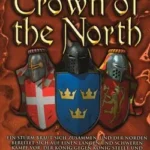
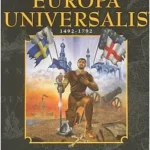
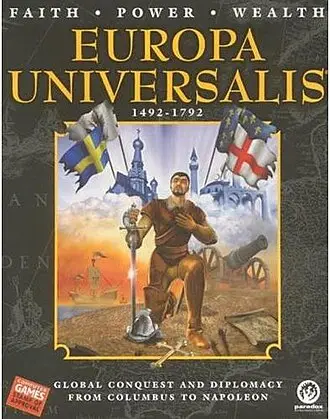
Europa Universalis (2000) is the ultimate genesis, the foundational architecture, and the definitive spark that birthed Paradox Interactive’s modern grand strategy empire.
Initially released in Europe on October 20, 2000 (and arriving in North America on February 21, 2001), the game was programmed by a tiny team led by Johan Andersson. At a time when the strategy market was entirely dominated by the high-APM real-time clicks of StarCraft or the strict, turn-based grids of Civilization, Europa Universalis introduced an entirely new category of historical gaming: pausable, deeply systemic, macro-level real-time statecraft.
The Tabletop DNA: The 1492–1792 Blueprint
The game was not an original digital concept; it was a literal, meticulously faithful adaptation of the monolithic 1993 French board game Europa Universalis designed by Philippe Thibaut. The original tabletop version was a legendary “monster game” featuring over 1,400 physical counters, a rulebook spanning 154 pages, and a single campaign session that could realistically take weeks to complete.
Paradox’s massive breakthrough was realizing that a computer could seamlessly handle all the tedious mathematical dice rolls, upkeep calculations, and background spreadsheet bookkeeping of Thibaut’s board game in real-time. The historical timeline was rigidly locked to the board game’s exact historical parameters: 1492 (the dawn of Christopher Columbus’s landing in the New World) to 1792 (the explosive onset of the French Revolution).
Key Mechanical Innovations
1. The Pausable Real-Time Engine
Before 2000, players assumed real-time strategy meant fast-paced base building. Europa Universalis completely flipped this paradigm. Time marched continuously day-by-day across a 2D stained-glass map of the world, but players could pause time at any given second with the spacebar. This allowed you to freeze the world, carefully analyze dynamic diplomatic requests, micro-manage economic tax slides, coordinate multi-province army movements, and then unpause to let history unfold.
2. The Economic Sliders & The Treasury Inflation Trap
The economy in the original game moved away from abstract background gold generation, forcing players to manage monthly income allocation via a matrix of five interlocking Investment Sliders:
The Inflation Trap: Minting liquid cash by sliding the “To Treasury” bar too high was the ultimate early-game trap. Every ducat routed directly to your bank account permanently inflated your national Inflation percentage. High inflation exponentially scaled the baseline gold cost of recruiting soldiers, building tax collectors, and upgrading infrastructure, easily bankrupting an empire by the 1700s if left unchecked.
3. The Casus Belli & Stability Imperative
In contemporary games, if you wanted to conquer a neighbor, you simply marched your army across their border. Europa Universalis forced players to respect international law and religious justifications via the Casus Belli (Reason for War) mechanic.
Declaring a war without a legitimate historical claim, dynamic event trigger, or diplomatic insult inflicted a catastrophic penalty on your national Stability meter (which ranged from +3 down to -3). Dropping to -3 stability immediately slashed your tax revenues, caused your army’s morale to crater, and lit up your provinces with massive, synchronized peasant and religious rebel uprisings.
4. Centers of Trade (CoTs) & The Merchant Pools
Trade was managed via a network of static Centers of Trade scattered across the globe (such as Venice, Andalucia, or Novogorod). Provinces automatically routed the raw value of their local goods (like spices, fur, sugar, or grain) to the nearest localized CoT. Players had to spend gold to dispatch individual Merchants to these trading hubs to bid for a baseline percentage slice of the overall market value. If a rival nation flooded a Center of Trade with their own merchants, they could aggressively compete with and kick yours out, executing a bloodless economic embargo.
The Major Playable Nations Matrix
While the map featured dozens of autonomous countries, the definitive Grand Campaign restricted human selection strictly to a core matrix of eight heavily balanced Major Powers. Every major power possessed unique historical events, specialized mission decks, and customized global objectives:
| Playable Major Power | Primary Geopolitical Starting Footprint | Core Strategic Archetype & Unique Focus |
| Kingdom of Spain | The Iberian Peninsula | Colonial Powerhouse: Heavily positioned to dominate early-game exploration exploration and hoard New World gold bullion before inflation strikes. |
| Kingdom of France | Western Europe | Continental Vanguard: Commands massive native manpower reserves and hyper-fertile provinces, engineered to dominate land warfare. |
| Kingdom of England | The British Isles | Naval Turtle: Protected by the English Channel; relies on keeping a massive navy to protect global trade links while avoiding land entanglements. |
| The Ottoman Empire | The Eastern Mediterranean | Expansionist Juggernaut: Positioned to easily crush the fractured Balkan states, but heavily penalized late-game by tech group slowdowns. |
| The Russian Empire | Eastern Europe / Muscovy | The Endless Wild: Starts locked in early territorial wars with Sweden and Poland; gains massive mid-game colonization rushes across Siberia. |
| Archduchy of Austria | Central Europe / Holy Roman Empire | Diplomatic Bureaucracy: Surrounded by complex internal German principalities; relies heavily on royal marriages and annexation loops. |
| Poland-Lithuania | Central-Eastern Europe | The Shield of the East: Commands excellent, highly flexible cavalry wings, but severely bottlenecked by decentralized domestic elective laws. |
| Kingdom of Portugal | Western Iberian Coast | The Merchant Pioneer: Avoids continental wars entirely to hyper-focus on racing down the African coast to monopolize the spice trade of India. |
Combat & Exploration Logistics
1. The Shock and Fire Phases
Real-time army combat was split cleanly into alternating, multi-day tactical phases: The Shock Phase (representing close-quarters melee and cavalry charges) and The Fire Phase (representing gunpowder and ranged musketry). Early-game combat was entirely dominated by cavalry during the shock phase. As the centuries ticked by and Land Technology advanced, the fire phase scaled exponentially, making artillery and line-infantry positioning the defining factor of late-game warfare.
2. Terra Incognita & Historical Leaders
The vast majority of the global map outside of Europe started the game shrouded in a dense, white fog called Permanent Terra Incognita. Standard military units were physically completely barred from moving into these unmapped coordinates.
To pull back the fog, the engine dynamically spawned explicit Historical Leaders (like Vasco da Gama, Christopher Columbus, or Francisco Pizarro) in their exact, real-world historical years. These Explorers and Conquistadors were the only assets capable of safely navigating unknown seas and foreign attrition nodes to pave the way for colonization.
Legacy & Modern Retail Limbo
The original Europa Universalis (2000) has indeed been digitally rescued and preserved on GOG, allowing strategy historians to bypass original physical CD-ROM hunting entirely.
To ensure the historical record is accurate, here is the corrected and fully updated overview of the game’s modern state to wrap up our profile:
Modern Packaging & Digital Preservation Status
While the game remains completely absent from other modern storefronts like Steam (which prioritize its massive sequels), it is beautifully cataloged and available as a standalone digital archive on GOG.
Archival Goodies: The digital download packages the game along with its original high-resolution desktop wallpapers and, most importantly, the original comprehensive game manual. Given the game’s deep tabletop DNA, having the manual on hand is incredibly useful for parsing the complex, under-the-hood dice mechanics of the early Europa Engine.
Out-of-the-Box Compatibility: The GOG release is fully patched to run on modern frameworks, wrapping the 26-year-old software so that it natively initializes on Windows 10 and Windows 11 environments. (Note for players: If you encounter initial scaling issues, simply toggling the executable to run in Windows 95 compatibility mode fully stabilizes the real-time tick rate and rendering boundaries).