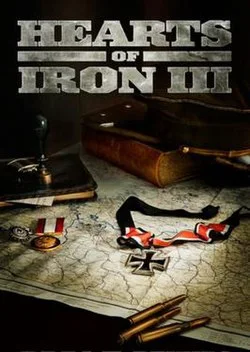
Hearts of Iron III
 77
★ /10
77
★ /10
 PC
PC
 1C Company, Paradox Interactive


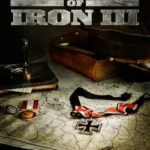
Hearts of Iron III (2009) is universally recognized as the absolute zenith of uncompromising, meticulously detailed, and mercilessly complex military grand strategy. Released on August 7, 2009, for Microsoft Windows (with a Mac OS X port following on December 7, 2009), this title marked a monumental technological leap for the franchise by permanently migrating the World War II simulator onto Paradox’s 3D Clausewitz Engine.
While later sequels focused on streamlining interfaces, Hearts of Iron III doubled down on raw, unyielding operational simulation. It holds a mythic reputation as the most hardcore, spreadsheet-dense wargame Paradox ever conceived—a title where winning the war demanded a mastery of real-world radio command ranges, localized supply bottlenecks, and intricate organizational hierarchies.
The Grand Strategic Canvas: 10,000+ Provinces
The campaign guides players through the familiar, high-stakes chronological arc of the Second World War, generally stretching from January 1, 1936, until the closing operational screens of December 30, 1948.
To fully leverage the capabilities of the Clausewitz engine, Paradox drastically increased the map resolution. While Hearts of Iron II split the planet into roughly 2,000 broad operational zones, Hearts of Iron III carved the global map into over 10,000 highly distinct individual land provinces. This massive grid density completely revolutionized warfare; frontlines were no longer static walls. A single breakthrough could scale into a massive multi-province encirclement maneuver, transforming Russia and Central Europe into fluid, highly dynamic theaters of movement.
Key Mechanical Pillars: Extreme Operational Micro
1. The Monolithic Order of Battle (OOB) Hierarchy
The single most definitive—and intimidating—feature of Hearts of Iron III is its mandatory, deeply layered Order of Battle (OOB) command structure. You cannot simply select twenty divisions and click on an enemy city. To fight efficiently, every single individual combat brigade must be manually stitched into a rigid, realistic military chain of command.
Every tier of the hierarchy requires a manually appointed commanding officer, whose specific leadership traits (like Logistics Wizard or Panzer Leader) cascade downward to buff the troops underneath them.
Furthermore, the engine simulates Radio Command Range. Every HQ unit generates a physical communication radius on the map. If your frontline divisions advance too quickly and overextend beyond their Corps HQ’s radio link, they instantly lose their command bonuses and experience a massive penalty to coordination, forcing players to meticulously march their HQ staff units right behind the advancing armor wedges.
2. The Leadership Slider Matrix
Instead of separating abstract political and scientific currencies, statecraft is entirely governed by a centralized pool of daily Leadership Points, dynamically calculated based on your nation’s literacy levels and urban centers. Every midnight, players must adjust four sensitive sliders to distribute these points:
- Research: Channels points directly into a massive, granular technology tree to unlock tank calibers, synthetic oil processing, and doctrinal combat tactics.
- Espionage: Trains and dispatches secret agents to foreign capitals to passively lower enemy national unity, sabotage infrastructure, or boost domestic party popularity.
- Diplomacy: Generates diplomatic influence points required to trade raw materials or pull neutral countries toward your ideological faction.
- Officers: The ultimate hidden killer metric. Leadership points spent here continuously train your national Officer Ratio. If your officer pool drops below 100%, your combat divisions suffer a catastrophic penalty to organization recovery speeds and shatter thresholds, causing your army to melt away under prolonged artillery duels.
3. Custom Division Modular Design
The game completely discarded fixed division blueprints, introduction a completely modular Brigade Assembly Grid. Divisions are built from scratch by combining up to four individual component brigades (expanded to five via technology upgrades).
You can custom design your forces to match your geographic requirements—assembling a heavy breakthrough division by linking two Light Armor brigades with a Motorized Infantry component and an Armored Car reconnaissance attachment, or constructing a stout defensive wall by pairing three standard Infantry brigades with a specialized Anti-Tank unit.
The Three Essential Expansions
Because of the extreme mechanical complexity of the 2009 launch client, Hearts of Iron III was notoriously plagued by severe AI bugs, pathfinding glitches, and performance-crashing memory leaks. True to Paradox’s foundational era, the software underwent three consecutive, linear expansions to achieve its definitive, fully stabilized operational state:
1. Semper Fi (June 6, 2010)
- Explicitly engineered to overhaul the game’s convoluted OOB management. It introduced a visual HQ connection line system right on the map canvas, allowing players to instantly see which divisions were drifting out of radio range. It also added customizable hidden AI theatrical stances and historical win conditions.
2. For the Motherland (June 28, 2011)
- Focused heavily on internal security and the Eastern Front. It debuted a sophisticated, underground Partisan/Resistance Network model, added targeted localized coup d’état options, introduced specific “War Goals” to shape post-war treaties, and optimized the engine code to multi-thread across modern processors.
3. Their Finest Hour (September 26, 2012)
- The definitive final expansion pack. It introduced unique, high-tier Elite Units (such as Soviet Guards, US Rangers, and British Gurkhas), added a dedicated Lend-Lease system to economically subsidize struggling allies, re-engineered amphibious beach invasions, and debuted a custom “Custom Game Mode” letting players pre-spend tech and industrial points before the 1936 clock starts ticking.
Modern Packaging & Storefront Status
Today, the legacy experience is completely preserved and legally available on PC via Steam and GOG. To ensure the game runs stably, players should entirely avoid the vanilla baseline client and purchase Hearts of Iron III Collection (or the DLC Collection bundle on GOG). This comprehensive digital installer automatically packages the base game alongside Semper Fi, For the Motherland, and Their Finest Hour fully pre-merged right out-of-the-box.
The digital package comes pre-configured inside an automated compatibility wrapper, ensuring the hour-by-hour time tick, massive brigade design grids, and legendary Order of Battle chains of command scale flawlessly on contemporary Windows 10 and Windows 11 desktop environments.