Hearts of Iron
 72
★ /10
72
★ /10
 PC
PC
 1C Company, Koch Media, MacPlay, PAN Vision, Virtual Programming
Where to buy

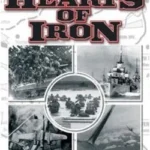
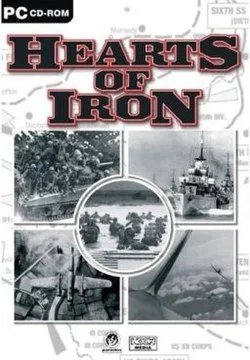
Hearts of Iron (2002) is the foundational genesis and the unyielding, grit-soaked architecture that launched Paradox Interactive’s most complex, military-focused global franchise. Released in North America on November 27, 2002 (and arriving in Europe on February 28, 2003), this title was developed internally on the legacy 2D Europa Engine.
At a time when World War II games were almost exclusively first-person shooters or localized tactical turn-based hex games, Hearts of Iron introduced a staggering new scale: a pausable, real-time global simulation where players could pilot any nation on Earth through the logistical, industrial, and military meat-grinder of total war.
The Grand Chronological Arena: 144 Hours per Year
The game’s grand campaign timeline spans from January 1, 1936, to December 30, 1948. Time ticks forward continuously hour-by-hour (where one minute of real-world processing translates roughly to one calendar day under peak simulation speeds), with the vital capability to pause time instantly using the spacebar.
The entire global theater is carved into an ideological three-way tug-of-war. Every nation on Earth drifts organically or forcefully toward one of three massive international Factions:
- The Allies (Democracy): Focused on preserving global stability and blocking expansionist aggression, but severely bottlenecked early-game by domestic anti-war sentiment and legislative limits.
- The Axis (Fascism): The early-game military juggernauts; armed with highly aggressive expansionist mechanics, high baseline organization, and zero legislative barriers to declaring war.
- The Comintern (Communism): Led by the Soviet Union; built upon massive internal manpower reserves and an isolated, highly secure industrial heartland.
Core Economics: The Industrial Capacity (IC) Grid
Hearts of Iron completely discarded standard currency. You did not accumulate gold crowns or dollars; instead, your nation’s absolute economic, scientific, and military power was entirely measured by a unified metric called Industrial Capacity (IC).
Your global factories generated a raw pool of daily IC points. To prevent your country from collapsing, you had to manually adjust five highly sensitive, interlocking Production Sliders every single day:
                     /---> Consumer Goods --> Pacifies citizens; keeps Dissent at 0%
                    /----> Production -----> Builds physical divisions, fortifications, and navies
Daily Factory IC --+-----> Research -------> Channels points directly into the massive Tech Tree
                    \----> Supply ---------> Manufactures food/ammo required to keep units alive
                    \----> Upgrades -------> Modernizes existing older divisions to newer models
The Threat of Dissent: Starving your population by sliding the Consumer Goods bar below its mandatory minimum immediately triggered an accumulation of national Dissent percentage. High dissent was the ultimate internal killer: it acted as a massive negative percentage multiplier on your factory output, cratered your military divisions’ combat morale, and eventually triggered widespread partisan revolutions across your home provinces.
The Infamous “Micro-Tech Tree” Masterpiece
The absolute standout feature of the 2002 original—and a mechanic that strategy purists still speak of with a mix of awe and terror—was its monolithic, component-based Technology Tree.
Unlike modern sequels that feature streamlined, abstract upgrade lines, the original game featured hundreds of highly specific micro-technologies spread across various engineering fields (Infantry, Armor, Electronics, Industrial, Rocketry, Nuclear). You could not simply click a button to unlock a “Medium Tank.” Instead, you had to manually research separate, physical components:
[Research: 70mm Tank Gun Caliber] + [Research: Basic Medium Tank Chassis] + [Research: Sloped Armor Casts]
                                                    |
                                    (Unlocks: Specific Tank Division Model)
Failing to balance your research inputs meant you could easily end up accidentally manufacturing top-tier armored divisions that were completely crippled because you forgot to research basic rubber synthetics for their tracks or specialized internal combustion engine cooling blocks.
Division-Level Combat & Supply Convoys
Combat shifted away from moving individual pixel soldiers to managing massive Divisions (Infantry, Motorized, Mechanized, Armor, Cavalry, and specialized Paratroopers) on a grand scale.
- The Combat Weight Penalty: The 2002 engine implemented an aggressive Over-Stacking Modifier. Shoving 50 divisions into a single province hex didn’t guarantee victory; crossing local operational command thresholds inflicted catastrophic combat efficiency penalties, allowing a small, highly organized defensive force to decimate an uncoordinated swarm.
- The Convoy System: Waging overseas campaigns (such as Great Britain defending Egypt or the USA invading the Pacific islands) required the manual creation and defense of Supply Convoys. Players had to dedicate transport ships and escorts to specific sea lane coordinates. If enemy submarines successfully executed commerce raiding along those paths, your frontline troops would instantly run out of oil and ammunition, rendering them completely stationary and helpless on the battlefield.
Playable Major Powers Matrix
| Nation & Flag | Geopolitical Arena | Core Starting Strategic Reality & Blueprint |
| German Reich | Central Europe | The Aggressive Vanguard: Armed with elite doctrinal technology and rapid industry, engineered to launch a massive continental blitzkrieg before the Allies mobilize. |
| Soviet Union | Eastern Europe | The Industrial Shield: Starts with vast, un-industrialized territory and high dissent; relies on executing a massive mid-game industry relocation eastward beyond the Ural Mountains. |
| United States | North America | The Sleeping Giant: Completely insulated by two oceans with astronomical latent resource wealth; heavily bottlenecked early-game by a massive isolationist consumer goods penalty. |
| United Kingdom | British Isles | The Maritime Hegemon: Controls a sprawling global empire and the world’s premier navy; highly vulnerable to being economically starved by enemy submarine blockades. |
| Empire of Japan | East Asia | The Island Raider: Highly advanced carrier fleet; completely reliant on launching rapid naval invasions to seize the rubber and oil fields of Southeast Asia to fuel its war machine. |
The International Backlash & The China Ban
In May 2004, Hearts of Iron achieved major mainstream political notoriety when the game was officially and permanently banned across mainland China by the Ministry of Culture.
The Beijing administration declared that the strategy game severely distorted historical reality and violated China’s territorial integrity. The 1936 baseline starting map accurately mapped the fractured reality of the era—showing Tibet, Xinjiang (Sinkiang), and Guangxi as independent sovereign factions, representing Manchukuo as a Japanese puppet state, and placing Taiwan under direct Japanese administrative control. The Chinese government viewed this historical representation as an unacceptable redline, leading to the immediate confiscation of all physical retail discs across the country.
Modern 2026 Status & Accessibility
For grand strategy historians looking to explore the literal roots of Paradox’s World War II simulator, the game is fully preserved and legally accessible on PC via GOG and Steam under the title Hearts of Iron (frequently packaged in its definitive Platinum update configuration).
The digital GOG release comes pre-patched and bundled inside an automated compatibility wrapper, ensuring the hour-by-hour time tick, massive component tech trees, and industrial capacity management sliders execute flawlessly out-of-the-box on modern Windows 10 and Windows 11 architectures.