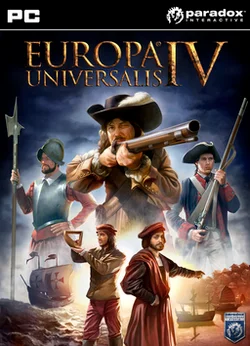
Europa Universalis IV
 87
★ /10
87
★ /10
 PC
PC



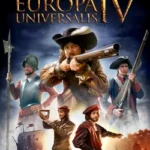
Europa Universalis IV (2013) is the absolute, undisputed sovereign titan of historical grand strategy gaming. Released on August 13, 2013, on the Clausewitz 3.0 engine, EU4 holds the legendary distinction of executing one of the longest, most commercially massive, and mechanically transformative operational lifecycles in video game history.
For over a decade, Paradox Interactive continuously evolved the client through more than 30 major expansions and hundreds of patches, until the franchise’s active development gracefully sunsetted to pave the way for the historic launch of Europa Universalis V on November 4, 2025.
The Chronological Sandbox: 1444–1821
The game drops players onto a beautifully detailed, microscopic map of the Earth on November 11, 1444—the day immediately following the crushing defeat of Christian forces at the Battle of Varna. The simulation marches day-by-day in pausable real-time through four monumental centuries of human transformation, wrapping up on January 3, 1821 (the death of Napoleon Bonaparte).
You can take the reins of any sovereign political entity on the globe—from monolithic imperial juggernauts like the Ottoman Empire or Ming China to tiny, single-province principalities in the Holy Roman Empire or nomadic tribes in the Americas.
The Foundational Engine: The Monarch Power Trinity
The core gameplay loop of EU4 is driven by an abstract, highly precious resource cycle called Monarch Power. Generated passively every month based on your active ruler’s innate competence attributes, this currency is split into three pillars that bottleneck your entire empire’s progression:
- Administrative (ADM): Spent to absorb newly conquered territory (“Coring”), raise national stability, unlock National Ideas, and advance administrative tech tiers to boost tax efficiency.
- Diplomatic (DIP): Consumed to sue for peace, expand naval technology, integrate subject nations, and deploy merchants to dominate global commerce.
- Military (MIL): Expended to recruit elite generals, forcefully suppress peasant uprisings, boost army morale, and stay ahead in the tech race to unlock modern infantry and artillery models.
Key Mechanical Masterstrokes
1. Directional Trade Flow & End Nodes
Trade in EU4 is heavily systemic and operates as a giant, fixed-flow pipeline. The world is carved into dozens of Trade Nodes connected by one-way directional streams. Wealth automatically flows along these channels based on global production.
Players use Light Ships to protect trade coordinates and deploy Merchants to either Collect wealth locally or Steer it along arrow paths toward their home nodes. The ultimate economic goal is to monopolize the three mythic End Nodes—The English Channel, Genoa, and Venice. Because wealth can never flow out of an End Node, whoever locks down these provincial regions becomes a financial vacuum, extracting the riches of the New World, Africa, and the Asian Silk Road directly into their treasury.
2. Aggressive Expansion (AE) & The Coalition Menace
Conquest is governed by an unforgiving psychological metric called Aggressive Expansion (AE). Grabbing chunks of land in a peace deal, particularly high-development provinces inside the Holy Roman Empire, inflicts a massive AE penalty with nearby nations of the same culture and religion.
If a player crosses the dangerous threshold of 50 AE with four or more countries, those AI states will form a unified Punitive Coalition. A coalition functions as a single, massive defensive pact; attacking one triggers an instantaneous, multi-front war with all members, engineered specifically to crush blobbed empires and restore the balance of power.
3. Branching Mission Trees
Initially shipping with basic dynamic text alerts, the game underwent a major design renaissance by introducing vast, unique Mission Trees. These function as localized historical progression ladders. Achieving explicit conditions (e.g., “Conquer the Levant”) automatically unlocks rewarding permanent buffs, historical claims, unique government sub-mechanics, or alternate-history event chains—giving every country a fundamentally asymmetric, tailored narrative feel.
4. The Internal Estate Balance
Rulers must manage the domestic internal politics of their realm by negotiating with distinct social factions known as Estates (The Clergy, The Nobility, The Burghers, and unique localized entities like the Cossacks or Dhimmi). Players can grant explicit Privileges to these estates to harvest massive passive buffs, but doing so surrenders your Crownland percentage. Low Crownland tanks your state efficiency and absolute control, forcing a constant tug-of-war to seize land back without triggering full-scale noble civil wars.
The Major Playable Juggernauts
| Nation & Flag | Primary Starting Arena | Core Geopolitical Archetype & Strategic Meta |
| The Ottoman Empire | Anatolia / The Balkans | The Early Game Juggernaut: Armed with exceptional unique military units, rapid expansionist ideas, and a custom harem succession mechanic designed to avoid bad rulers. |
| Kingdom of France | Western Europe | The Elan Heavyweight: Commands unmatched army morale buffs (Élan!) and vast manpower reserves, built to act as the military arbiter of Europe. |
| Kingdom of Castile | Iberian Peninsula | The New World Pioneer: Perfectly positioned to dominate early Atlantic exploration, establish massive colonial nations in the Americas, and absorb Aragon via the Iberian Wedding event. |
| The United Kingdom | British Isles | The Naval Hegemon: Protected by the English Channel and unique naval doctrine buffs, engineered to monopolize global trade networks while executing surgical colonial expansions. |
| The Archduchy of Austria | Central Europe | The Imperial Diplomat: Starts as the elected Emperor of the Holy Roman Empire (HRE); relies heavily on managing complex internal royal marriages, revoking privileges, and preventing the HRE from fracturing. |
| The Ming Empire | East Asia | The Celestial Bureaucracy: Starts with unmatched wealth and territory but is structurally bound to the Mandate of Heaven metric; a collapse in Mandate tanks army defenses and triggers multi-state collapses. |
Navigating the Meta: The $400 DLC Wall & Modern Solutions
Because EU4 evolved continuously over an eleven-year lifecycle, purchasing the base retail game today leaves you with an incredibly stripped-down experience missing critical features like army macro-builders, estate interactions, or customized mission trees. Buying every single individual expansion à la carte costs an intimidating $400+.
To elegantly fix this barrier to entry, Paradox Interactive maintains two definitive, modern accessibility options:
- The EU4 DLC Subscription Model: For a low, rotating monthly tier ($4.99/month), players can instantly unlock 100% of the game’s expansion catalog, immersion packs, and flavor adjustments with a single click.
- The Ultimate Bundle / King-Tier Sales: Storefronts routinely pack the game’s highest-regarded mechanical expansions—such as Art of War (essential for army management), Common Sense (provincial development), Rights of Man (ruler personalities), and the massive final flavor upgrades like Domination and Winds of Change—into deep, discounted bundles.
Modern Preserved Status
As the franchise charts its new modern era with the early lifecycle updates of Europa Universalis V, Europa Universalis IV sits fully complete as an immortal, completely stabilized masterpiece of grand strategy. Available on Steam and GOG, it runs flawlessly out-of-the-box on modern Windows 10 and Windows 11 architectures, waiting to see if you can successfully guide a minor duchy into a global empire that completely rewrites human history.